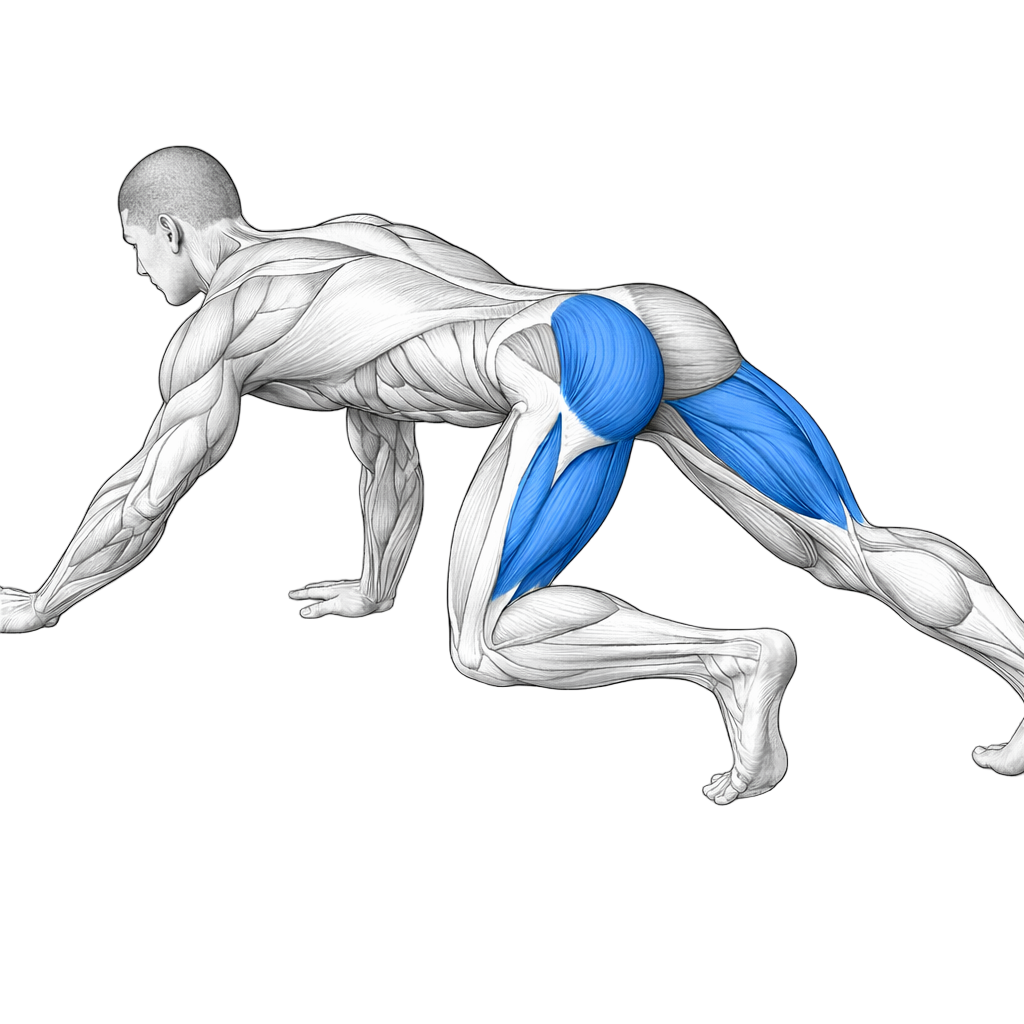
Learn the move every deadlift is built on.
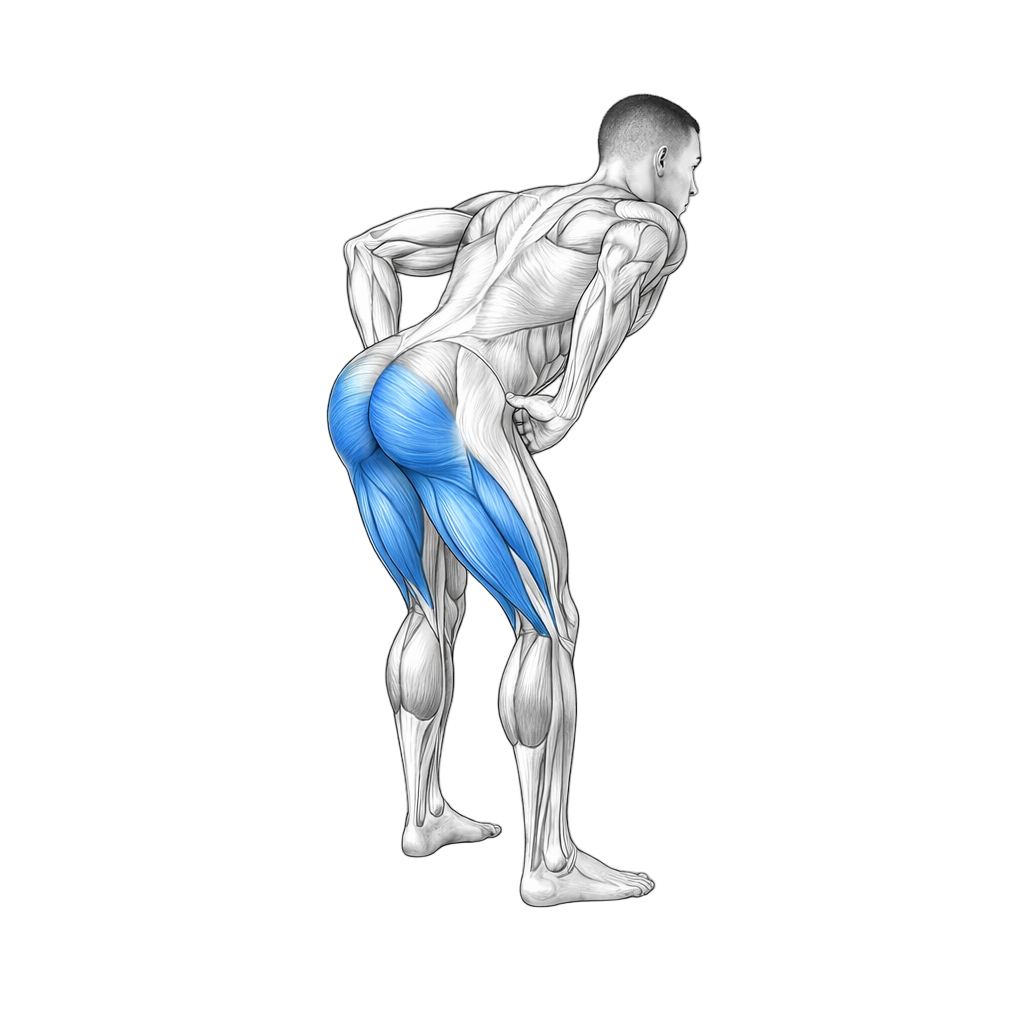
This is a hinge, not a squat, your hips travel back, not down, and your shins stay vertical.
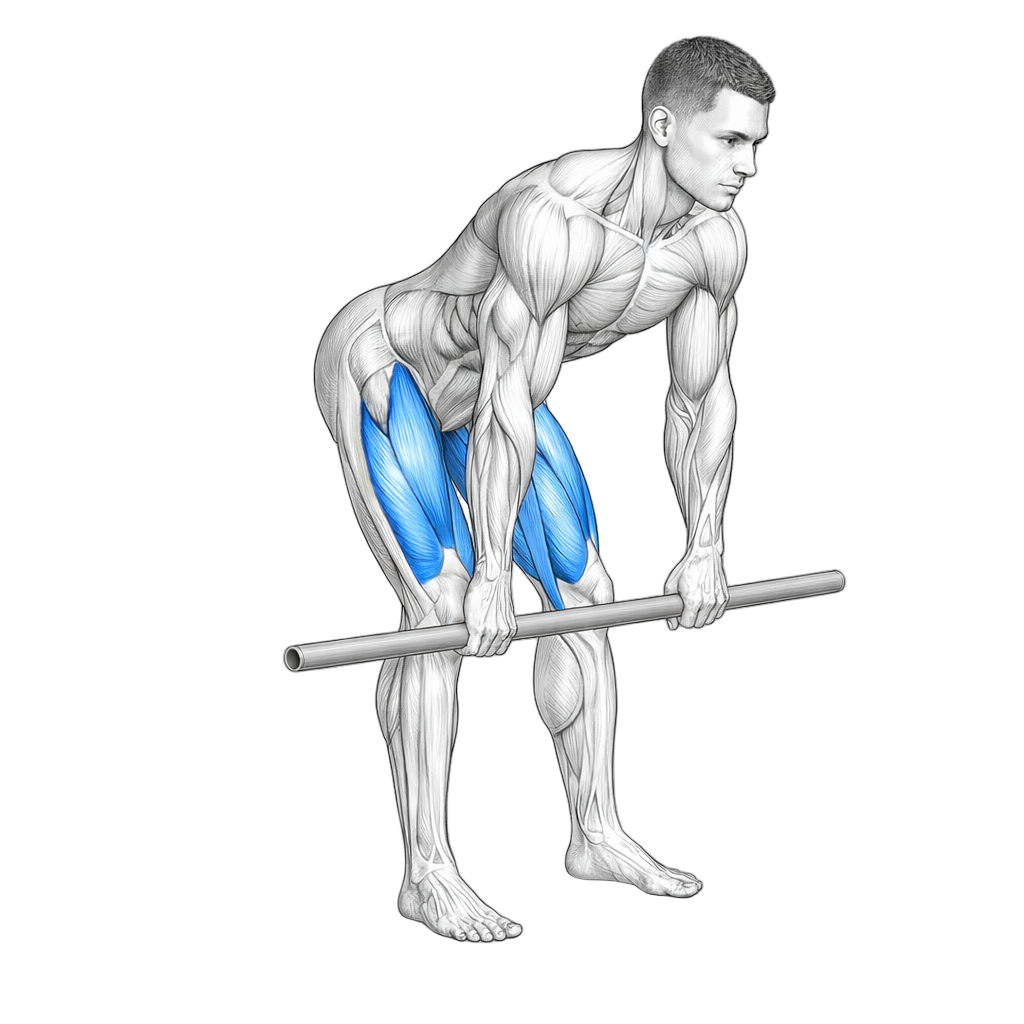
The hip hinge is the pattern underneath every deadlift, swing and row: hips travelling straight back while the spine stays long. As your torso tips forward, the hamstrings lengthen under load and become the muscles that stop you folding, then the glutes fire to snap the hips forward and stand you tall. It earns its place as the first thing to master before touching a barbell, because a clean bodyweight hinge is the difference between hamstring-driven pulls and a lower back doing jobs it never applied for.
Direction of travel. In a squat your hips drop down and your knees travel forward. In a hinge your hips push straight back with shins staying vertical, so your torso tips and the hamstrings take the stretch. Butt back, not butt down.
Hold a broomstick or dowel along your spine touching your head, upper back and tailbone. If all three stay in contact while you push your hips back, your hinge is clean. Losing the head or tailbone contact means you are rounding.
A little, and then they stay put. Start with a soft bend and keep it constant while the hips travel back. If the knees keep bending as you descend, you are drifting into a squat and the hamstrings lose their stretch.