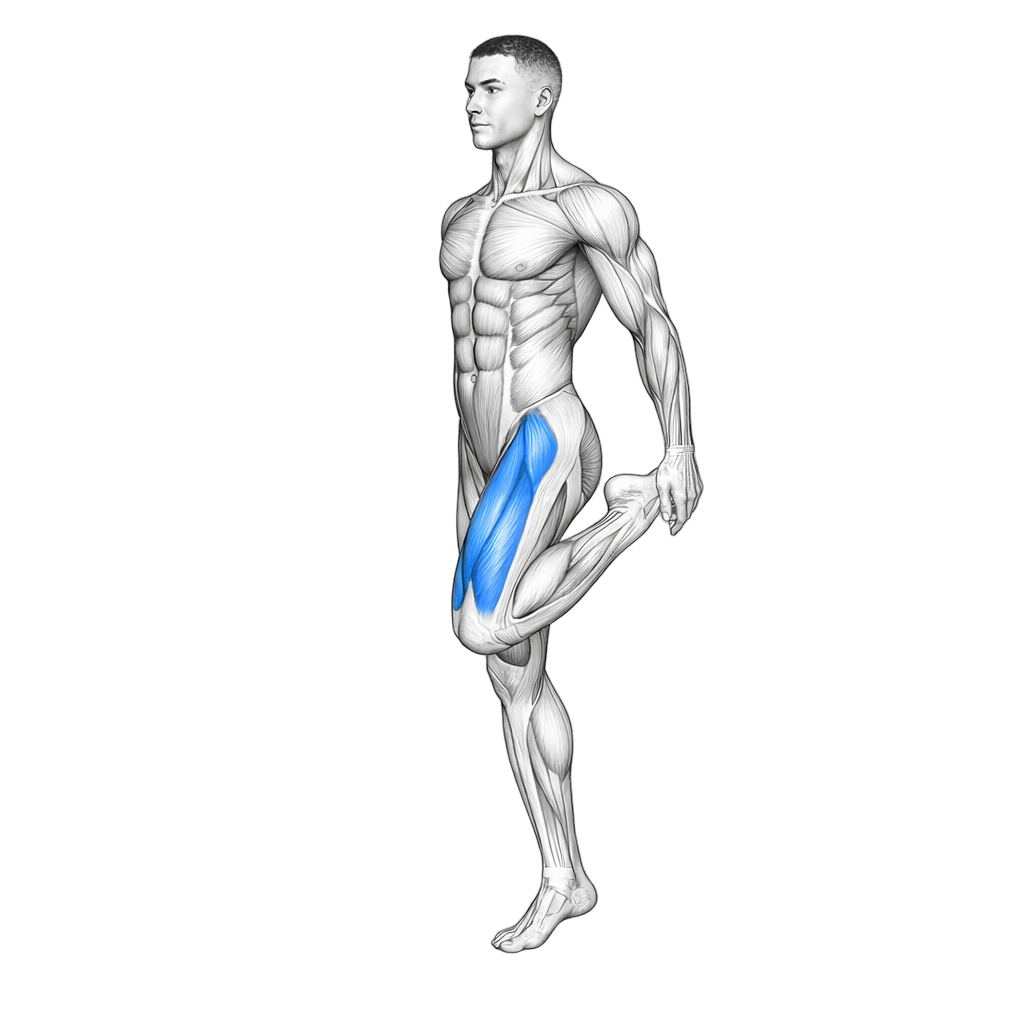
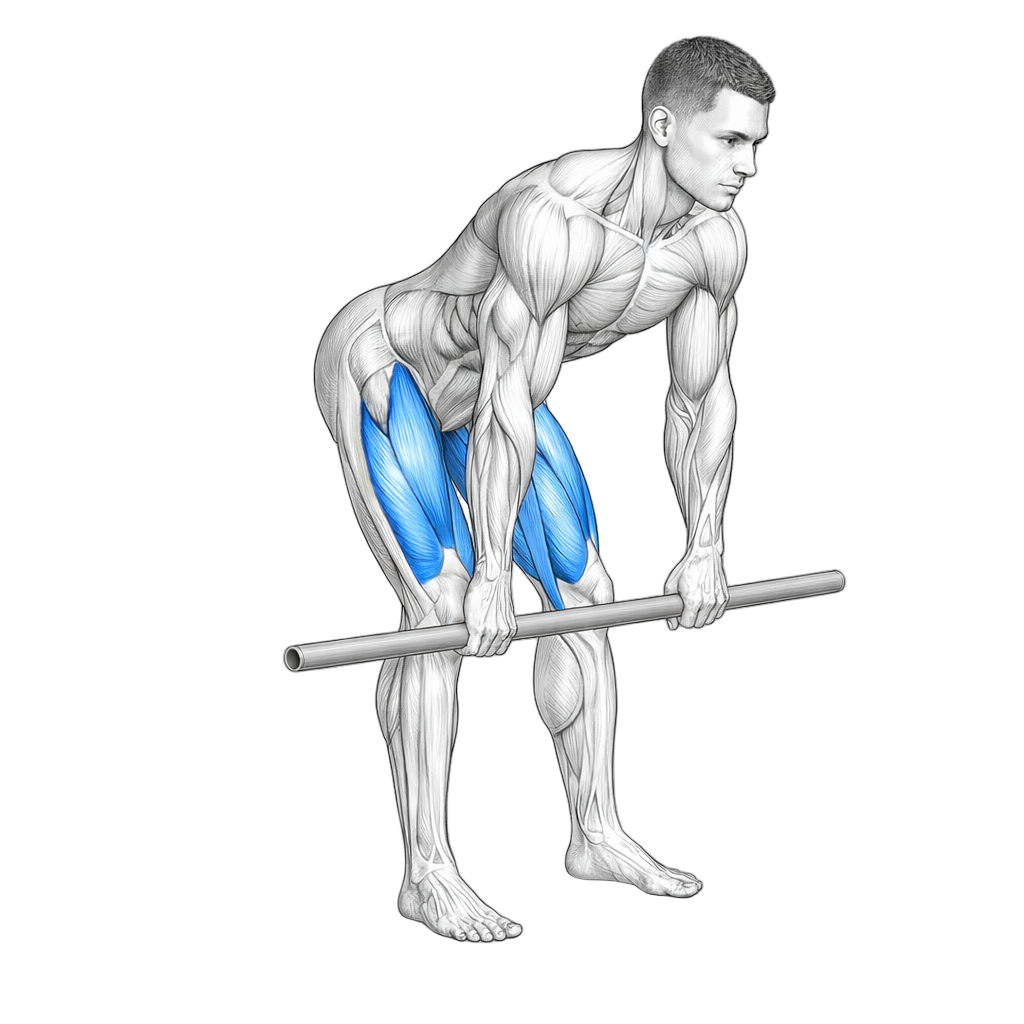
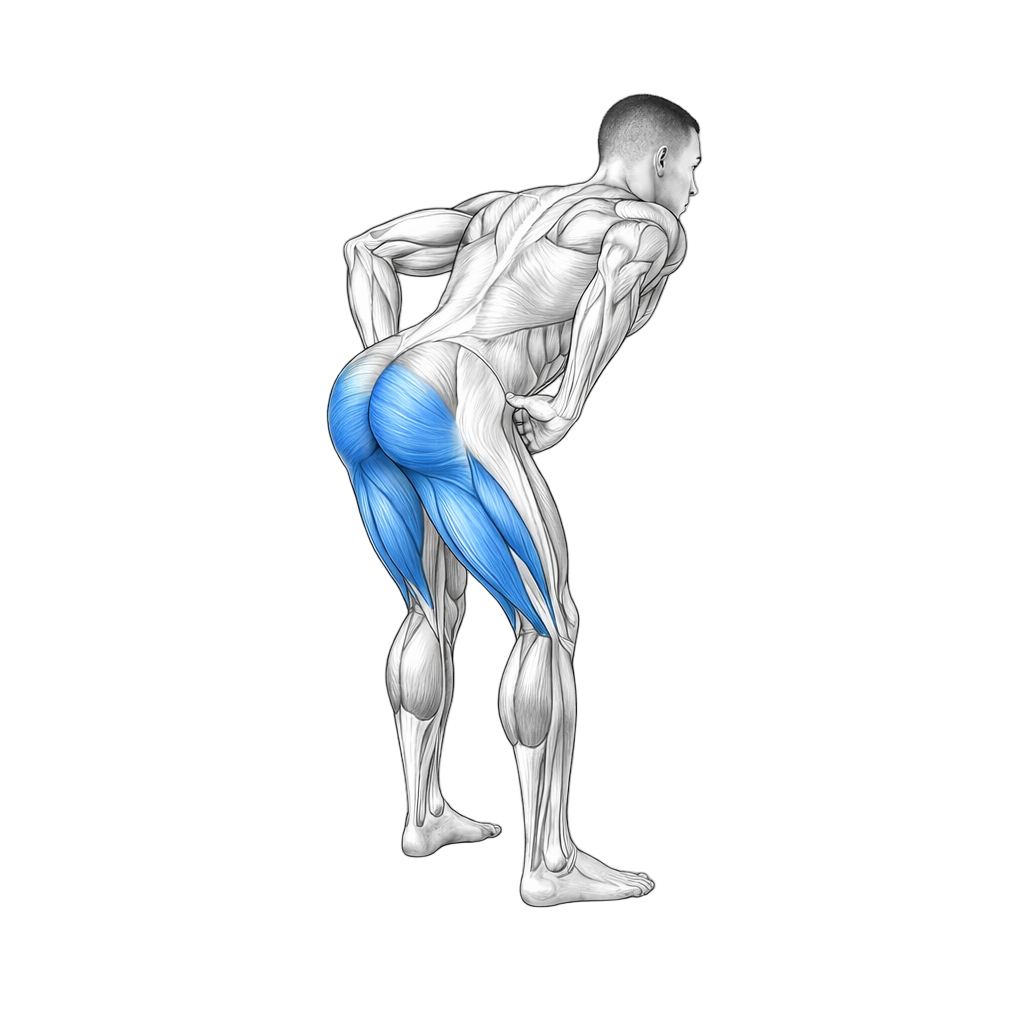
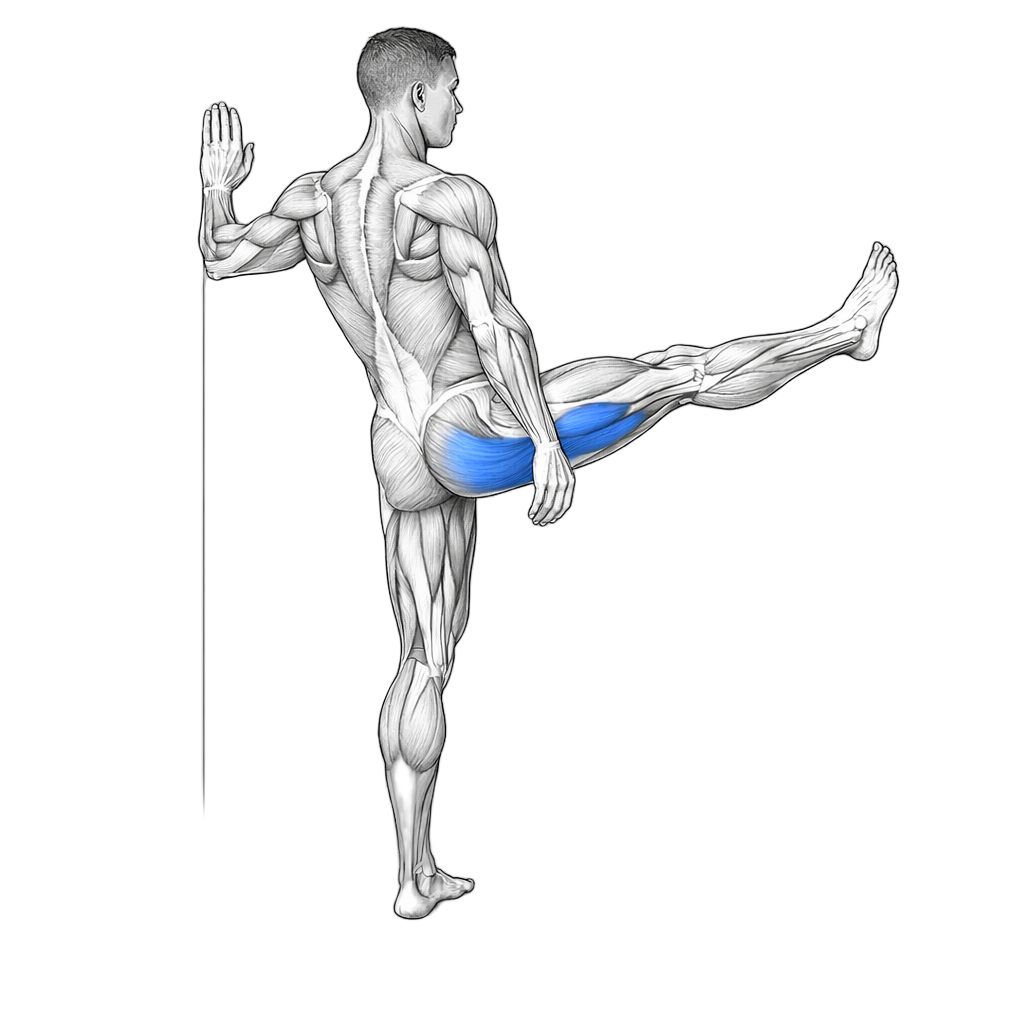
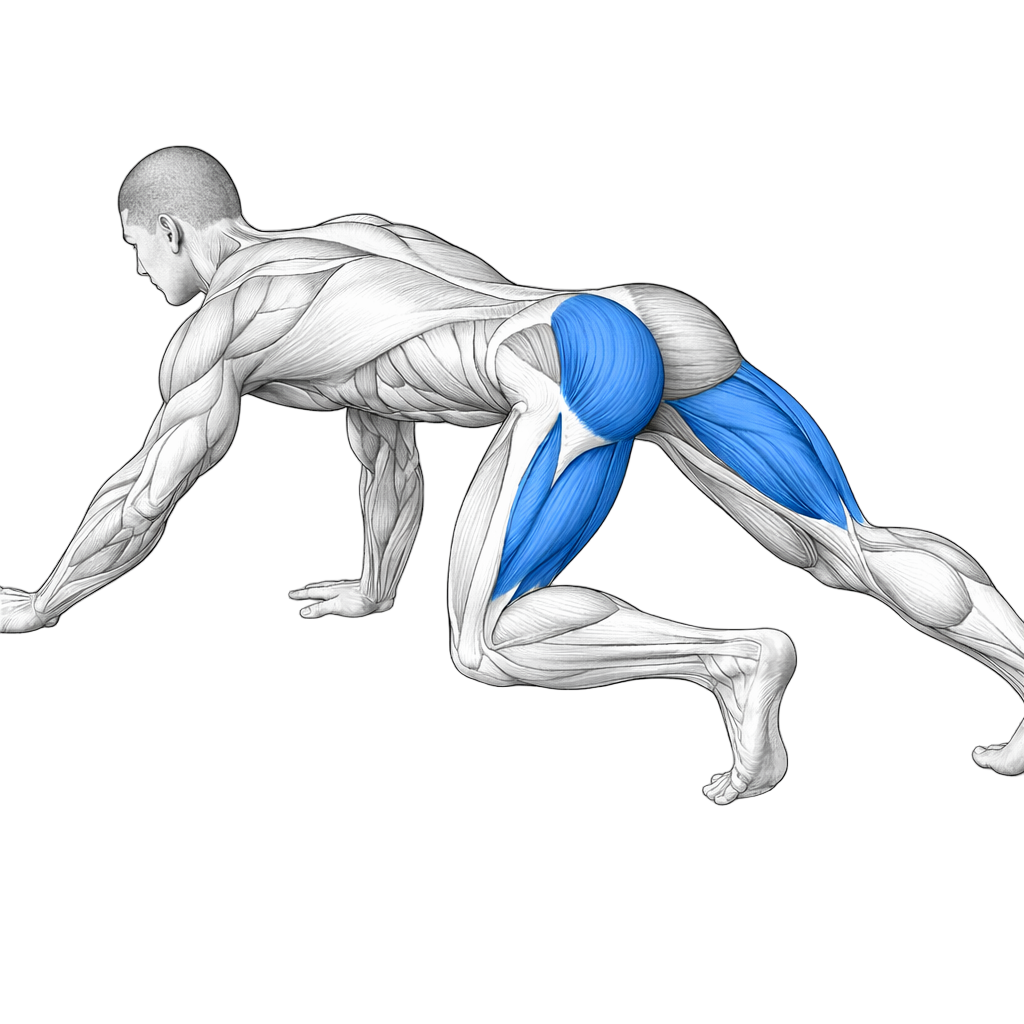
Balance on one leg and stretch your wings.
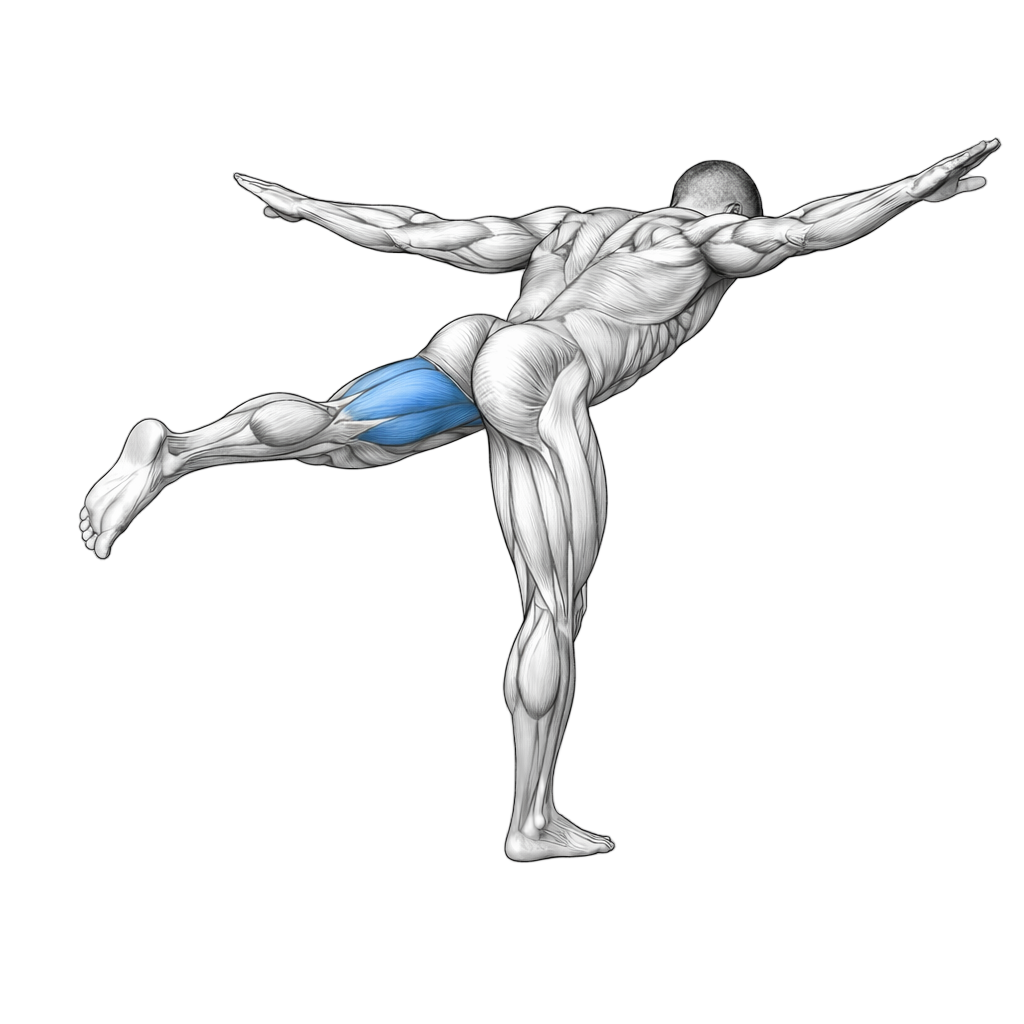
Keep your planted heel down and hips square, you should feel the stance-leg hamstring and glute working.
The Airplane is a single-leg hinge with your arms out wide, and the muscle doing the real work is the hamstring of the leg you are standing on, lengthening under your bodyweight as your torso tips forward and pulling you back upright. The stance-side glute fights the whole time to keep your hips level and square. One side at a time means every imbalance gets exposed, which is exactly why it earns a place before deadlifts and in any single-leg strength block.
Same hinge pattern, different focus. The airplane is done with arms out and no load, prioritising balance and hip control, while a single-leg RDL adds weight in the hands to load the hamstring harder. Own the airplane first.
Single-leg hinging exposes weak hip stabilisers, and wobbling is the training effect happening. Soften your standing knee, grip the floor with your whole foot, and move slower, steadiness improves within a couple of weeks.
Yes, square to the floor is the standard, the free-leg hip loves to rotate open and you should keep closing it. If you cannot keep the hips square through the full range, shorten the range and build from there.