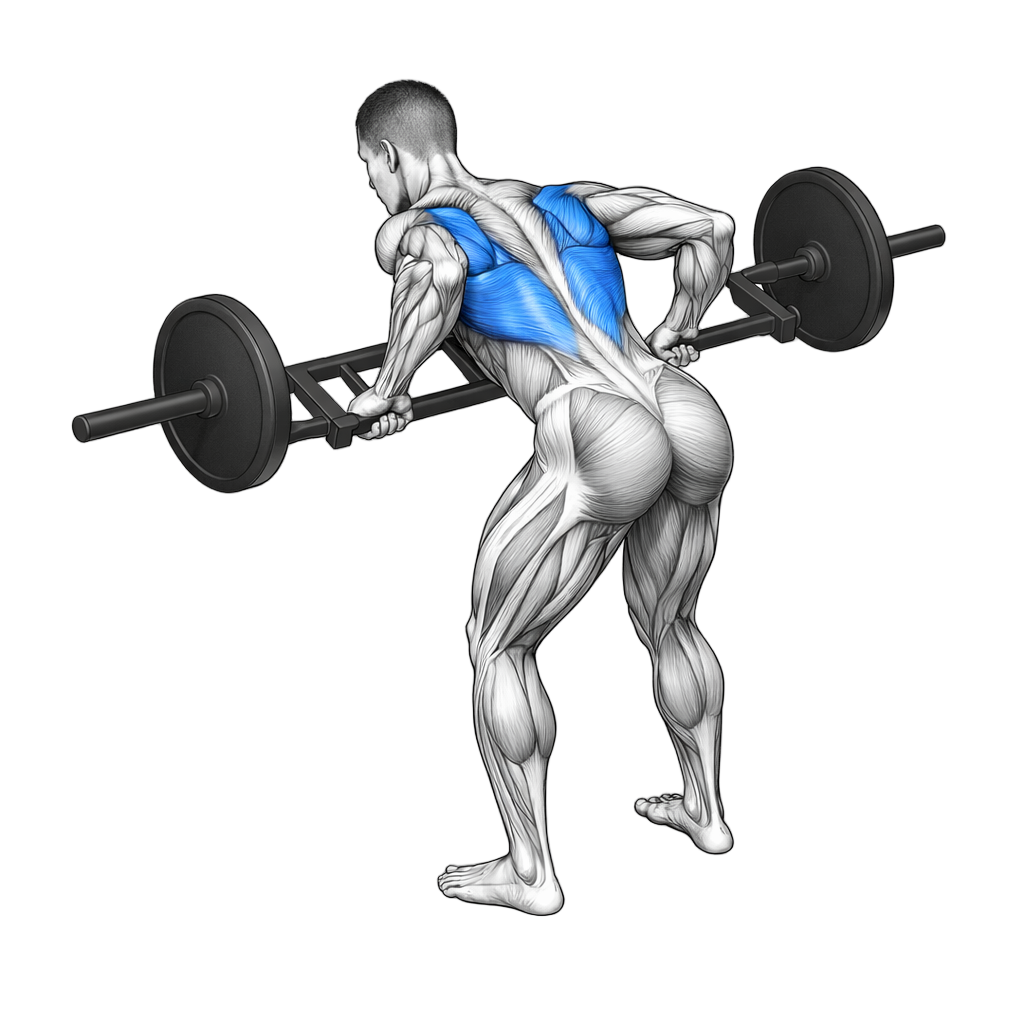
Zero lower-back stress, all upper-back gains.
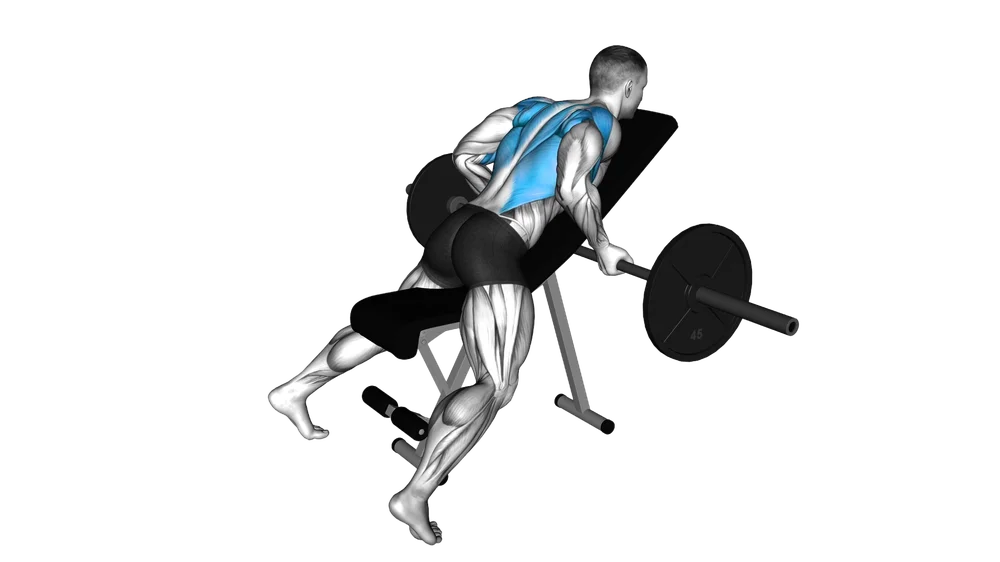
Keep your chest glued to the pad the whole set. If you're heaving off it, drop the weight.
With your chest planted on an incline bench, every kilo the bar carries goes into the back muscles pulling it, because the bench absorbs the hinge work your lower back would normally do in a bent-over row. Driving the elbows up and back drags the shoulder blades together, hammering the mid and upper back while the biceps assist the pull. It earns its place as the strict row: heavy horizontal pulling with the body-English switched off and no lower-back tax the day after.
Isolation and honesty. The pad eliminates lower-back fatigue and momentum, so the back muscles do all the pulling and every rep is comparable. Bent-over rows train more total body, chest-supported rows train more back per set.
Low enough that the bar hangs freely at arm's length, typically around 30 to 45 degrees. Steeper angles shift the pull higher toward the upper back, flatter angles let you load heavier through the lats and mid-back.
The weight is too heavy and your torso is cheating it up. Drop the load until your chest stays glued down for every rep. The pad is the whole point; heaving off it turns the exercise back into what it was designed to avoid.