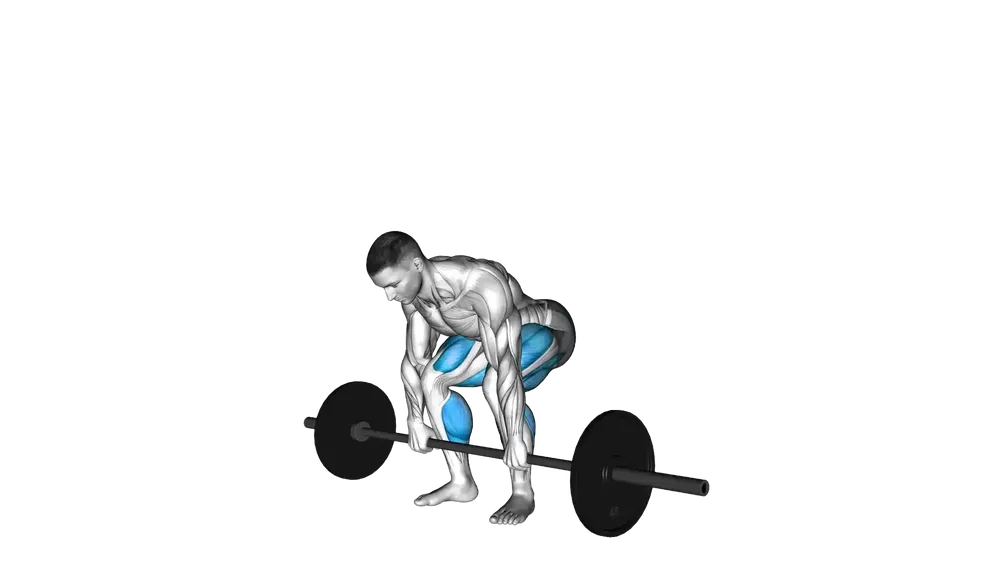
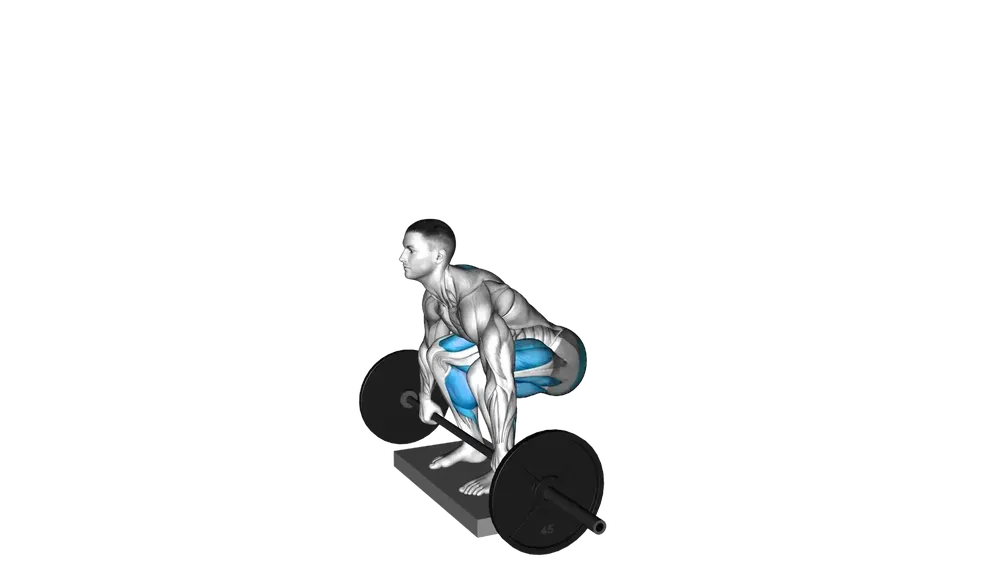
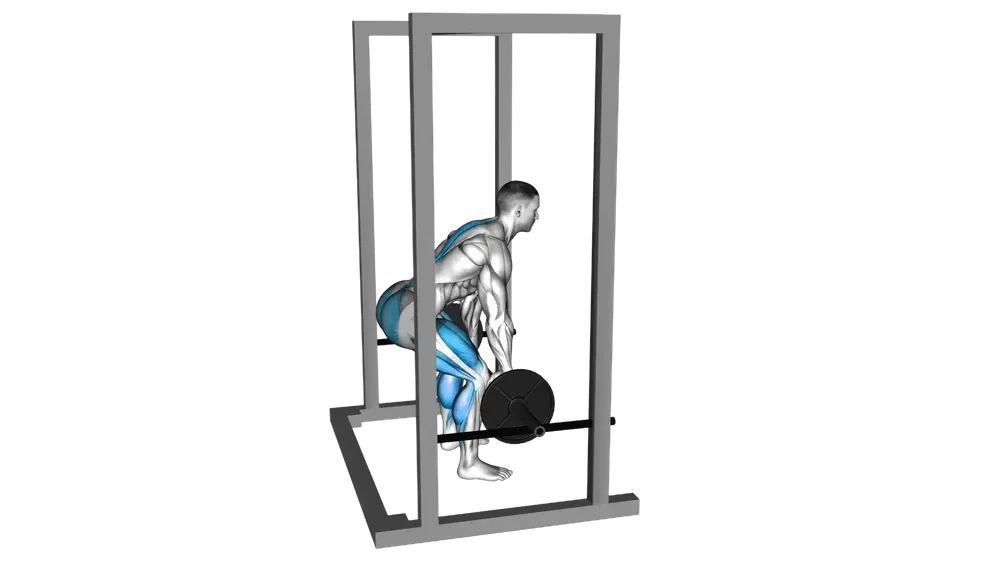
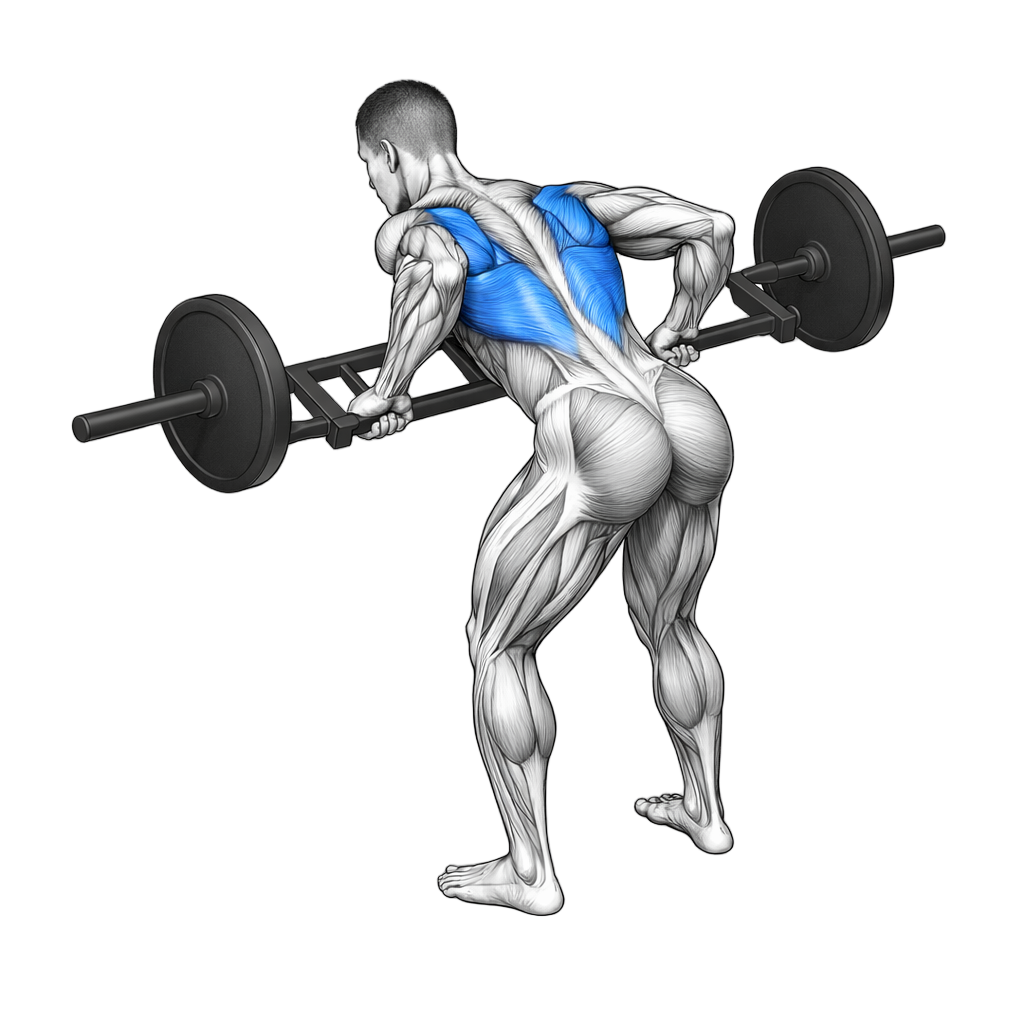
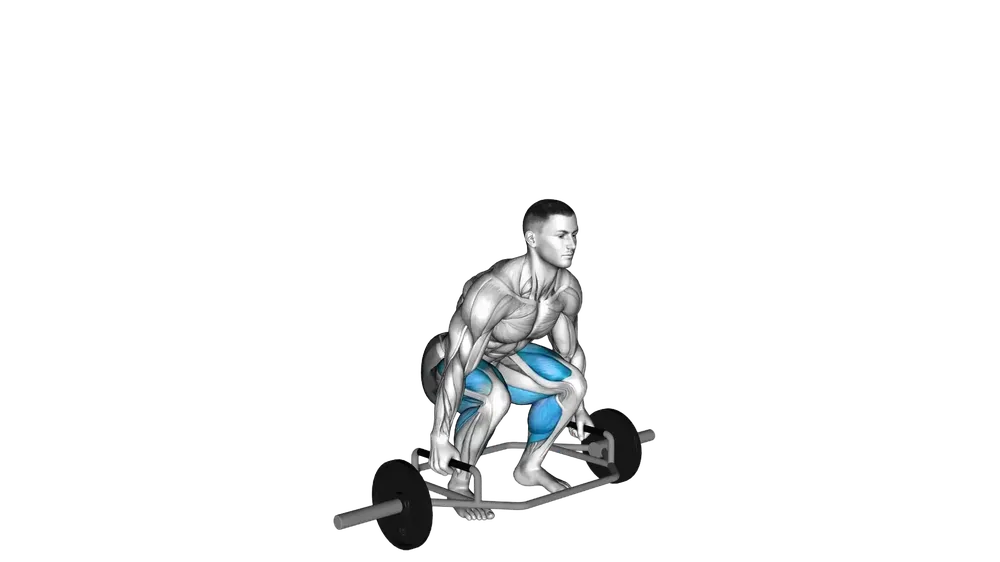
Deadlift off blocks to overload your strongest range and build a huge back.
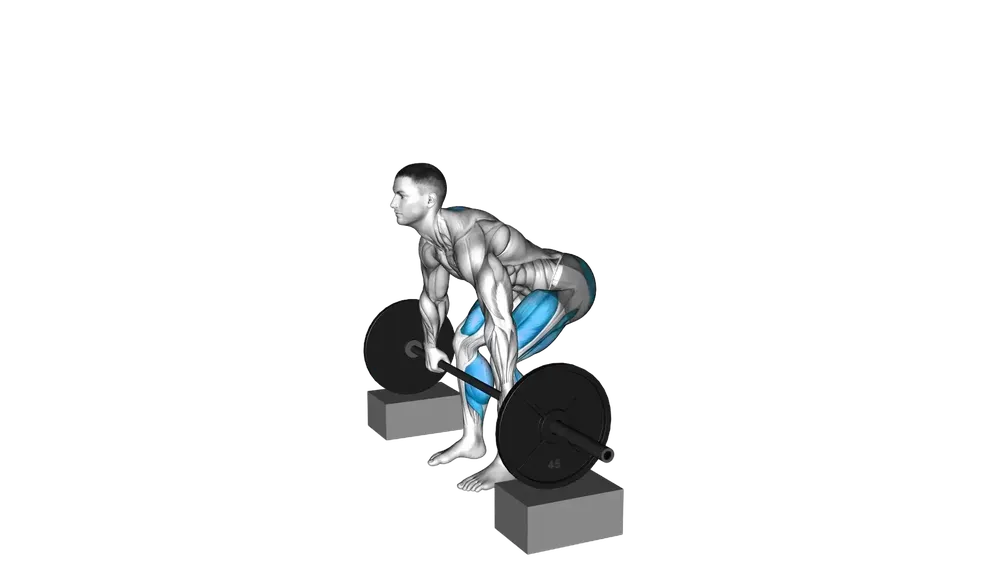
Reset each rep on the blocks, no bouncing the plates for momentum.
Starting the bar at knee height cuts out the bottom of the deadlift, so the upper back and lats take on a bigger share, holding position against loads your full pull could never touch. The hamstrings assist through the shortened hinge as the hips snap through to lockout. It earns its place for overloading the top half of the pull and building the back thickness that heavy deadlifts are made of.
Both raise the starting height, but block pulls set the plates on blocks so the bar still bends and behaves like a real deadlift, while rack pulls rest the bar on pins, which changes how the bar flexes and often lets ego loads creep in. Blocks feel closer to pulling from the floor.
Just below or at knee height is the classic setting, low enough that the lockout still has real work in it. The higher the blocks, the more weight you can move and the less the lift carries over, so resist the urge to stack them tall.
Modestly more, most lifters handle somewhere above their floor pull for the same reps. The moment your spine rounds or the bar gets bounced off the blocks between reps, the load has outrun the purpose.