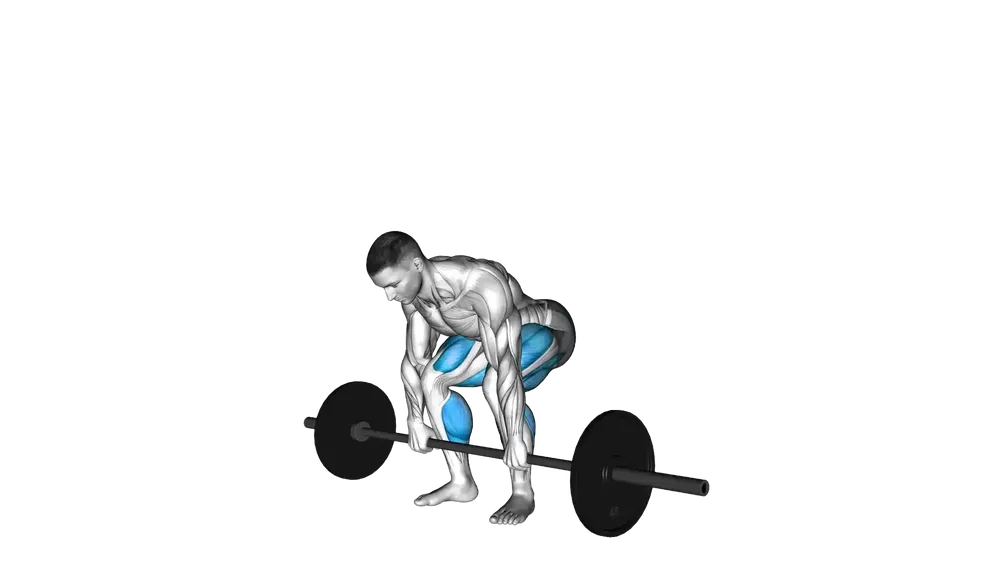
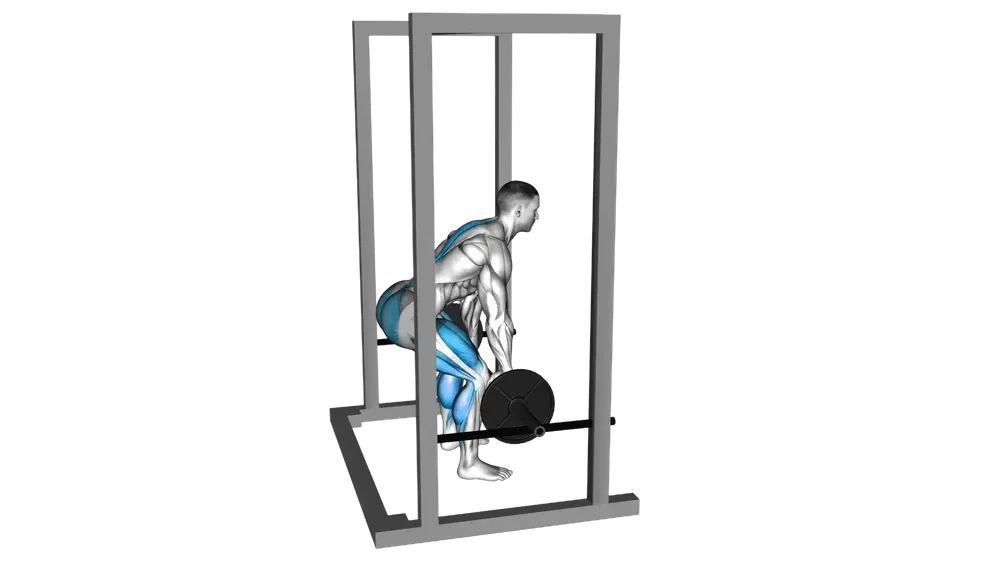
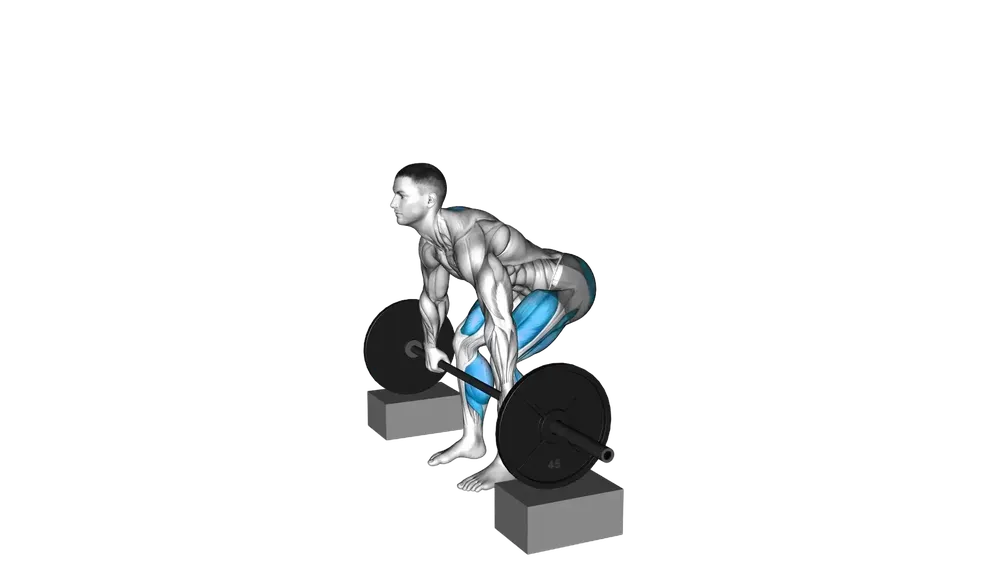
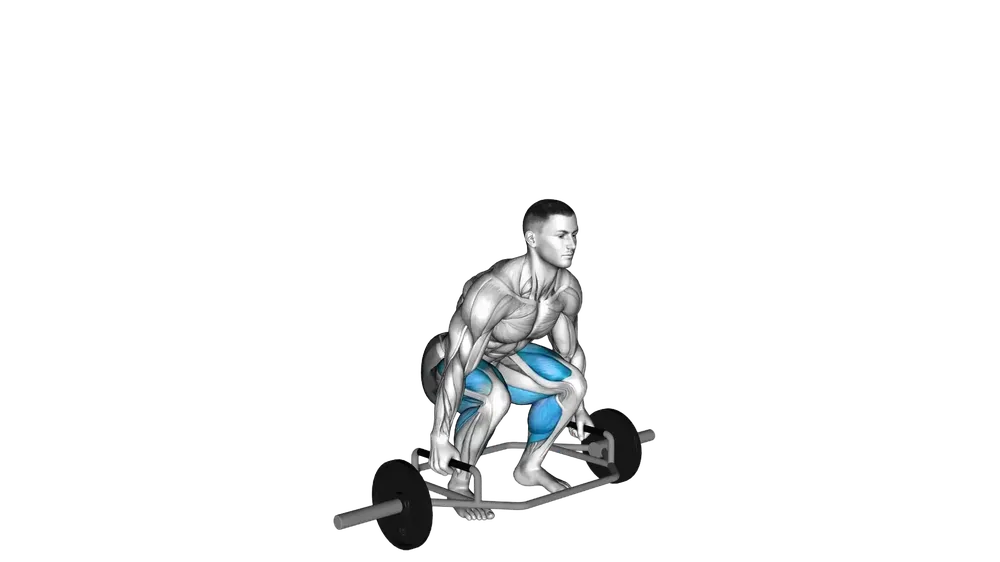
Pull from a raised platform for extra range and off the floor power.
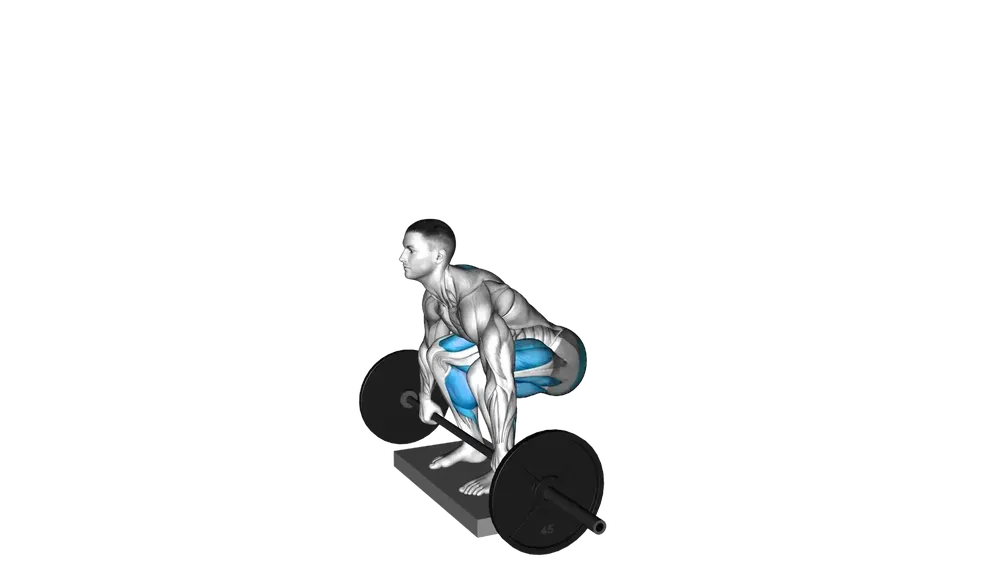
The extra range is brutal, keep your back flat and don't let your hips shoot up first.
Standing on a low platform drops your start position an inch or two below a normal pull, so your hips start lower and the bar travels further. That extended range forces the back to hold a flat, braced position through a harder angle, while the hamstrings and glutes fire from a deeper stretch to break the bar off the floor. It is the go-to fix for lifters who are slow off the floor on their conventional deadlift.
One to two inches is plenty, usually a bumper plate or a low platform. Go higher only if your mobility lets you keep a flat back at the bottom, because a rounded start defeats the point.
Yes. The longer range and deeper start make every rep harder, so expect to pull around ten to twenty percent less than your regular deadlift and treat it as a strength builder, not a max-out lift.
Lifters who stall just off the floor get the most from them. If your sticking point is at the knees or lockout, blocks or rack pulls are the better tool, and if you cannot hit the deeper start with a flat back, earn that position first.