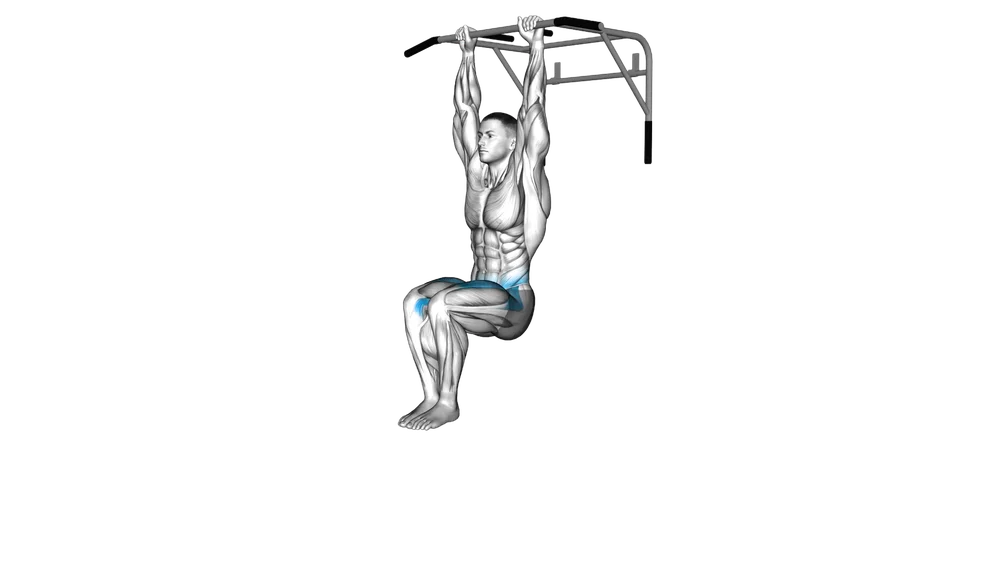
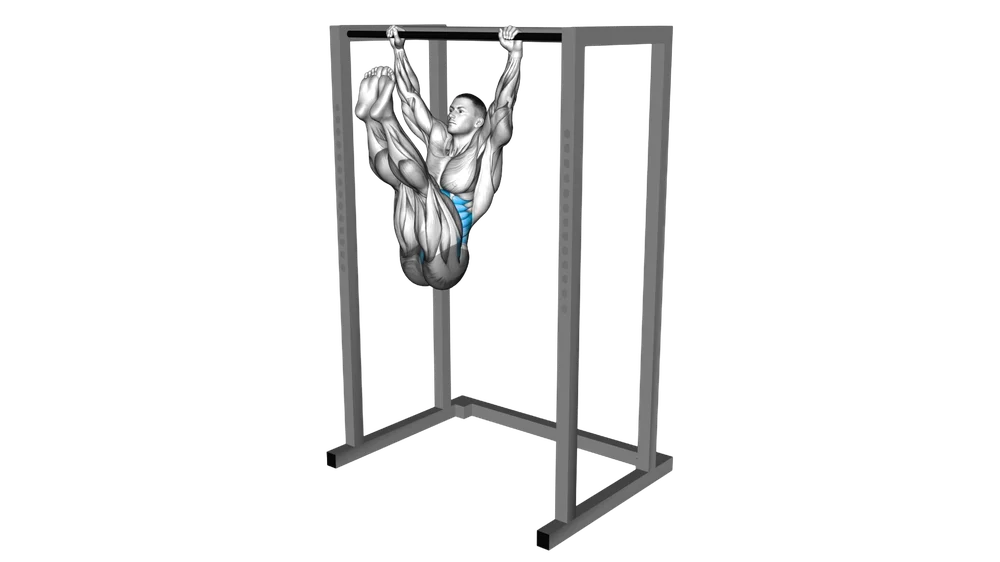
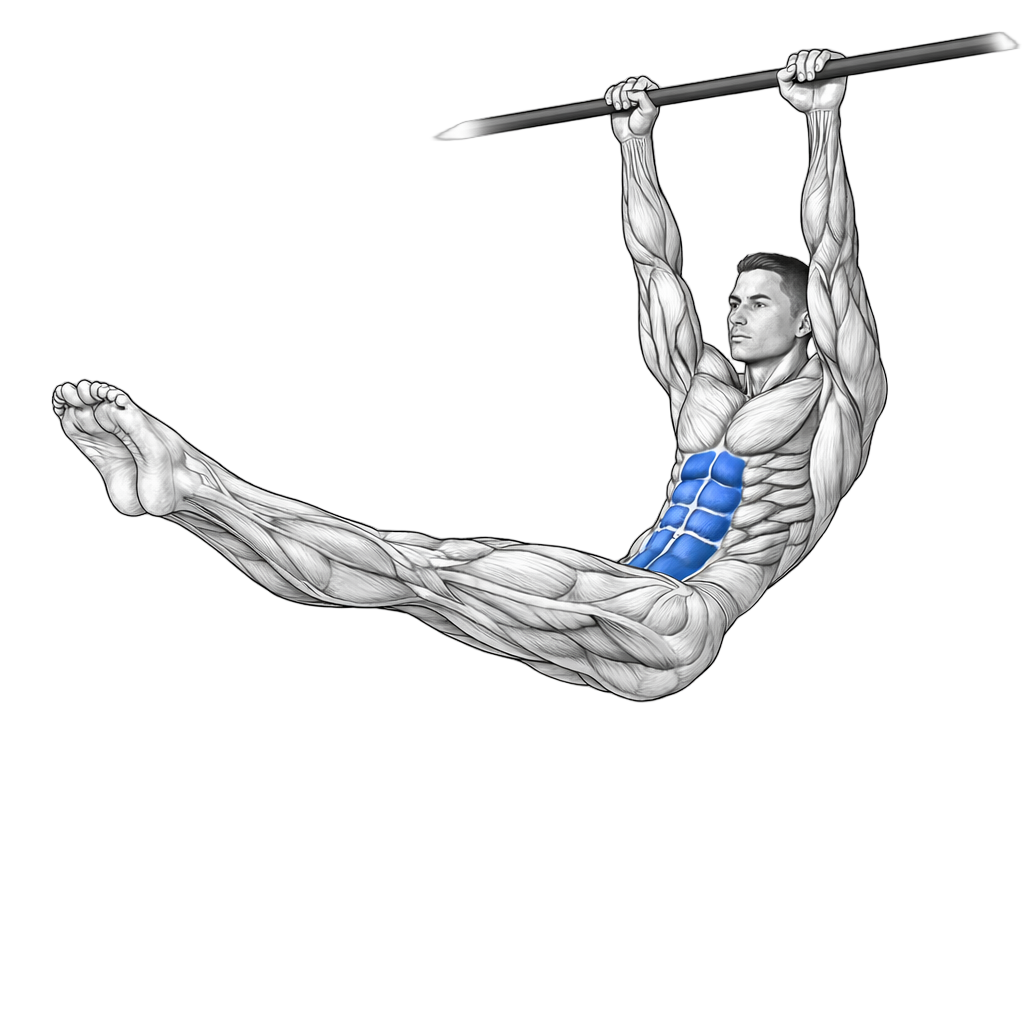
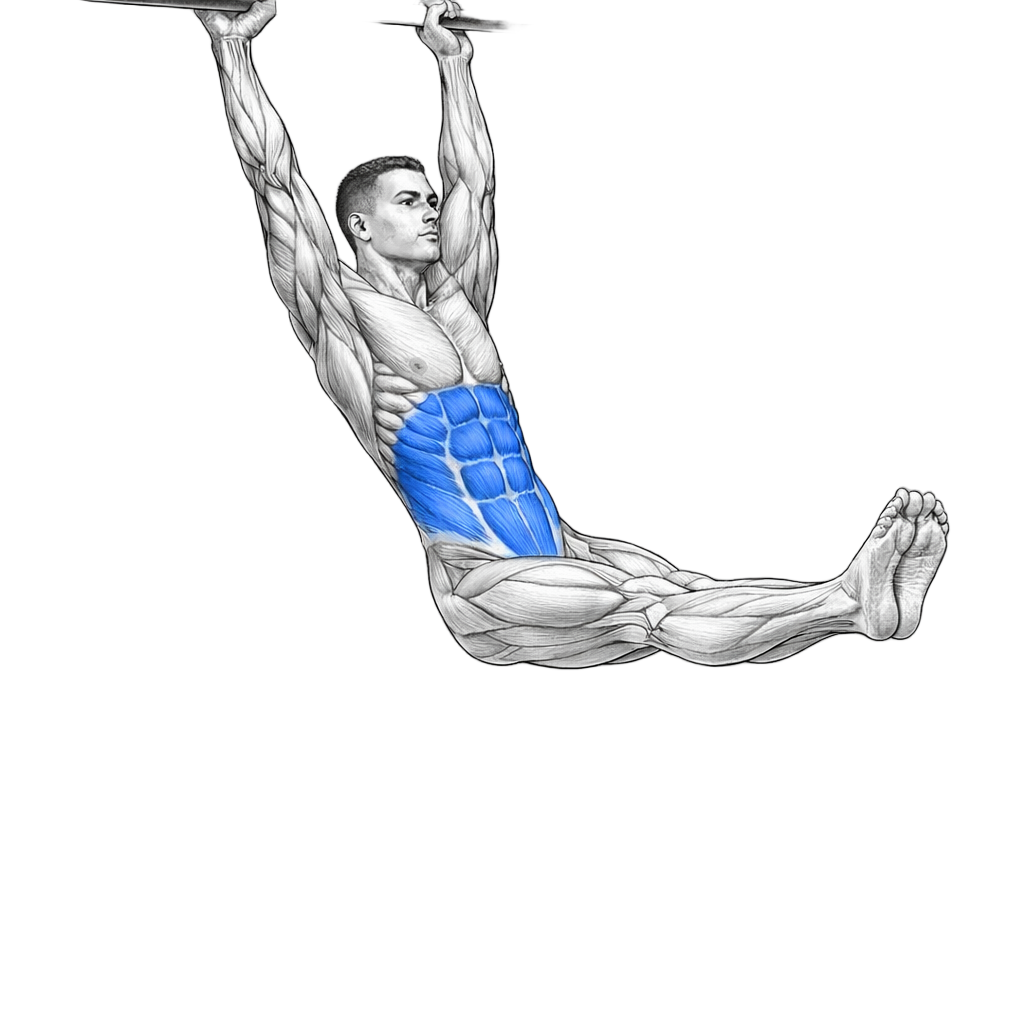
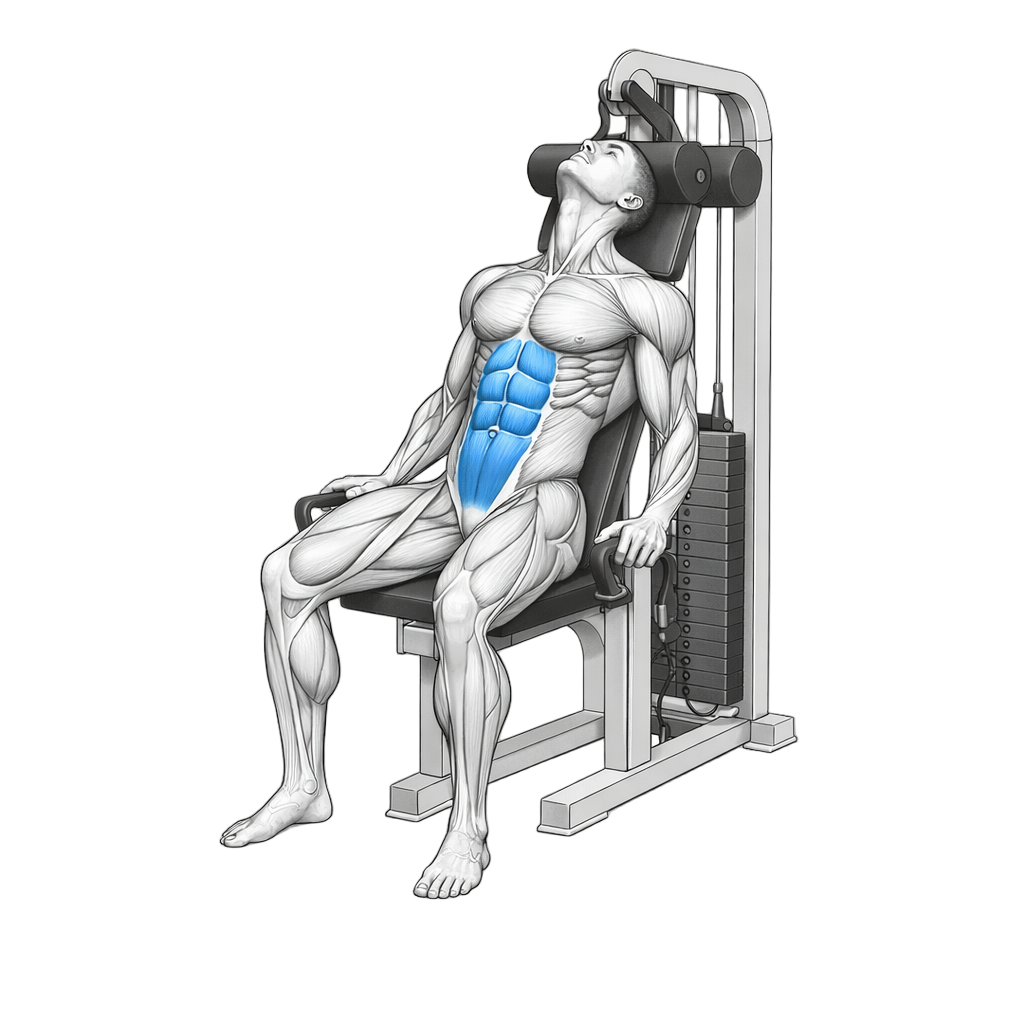
Hang strong, drive your knees up and to the side.
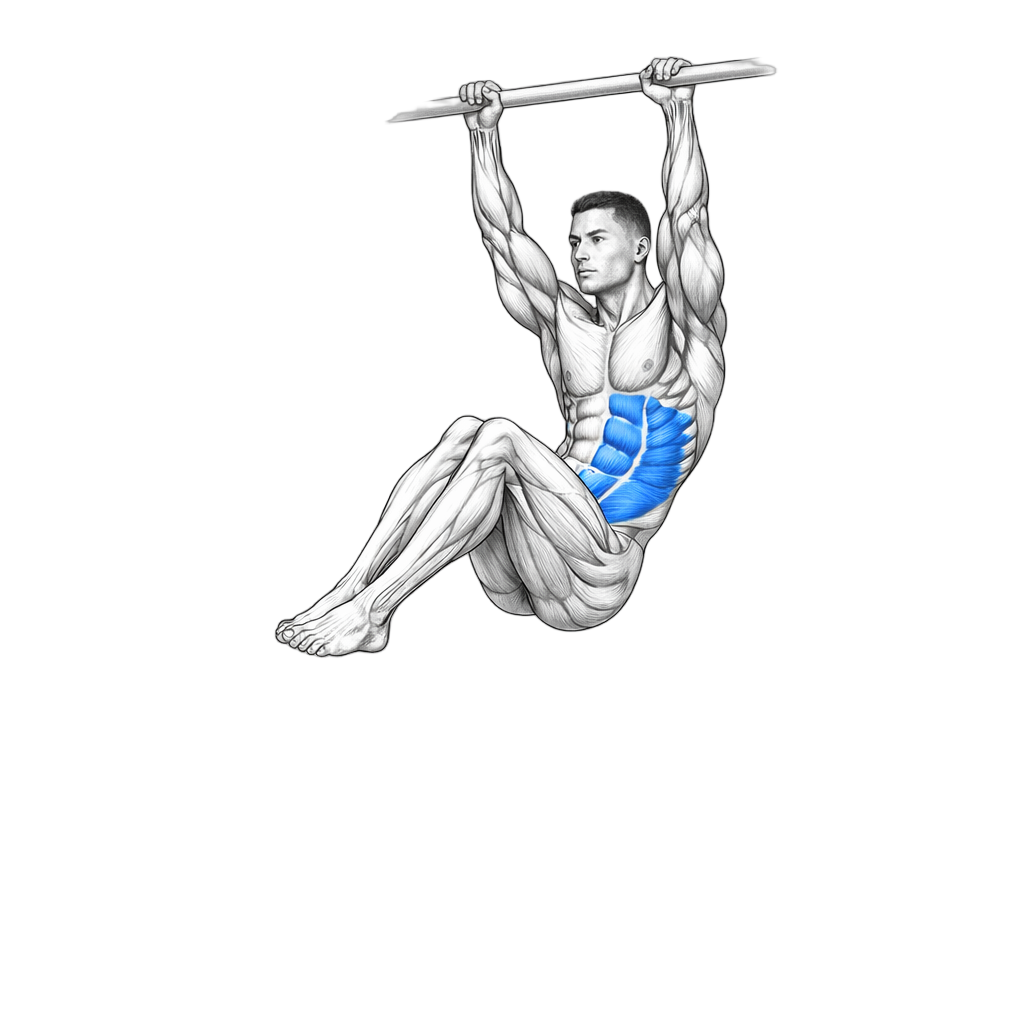
Curl your pelvis up as you twist, do not just swing your legs.
Driving your knees up and across your body adds rotation to the hanging raise, which pulls the sides of your core into the story in a way straight-up raises cannot. Your core has to flex, twist and then brake the descent while your body fights the urge to swing from the bar. It earns its place as the rotational partner to standard hanging raises, carving out the waist and building the twisting control that shows up in every sport.
The twist. Angling the knees to one side loads the rotational side of your core rather than just the front, so you train the muscles that turn and brake your torso, not only the ones that curl it.
Alternating keeps the rhythm and balance honest and matches how the movement is usually programmed. If one side is clearly weaker, finish with a few extra reps toward that side only.
Grip the bar hard, set your shoulders, and move slower. Spinning means your legs are throwing momentum the rest of your body has to absorb. Curl the pelvis up as you twist and control the lower back to still.