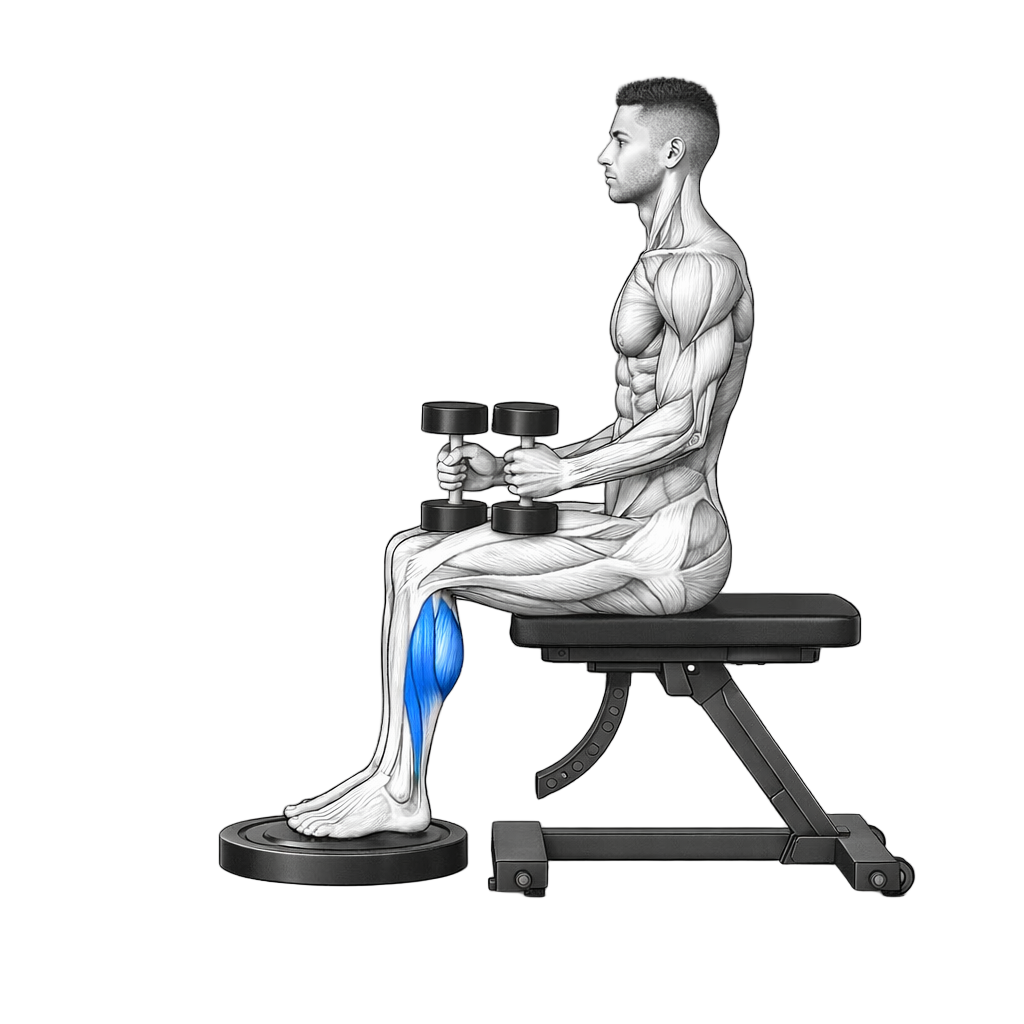
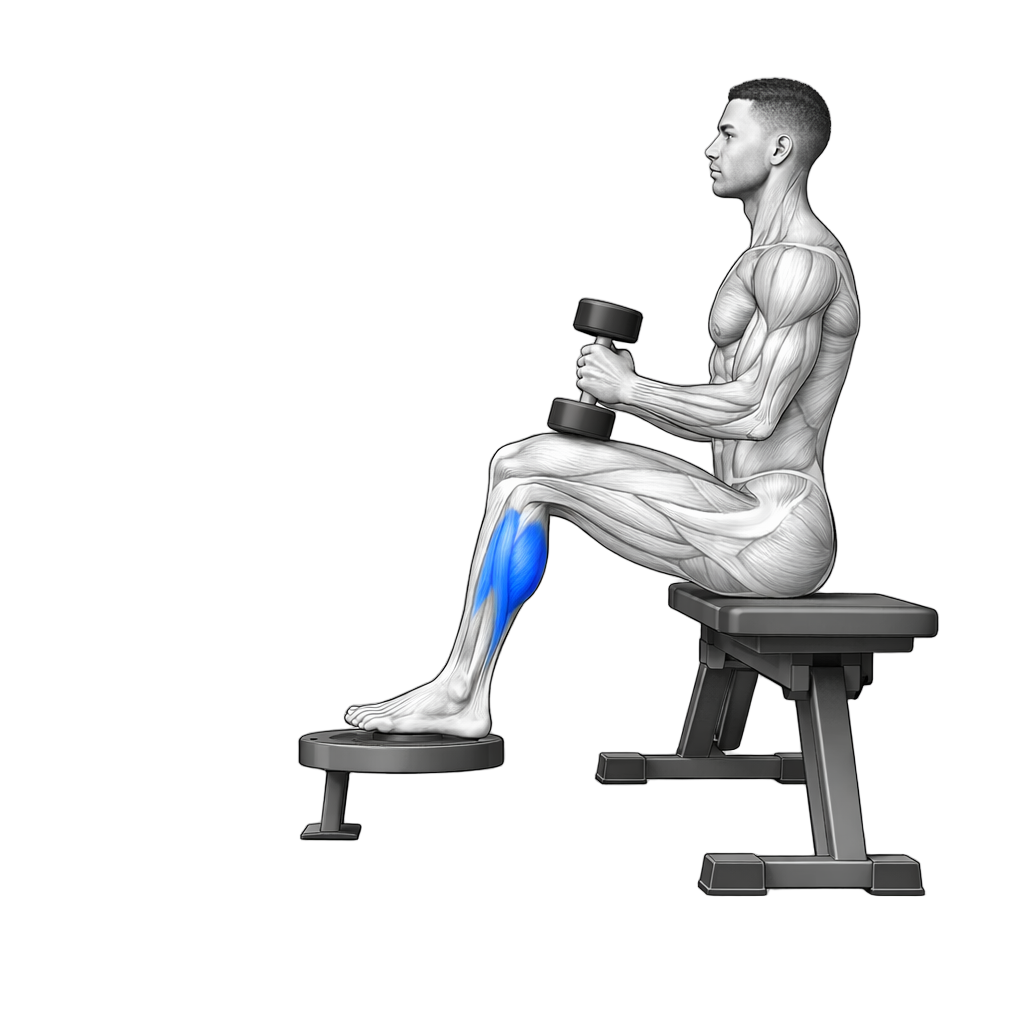
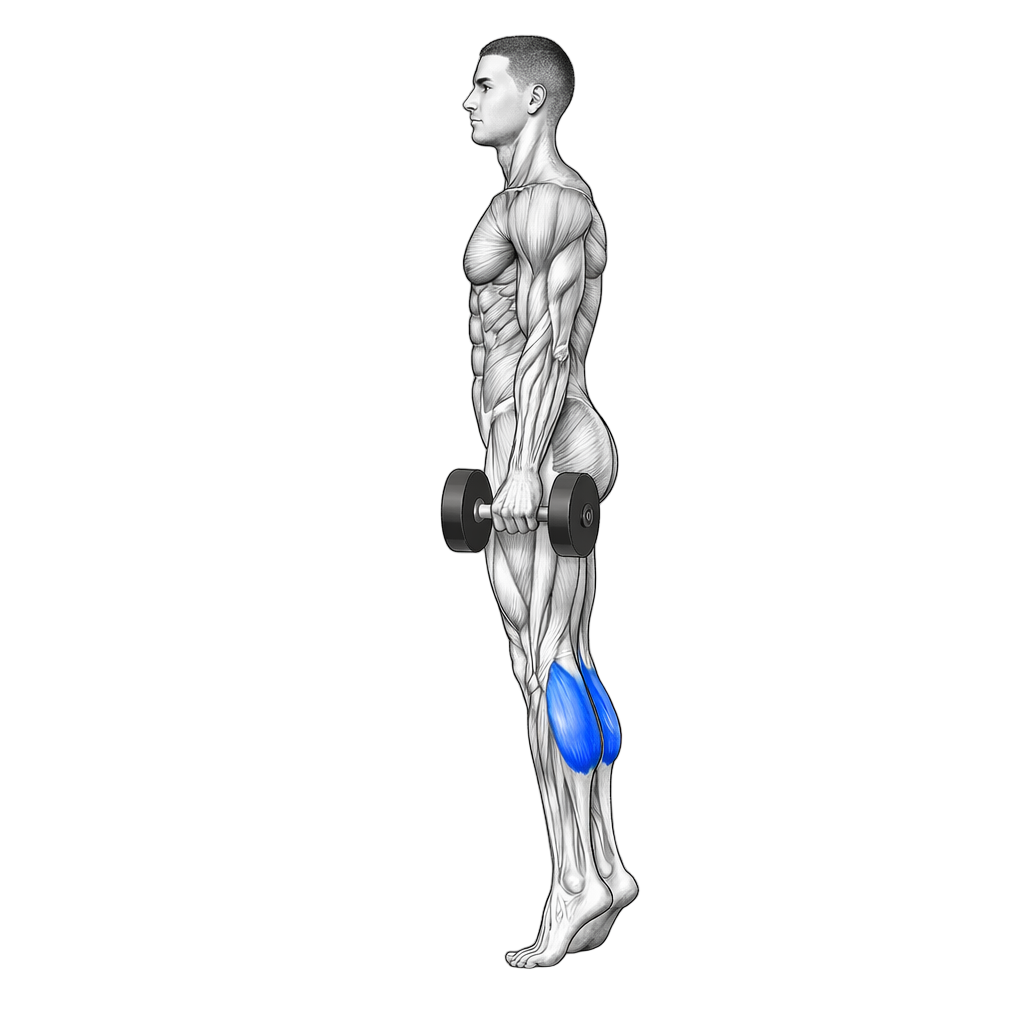
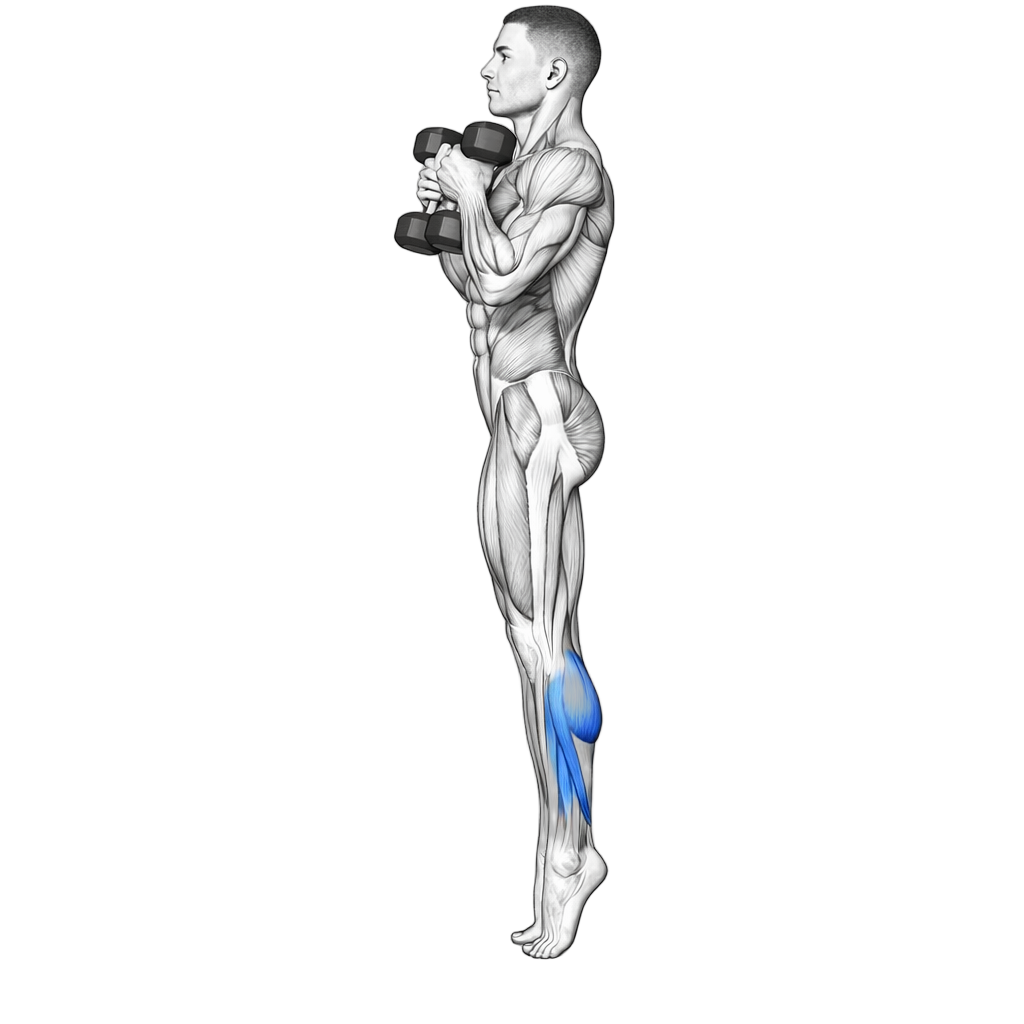
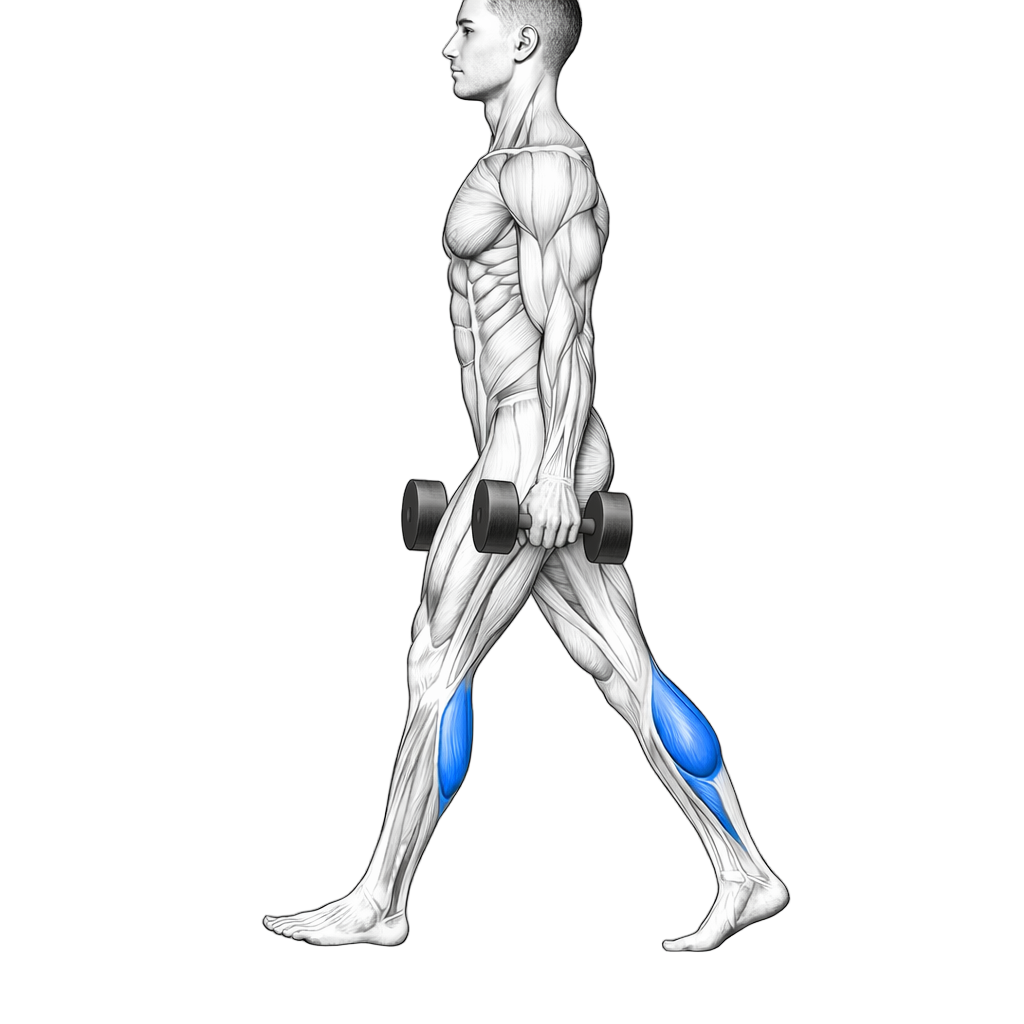
Loaded calves, full range, zero excuses.
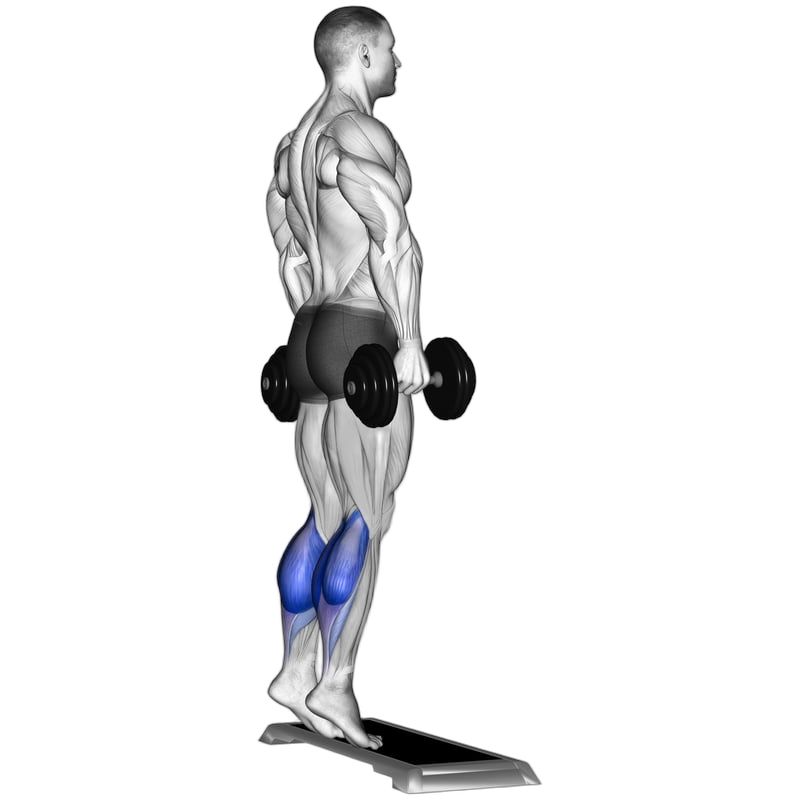
Get a full stretch at the bottom and a hard squeeze at the top, no bouncing.
Standing with straight legs puts the gastrocnemius, the visible diamond of the calf, in its strongest position to drive you up onto your toes. The block under the balls of your feet is non-negotiable, the deep heel drop below it is where calves actually grow, and the dumbbells add simple, scalable load. It is the standing half of complete calf training, the mirror muscle to the seated work.
Yes. Off flat ground you lose the stretch below neutral, which is the most productive part of the range. The dumbbells add load, but the block adds the range that makes the load matter.
Usually bouncing. Rushed, springy reps let the tendon do the work instead of the muscle. Slow the lowering, sink into a full stretch, pause, then drive to the tallest point you can hold. Boring tempo, better calves.
Both work, so mix them. Heavier sets of 8 to 12 with full range, lighter sets of 15 to 20 with pauses, and consistency for months. Calves respond to accumulated quality volume, not one heroic session.