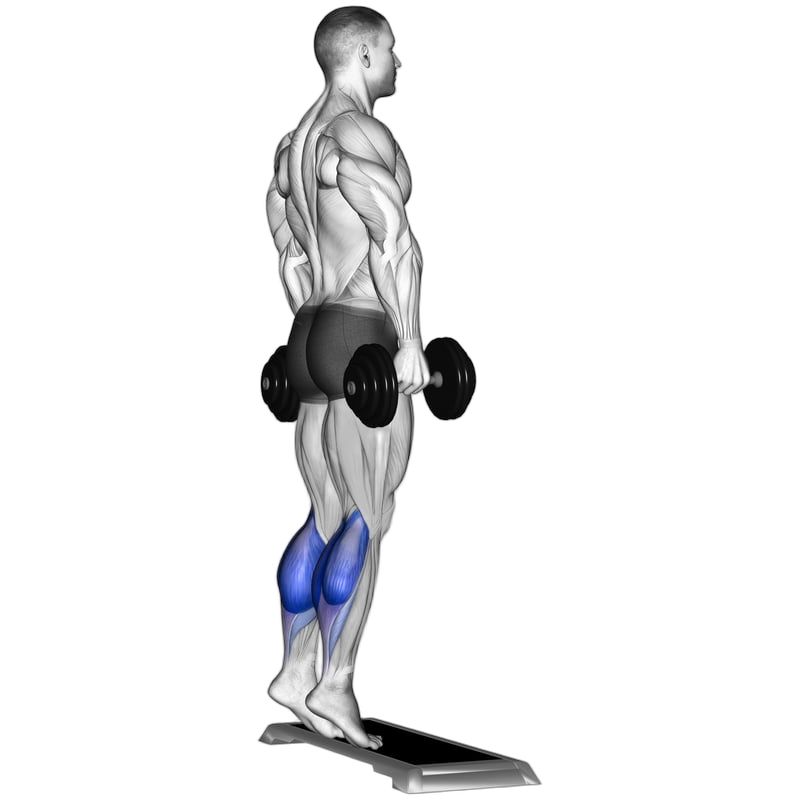
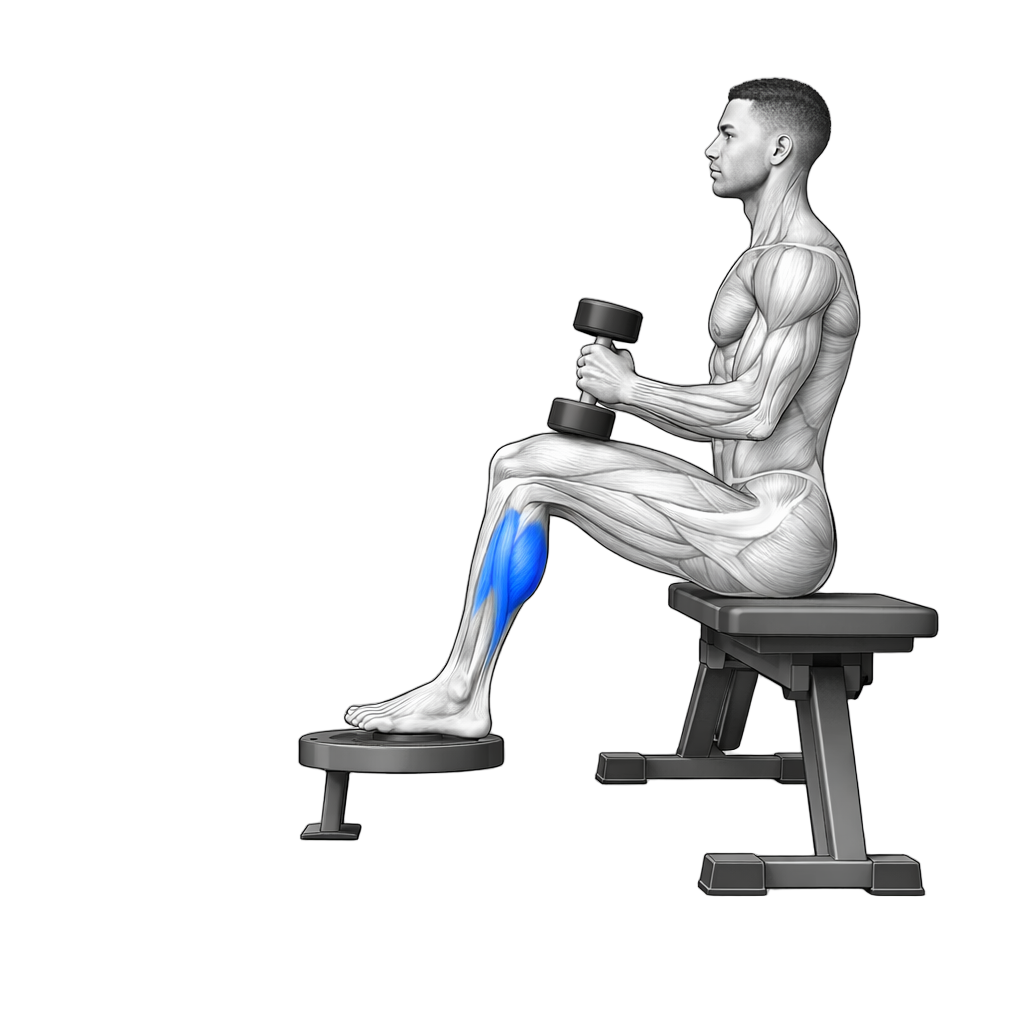
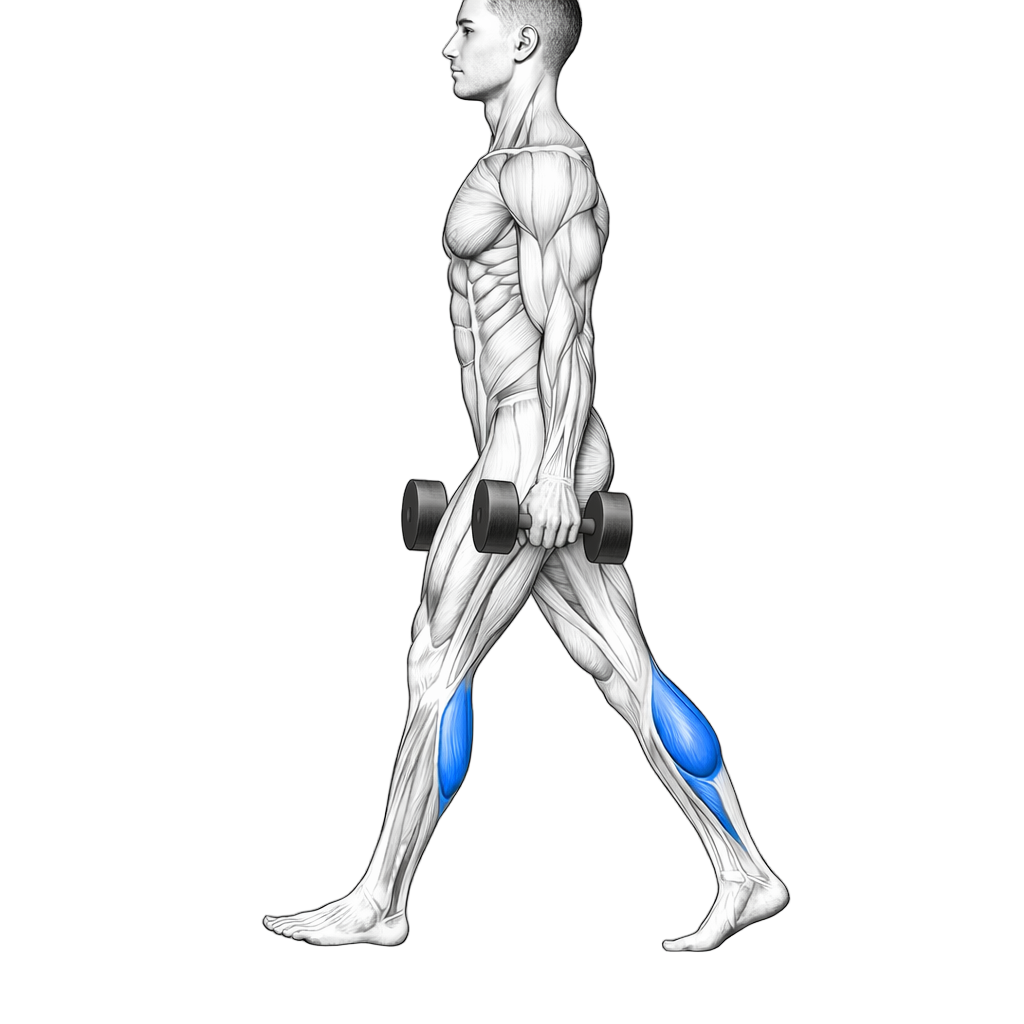
A dumbbell on the knees and your soleus on fire.
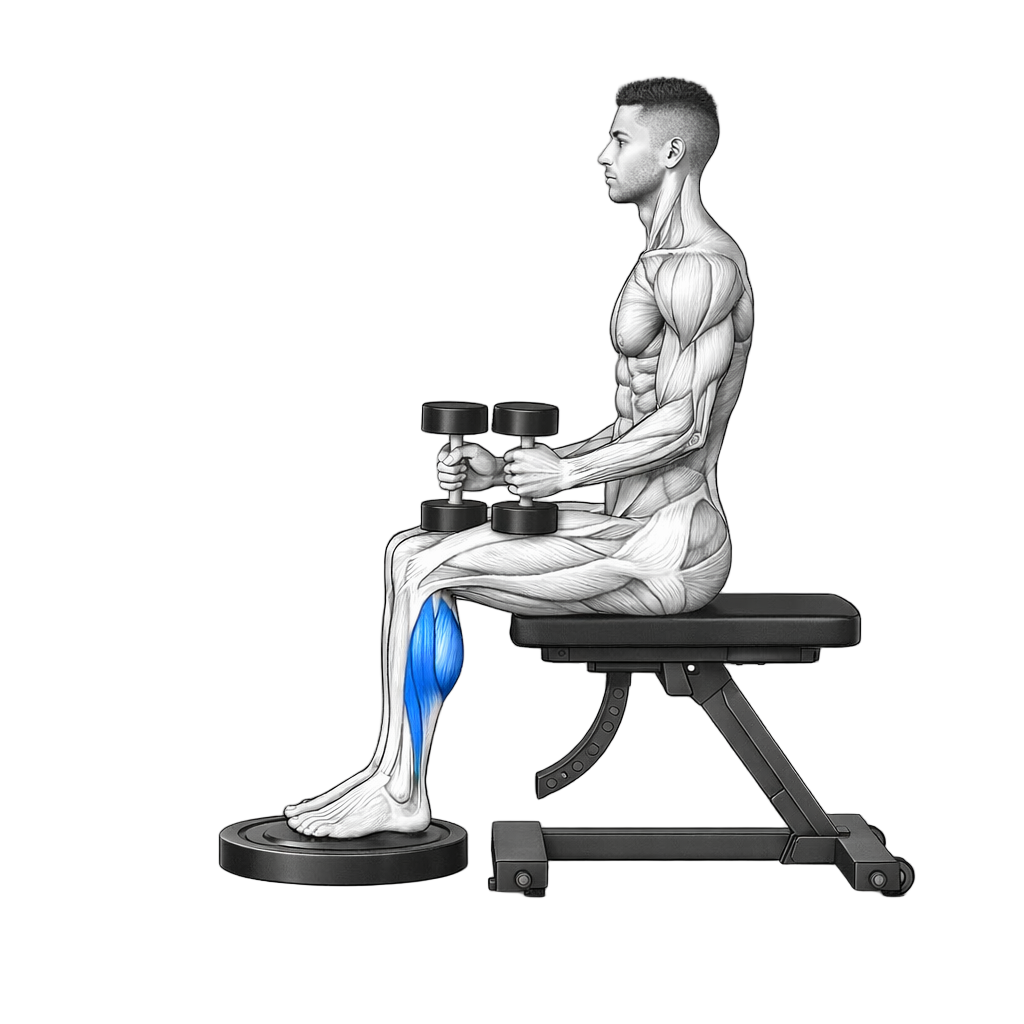
Keep the dumbbells over your knees and move only at the ankle for a clean soleus hit.
Sitting with bent knees slackens the gastrocnemius, the big calf muscle that crosses the knee, so the soleus underneath is forced to do the work. Dumbbells stood upright on your thighs supply the load, and the heels-off-a-block setup gives you the deep stretch and tall finish the soleus grows from. It is the home-friendly answer to the seated calf machine and the missing half of most people's calf training.
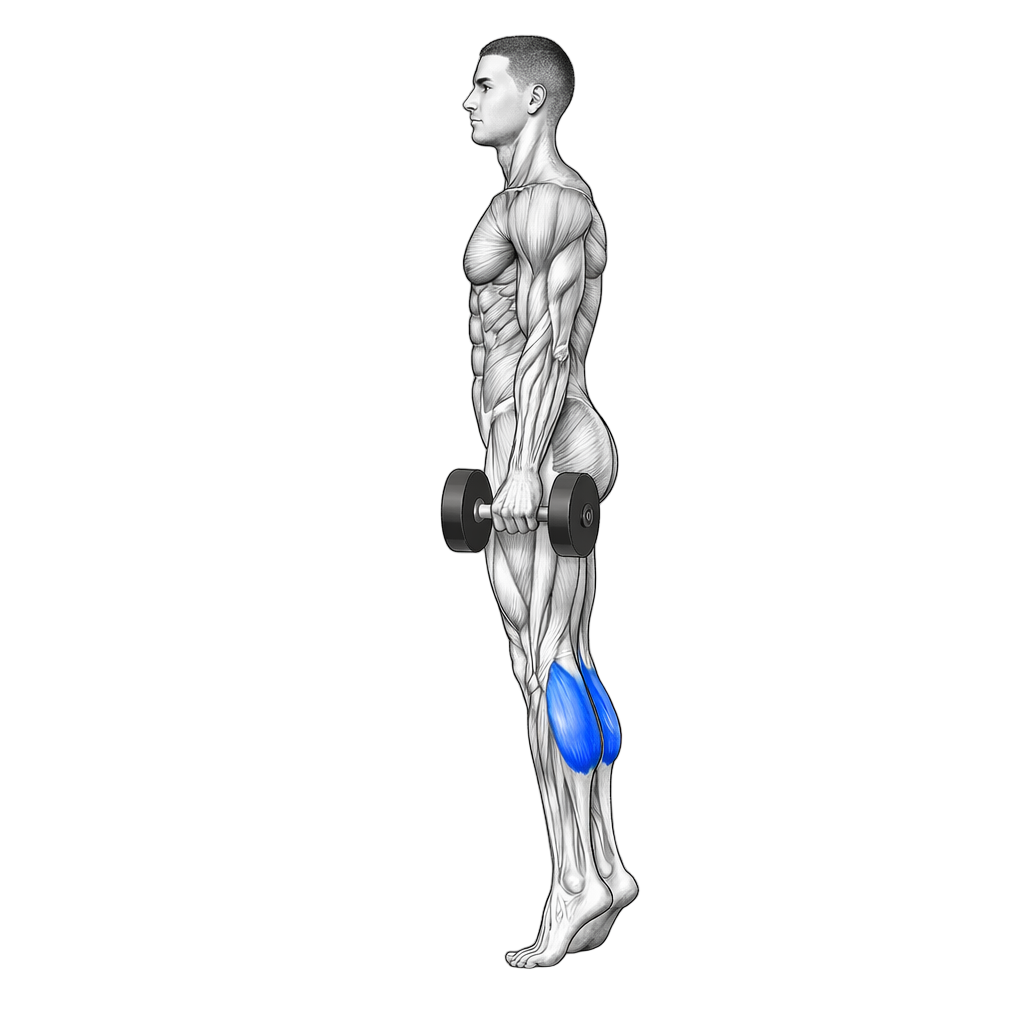
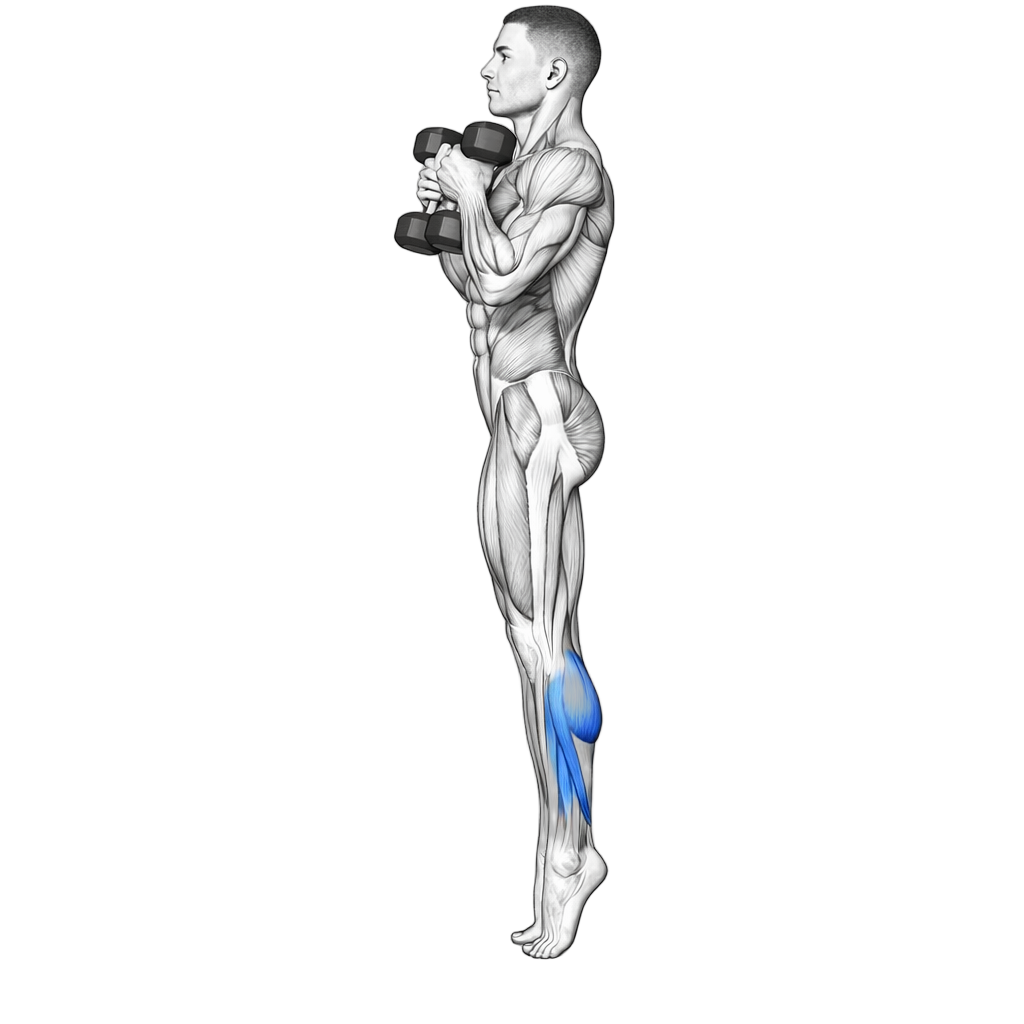
Bent knees shift the work from the gastrocnemius to the soleus, a different muscle that standing raises largely skip. Training both is what builds complete lower legs, so the seated version is a complement, not a duplicate.
Stand them vertically on your thighs just behind the knees and keep a hand on each the whole set. If they wander toward your hips, the load shifts off the working line and the reps get easier for the wrong reason.
The soleus handles higher reps well, so live mostly in the 12 to 20 range with a full heel drop and a pause at the top. Chasing heavy weight usually just shortens the range, and short-range calf work builds nothing.