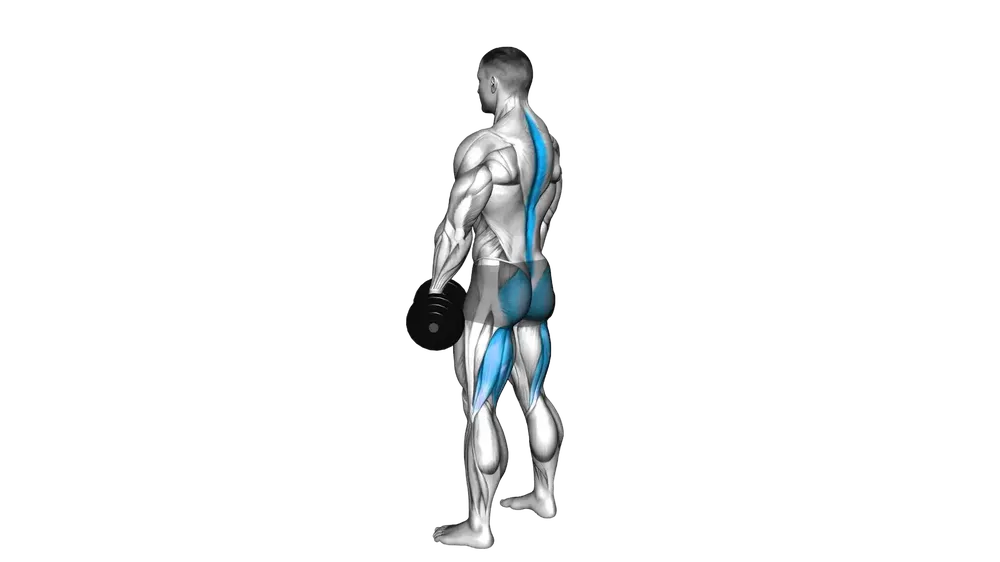
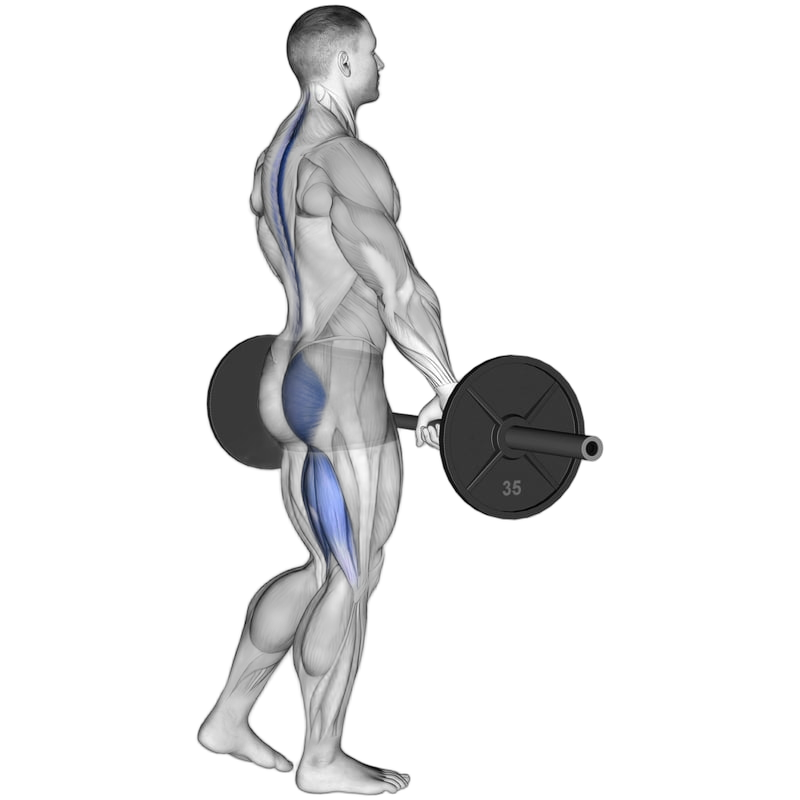
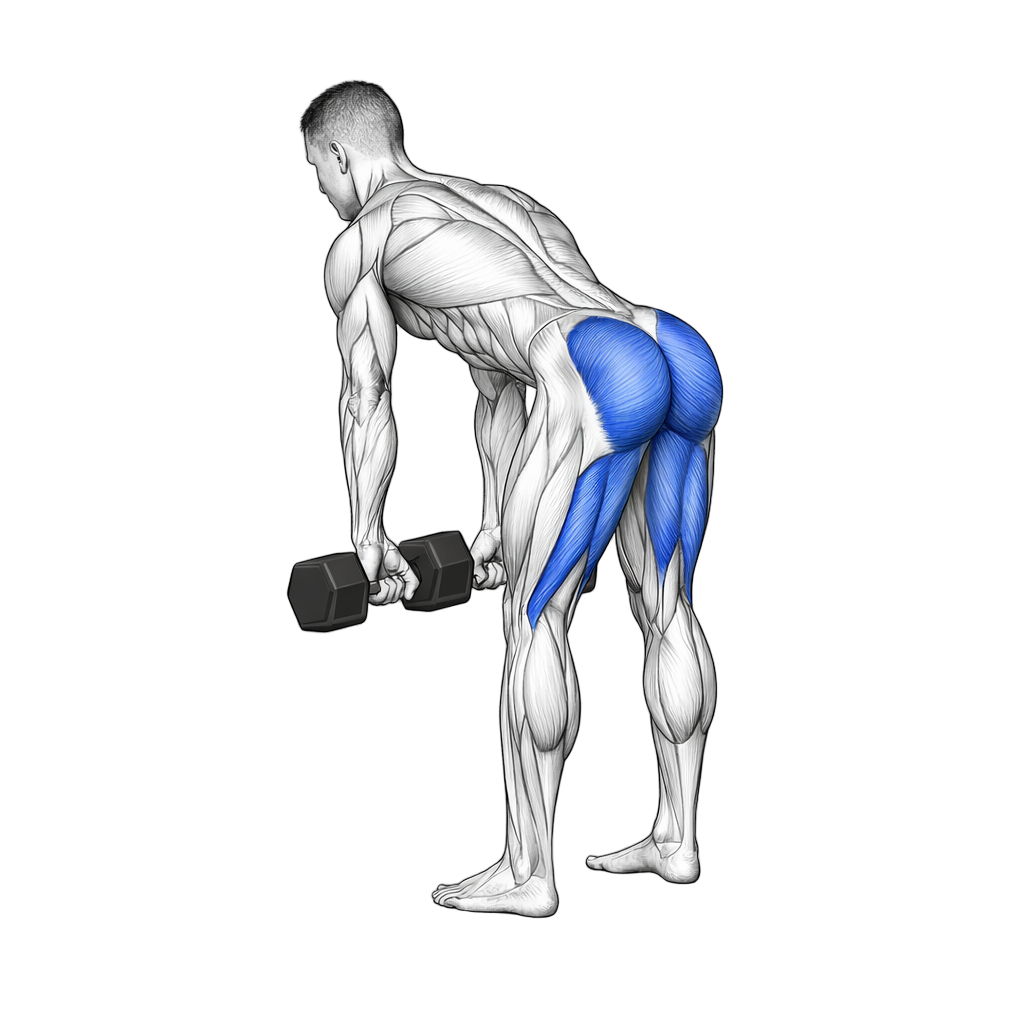
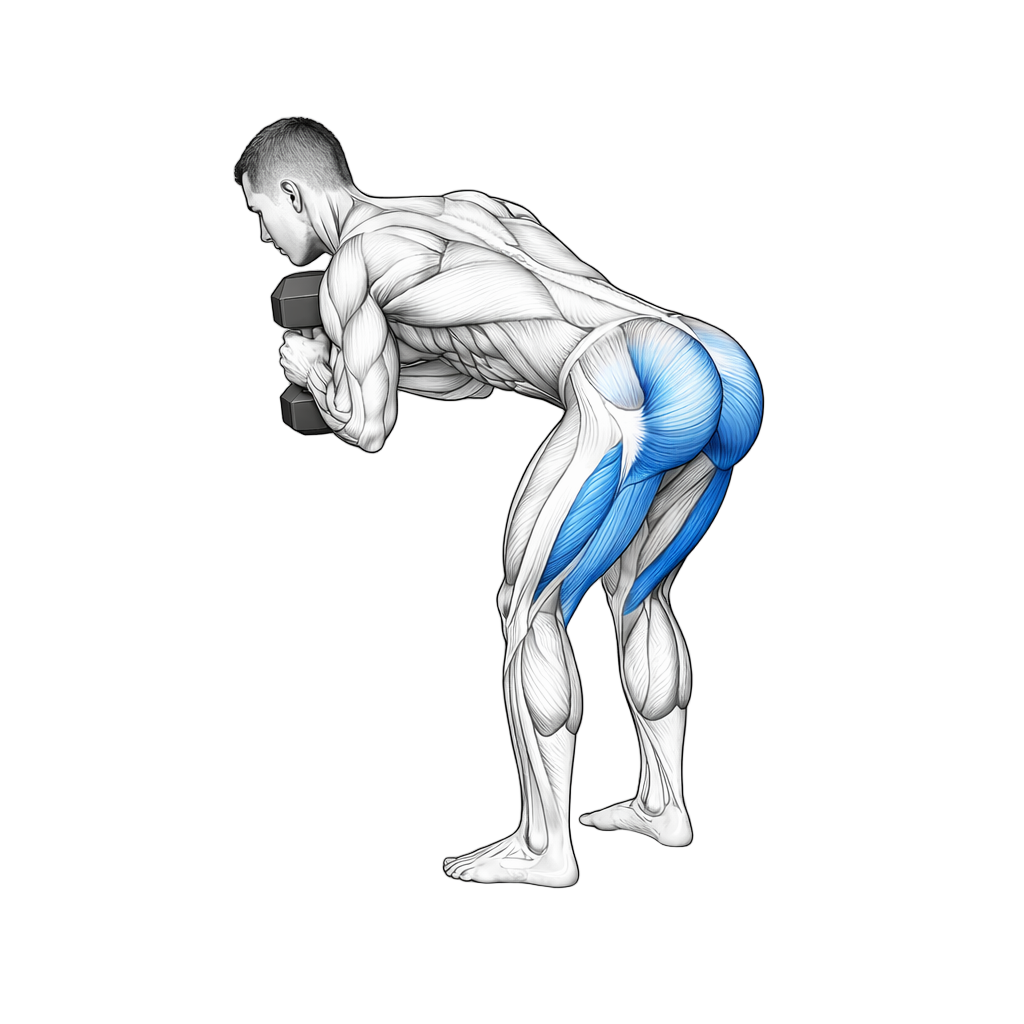
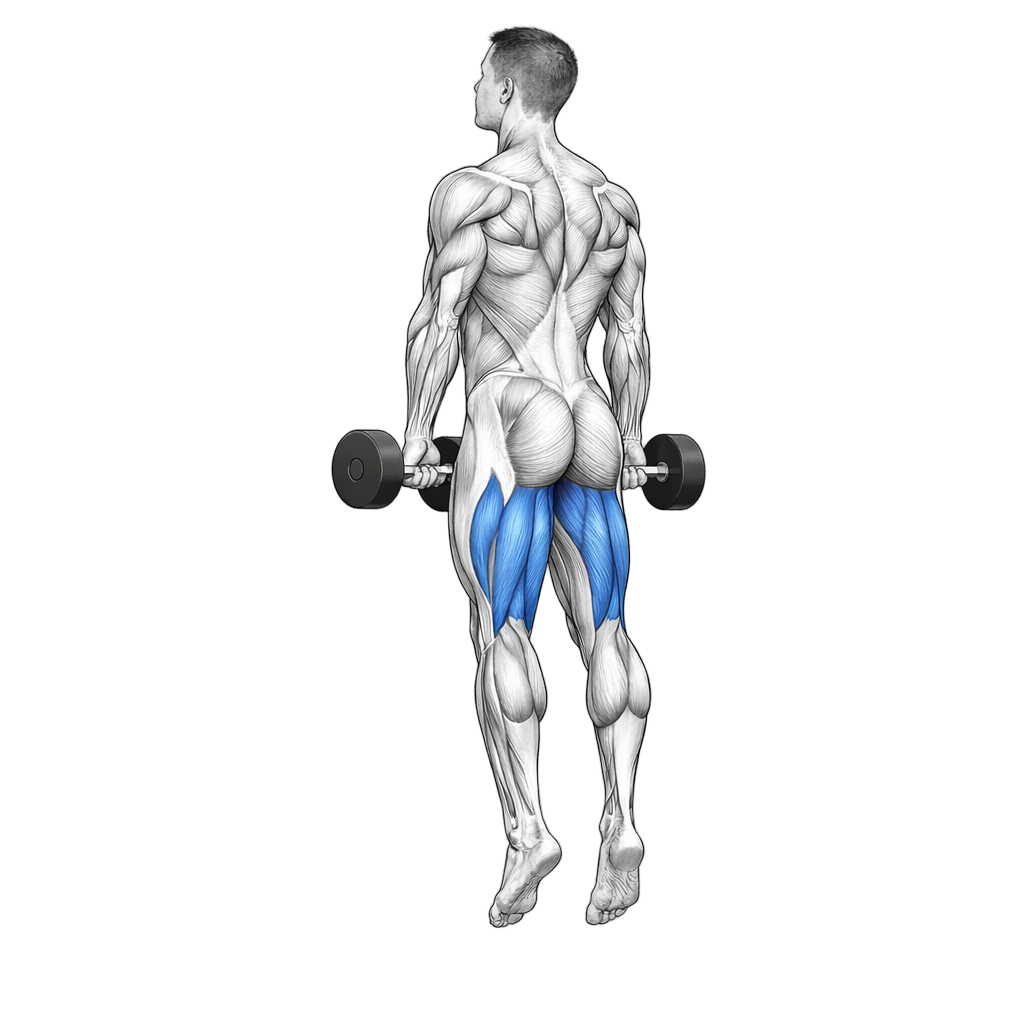
Hinge low, then row at the bottom for back and hammies.
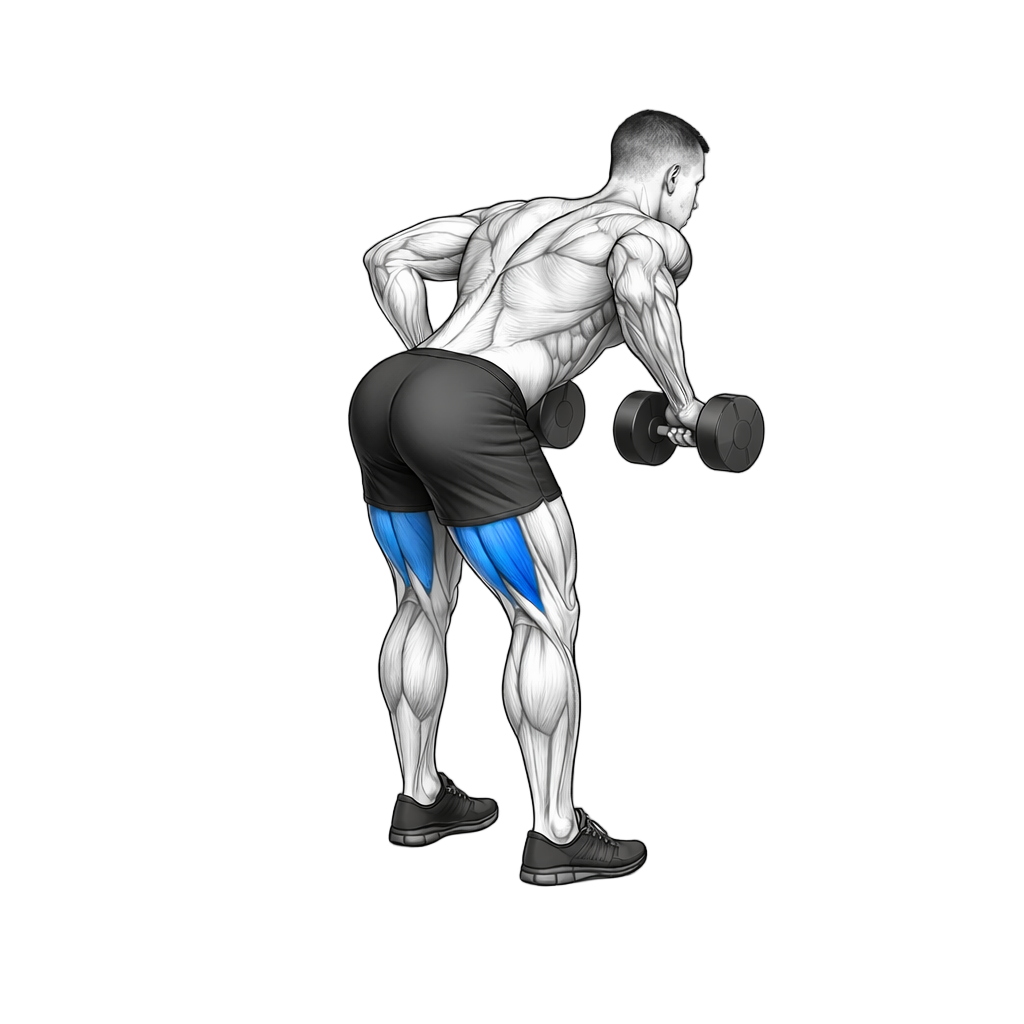
Row from the hinged position, don't stand up before you pull.
The RDL half loads the hamstrings through a deep stretch as you push your hips back, and instead of standing straight up, you hold that bottom hinge and row. Pausing there means the hamstrings and glutes work isometrically to hold the position while you pull, stacking extra time under tension onto every rep. It is a two-for-one that trains the hinge and punishes any weakness in holding it.
Rowing from the held hinge is the whole point. Your posterior chain has to lock the position isometrically while you pull, which turns the row into a test of your hinge as much as your pulling strength. Standing up first would just be two easier exercises in a row.
The row, almost always. Pick dumbbells based on what you can row cleanly from a flat-back hinge, which will be lighter than your straight RDL weight. The RDL portion still earns plenty from the slow, stretched descent.
Somewhat, since it holds the hinge during the row, but it should not be the story of the set. Shorten the pause, lighten the load, and make sure your hips are back and your lats are doing the rowing. If the back rounds, the set is over.