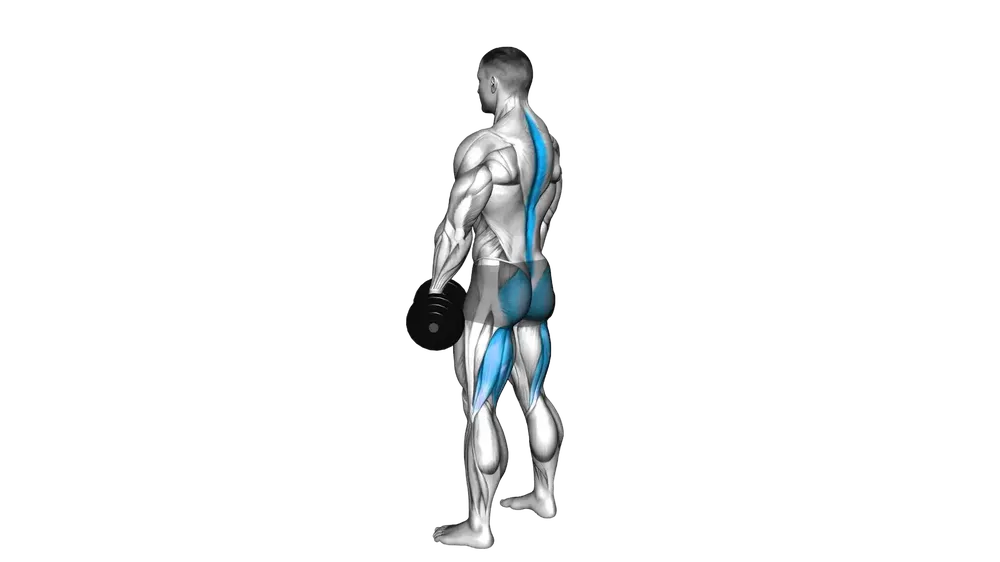
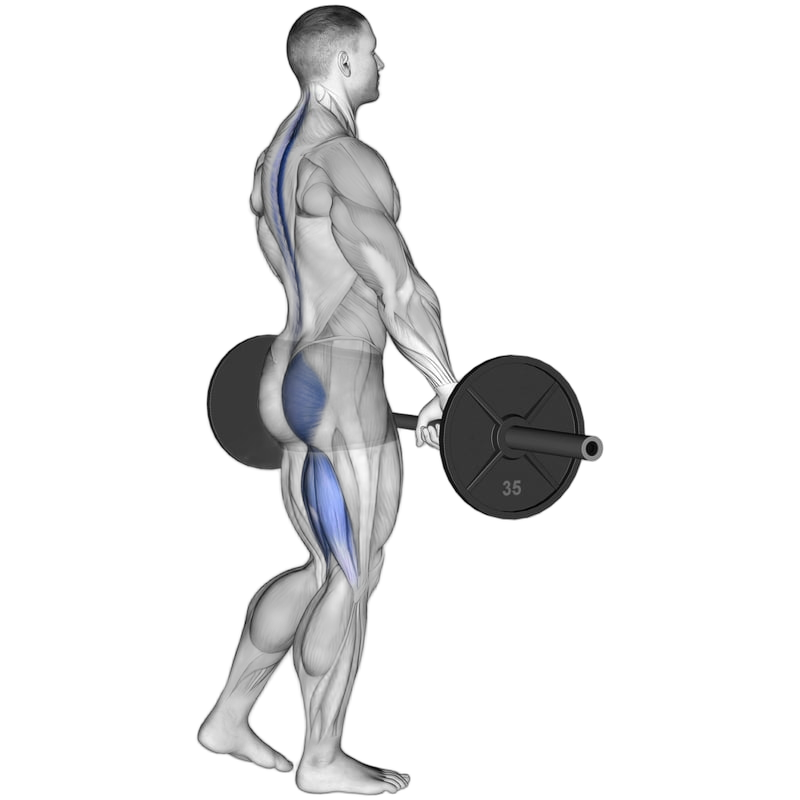
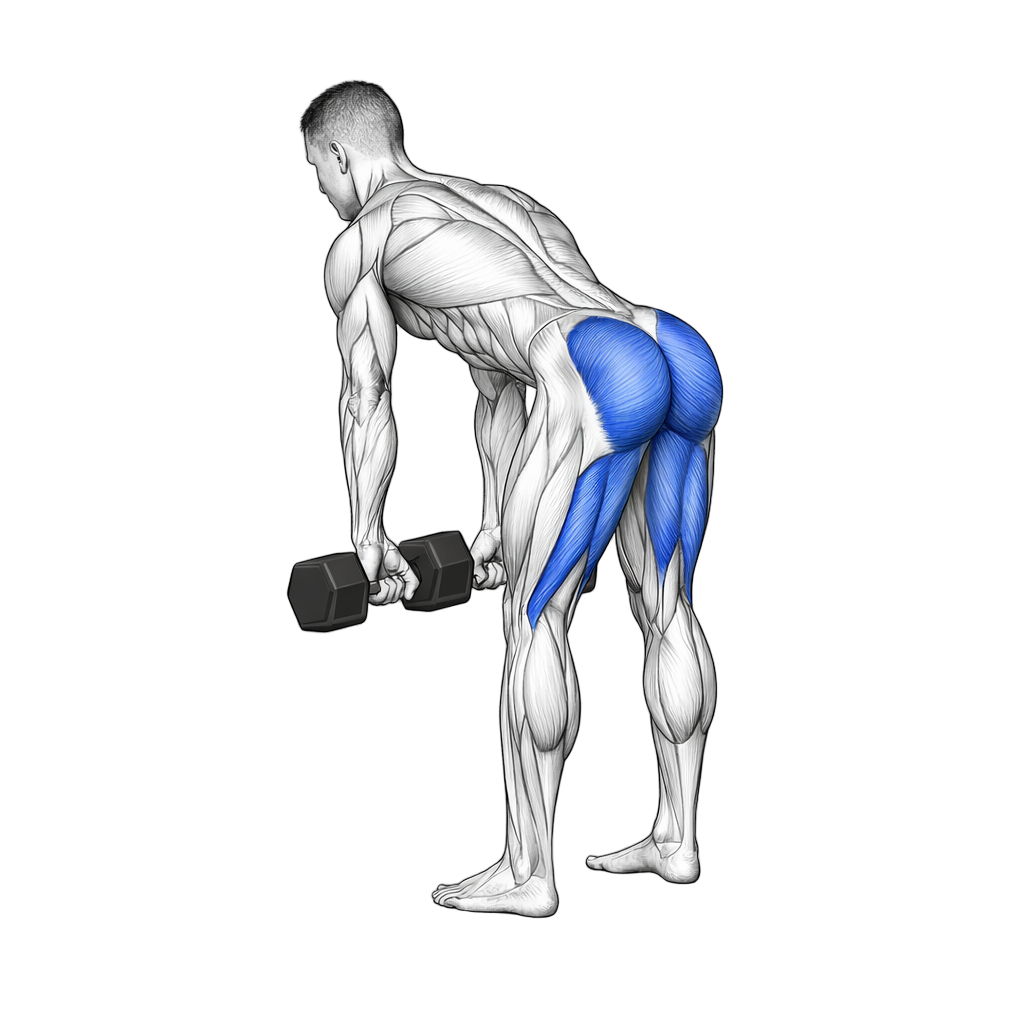
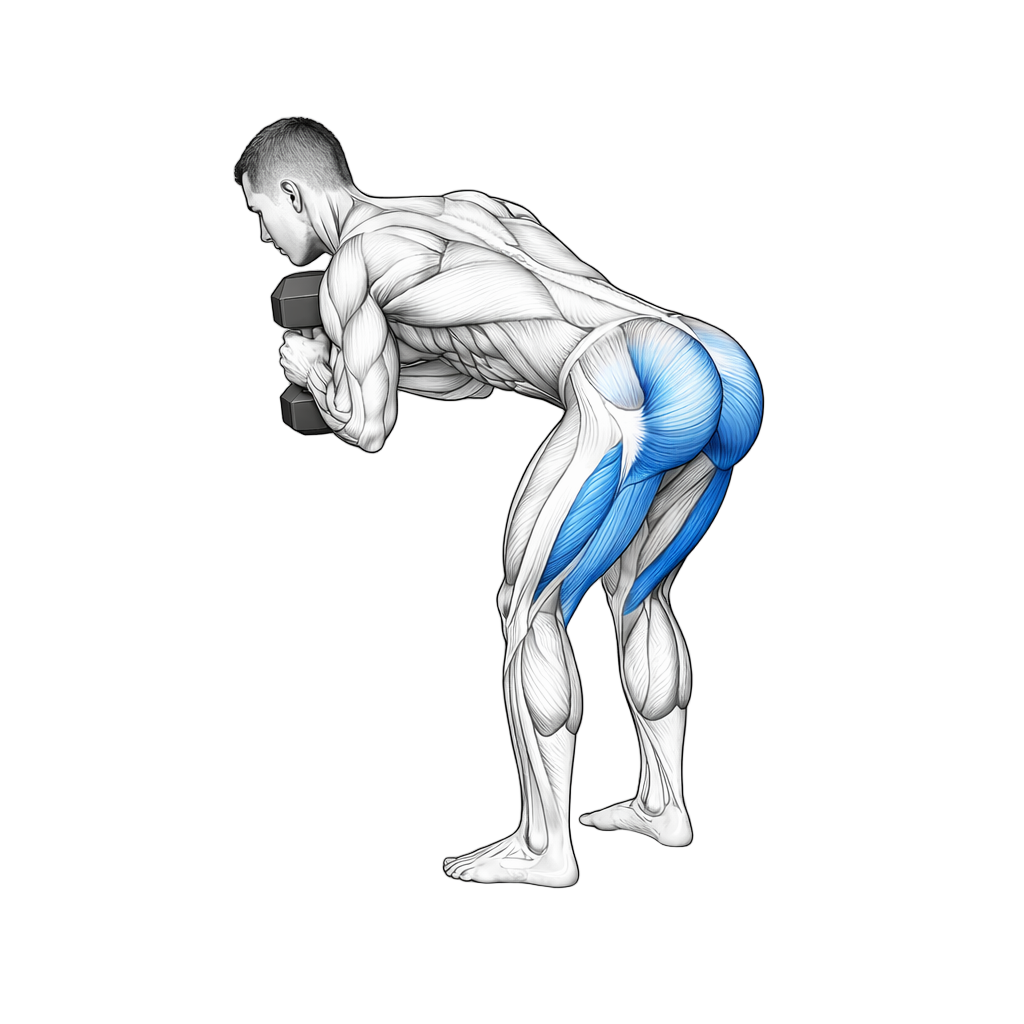
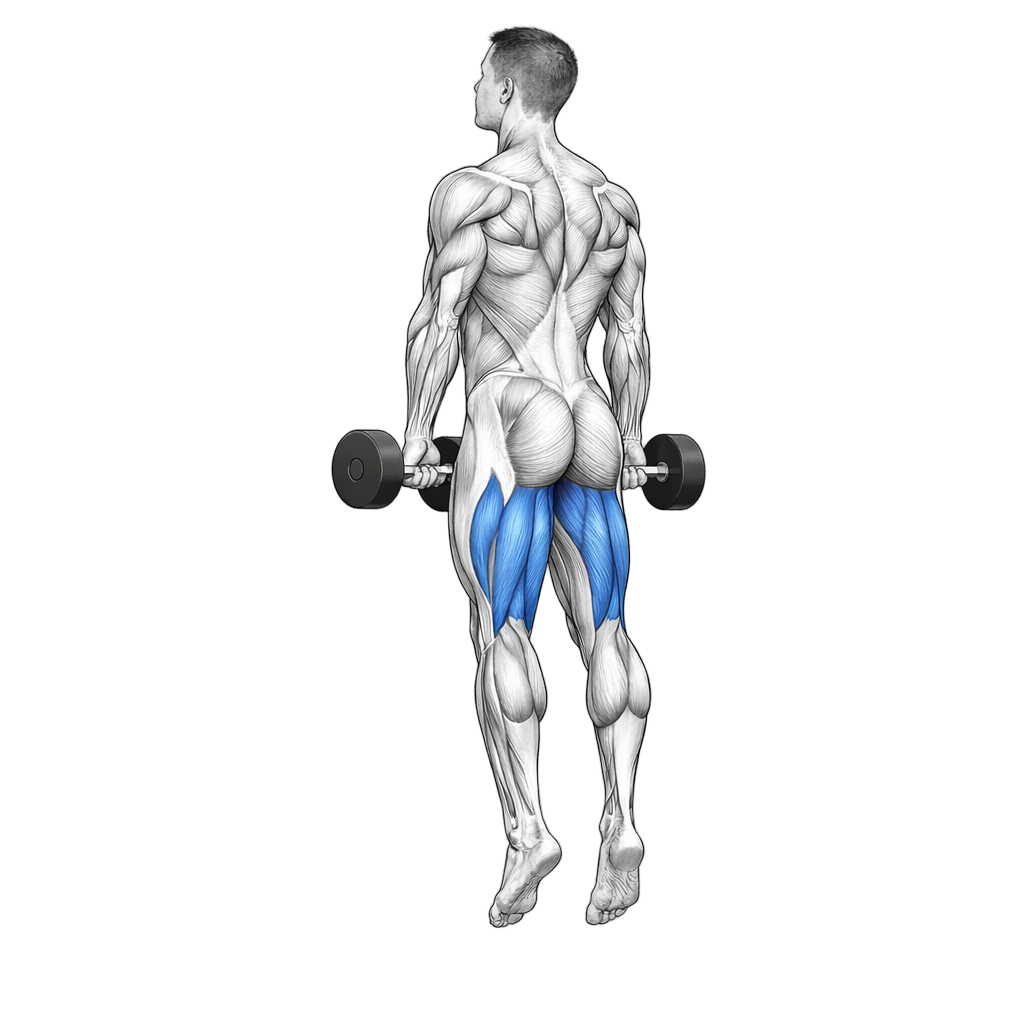
Single-leg hamstring work without the single-leg balance fight.
The back foot just helps you balance. Make the front-leg hamstring do all the work.
The B-stance splits the difference between a two-legged and single-leg RDL, the rear foot stays down on its toes as a kickstand so the front leg takes most of the load without the balance circus. Hinging over the loaded leg puts a deep stretch through that hamstring while the glute drives the hips back through. It earns its place as the way to train each side of the posterior chain independently while still going respectably heavy, one leg at a time.
In a B-stance RDL the back foot stays on the floor for balance, so you can focus on loading the front leg instead of wobbling. A true single-leg RDL floats the back leg entirely, which trains balance more but usually forces lighter weights.
Aim for most of it, roughly 80 percent or more, with the back toes just kissing the floor. If you catch yourself pushing through the rear foot, shift your hips over the front leg and lighten the dumbbells.
A strong stretch down the back of the front thigh on the way down, and the glute of that same leg driving you back up. If your lower back is doing the talking, shorten the range and re-brace before each rep.