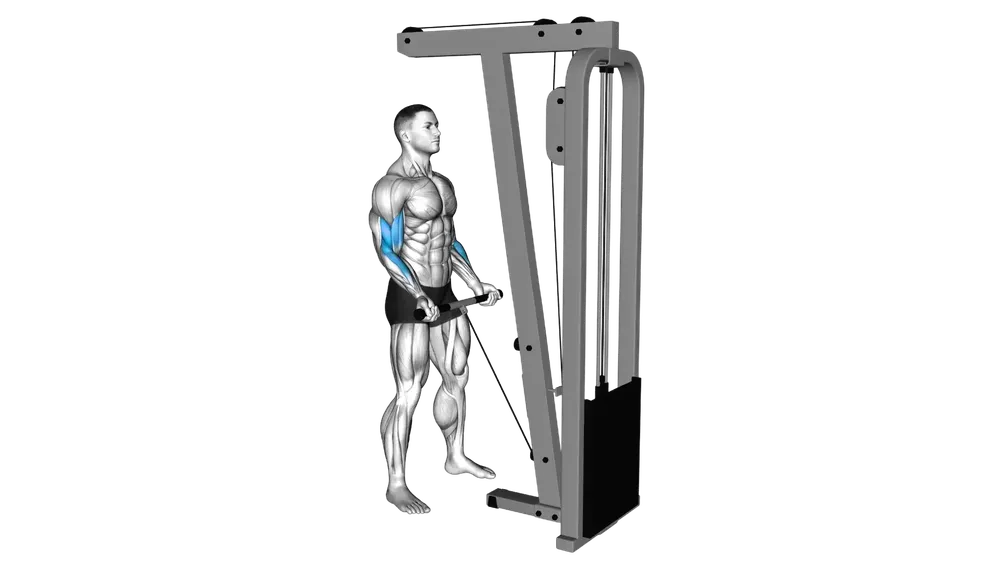
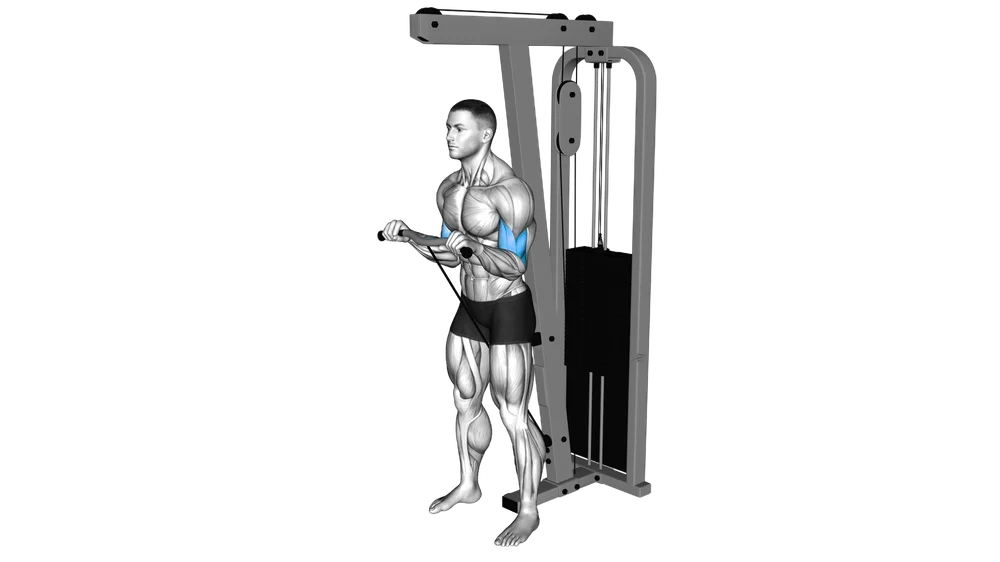
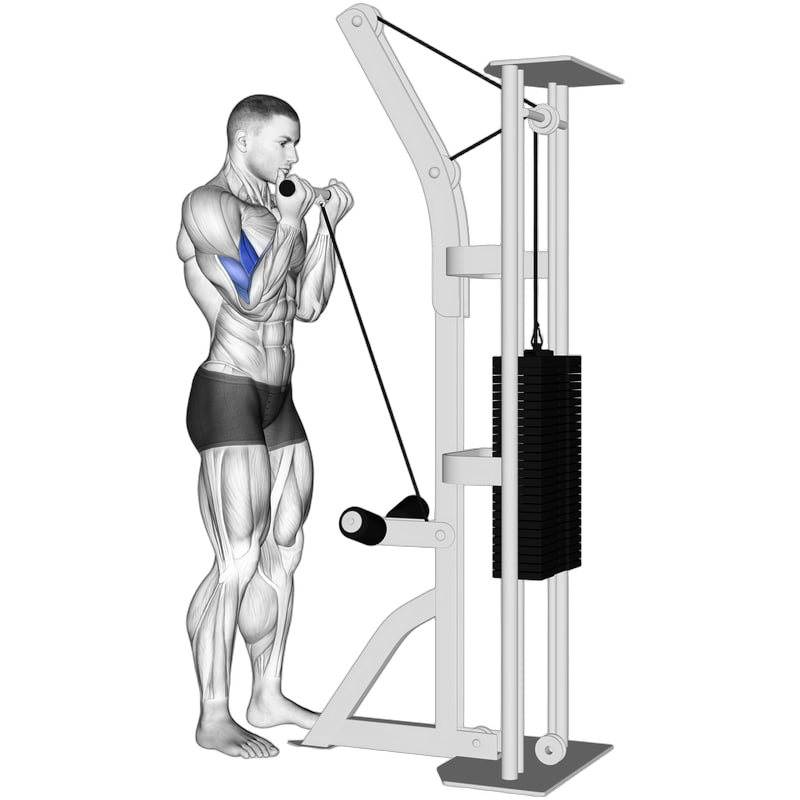
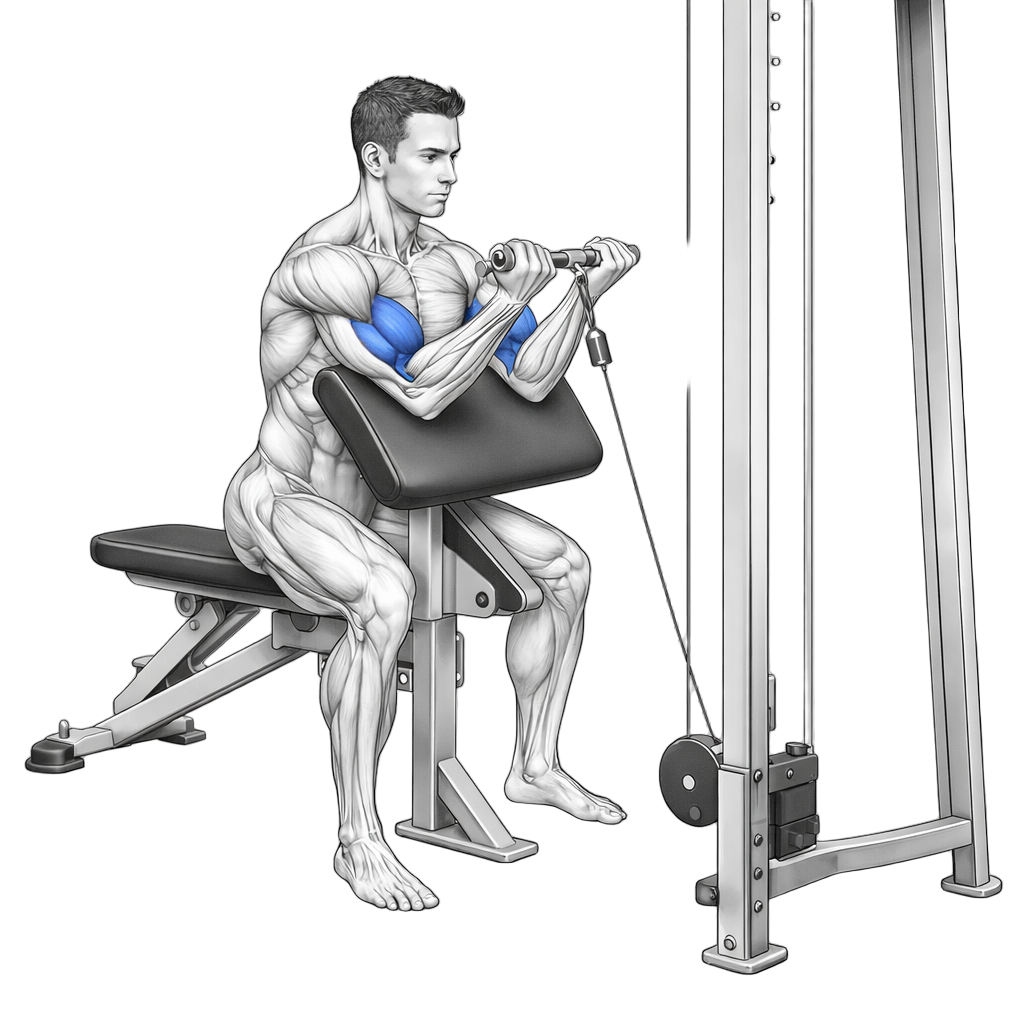
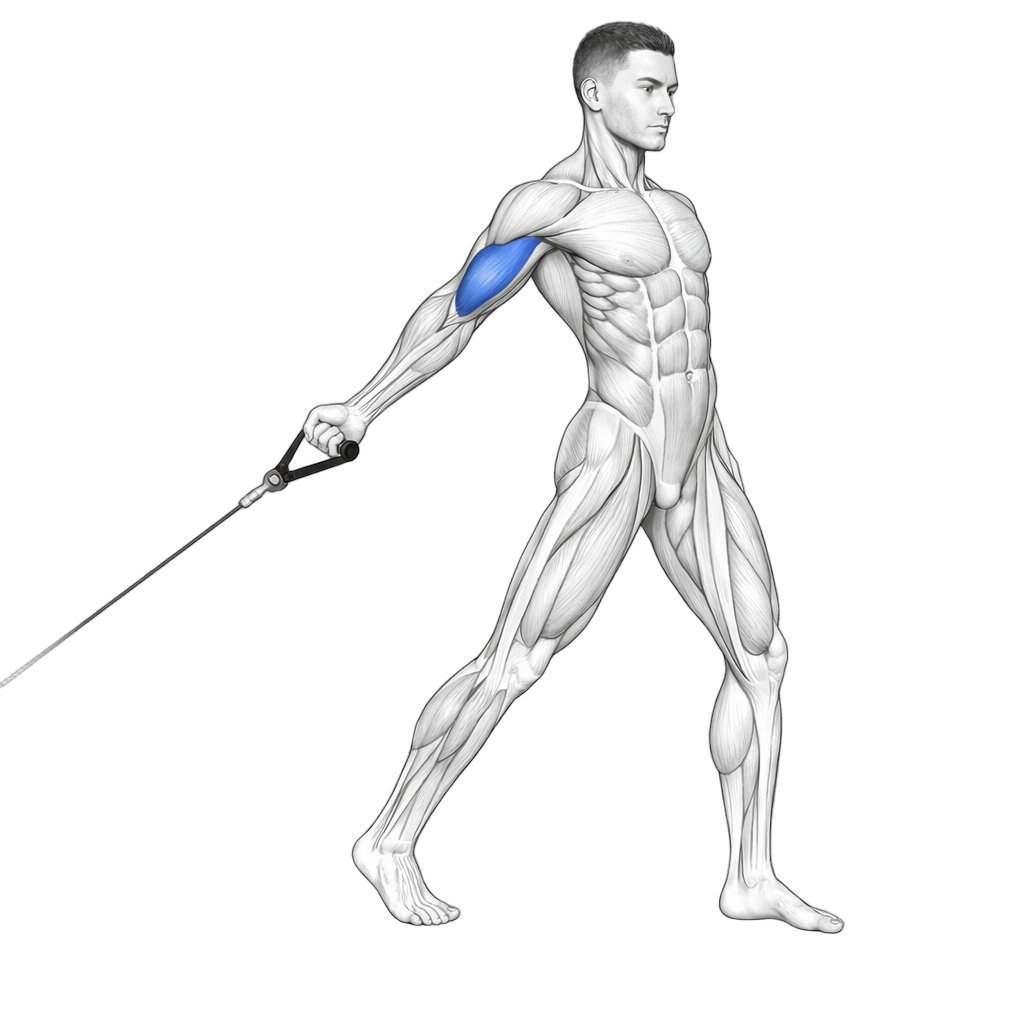
Constant cable tension hits your biceps and forearms at once.
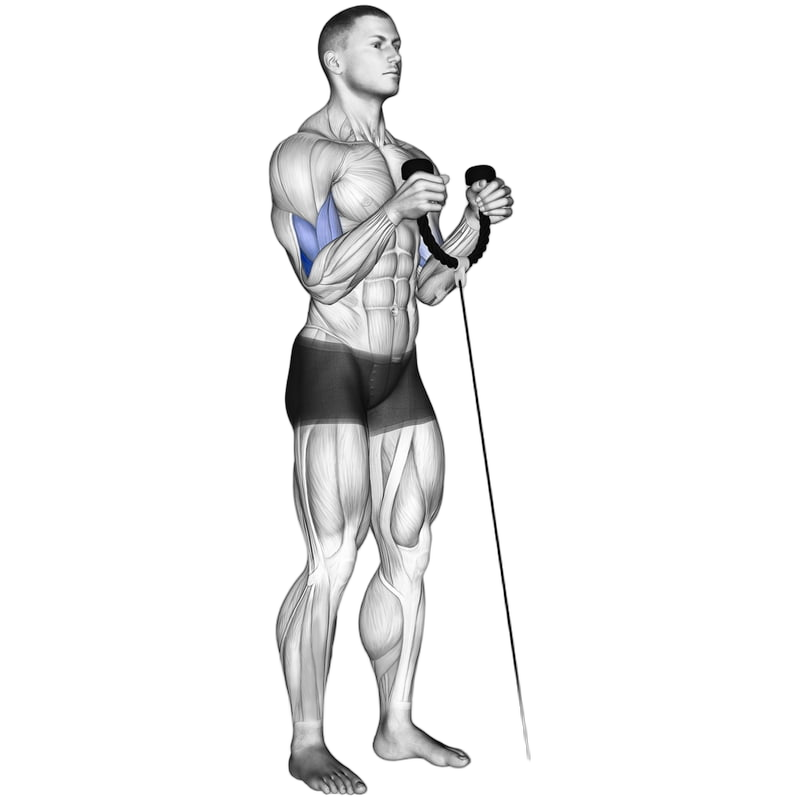
Keep your elbows locked at your ribs, let the cable pull you into a full stretch.
The neutral, palms in grip on the rope shifts the curl's workload so the forearms share the bill with the biceps, building the thickness that makes arms look strong from every angle. Off the low pulley, the cable keeps pulling through the bottom stretch where free weights switch off, and the rope lets each hand sit at its natural angle. Elbow flexion with the tension left running.
Grip. Palms up curls bias the biceps directly, while the neutral hammer grip pulls the forearm muscles into the lift alongside them. Hammers usually let you move a bit more weight and are the go to for arm thickness.
The dumbbell version is heavier and simpler. The rope adds constant cable tension, especially at full stretch, and lets your wrists settle into their own angle. Ideal as the strict, pump focused version of the two.
As set up here, both together, which keeps the set dense and symmetrical. Keep the elbows nailed to your ribs either way. If one arm keeps hijacking the rope, spend some time on single arm work to even things up.