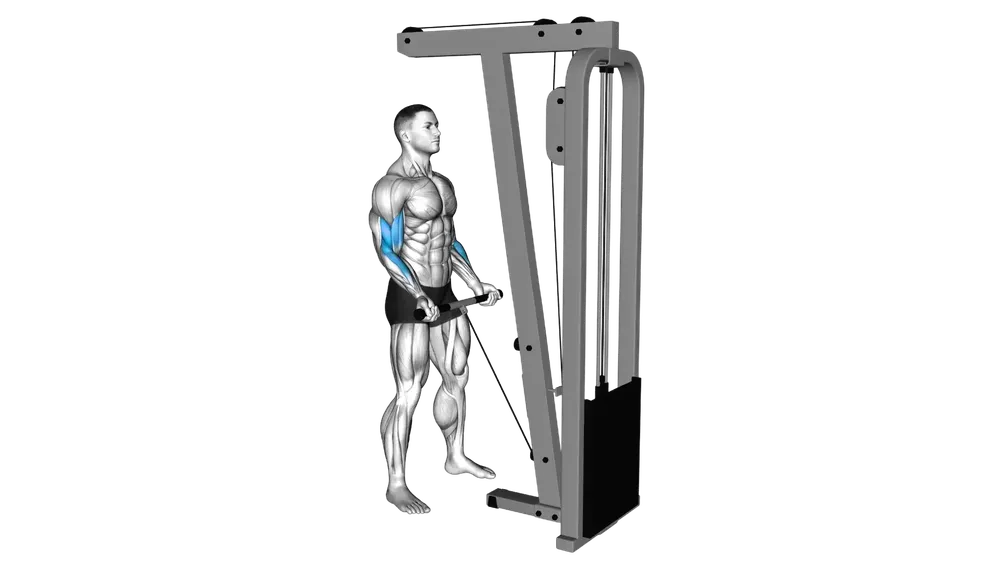
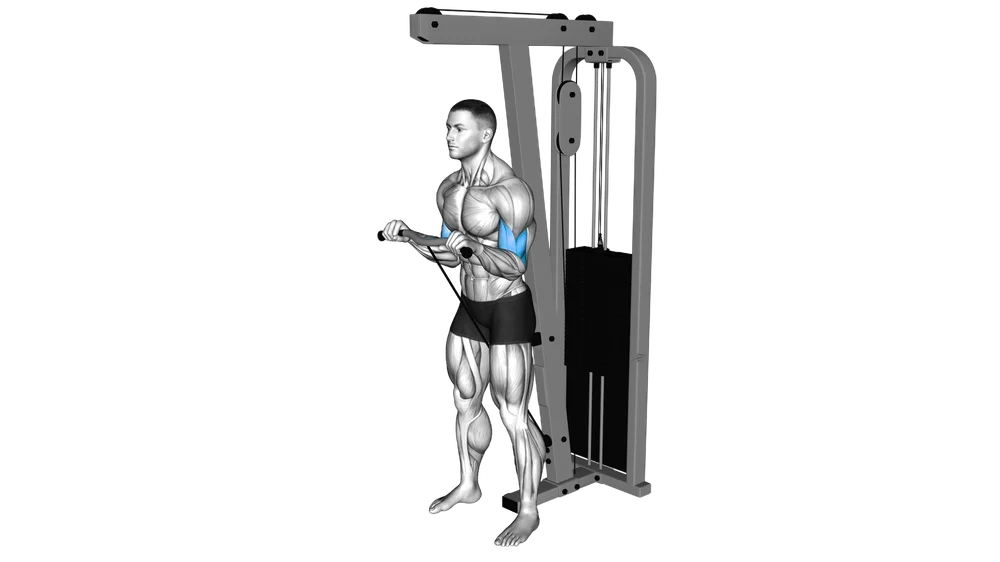
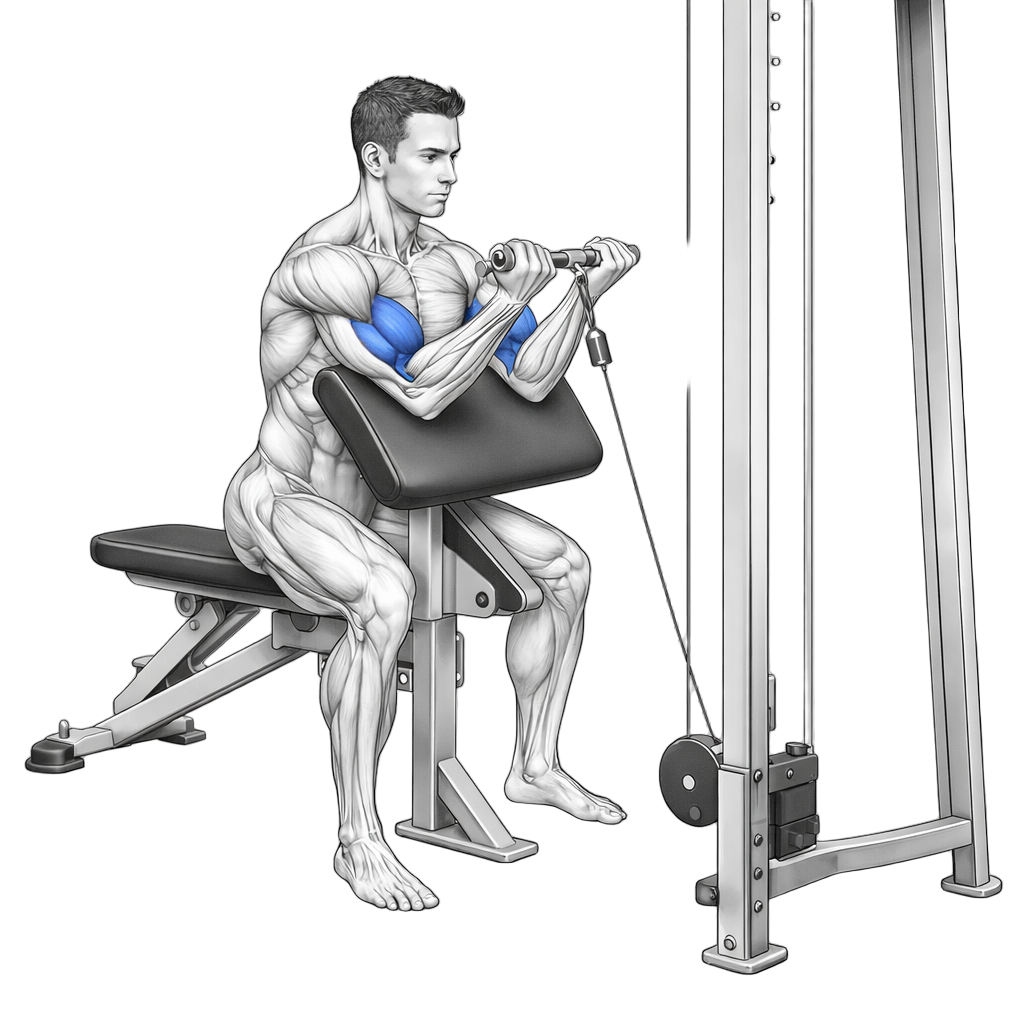
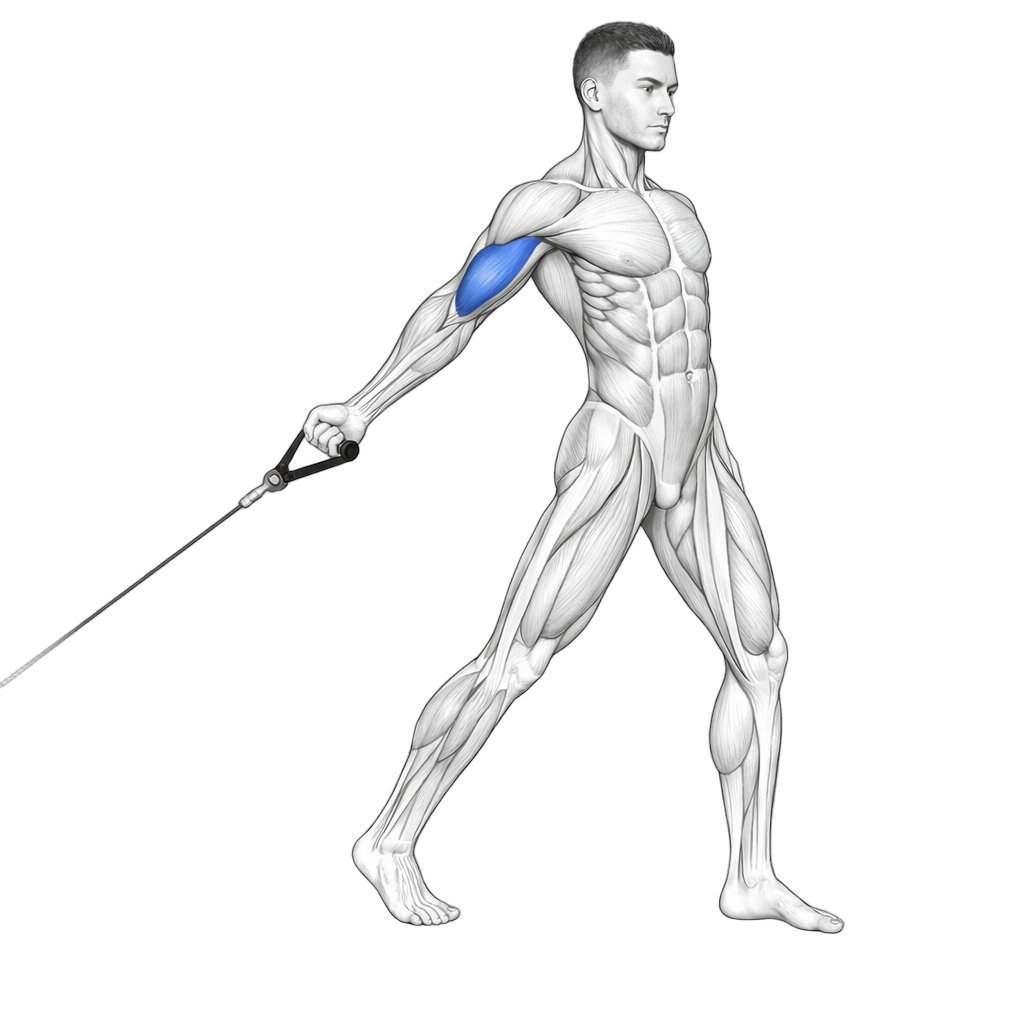
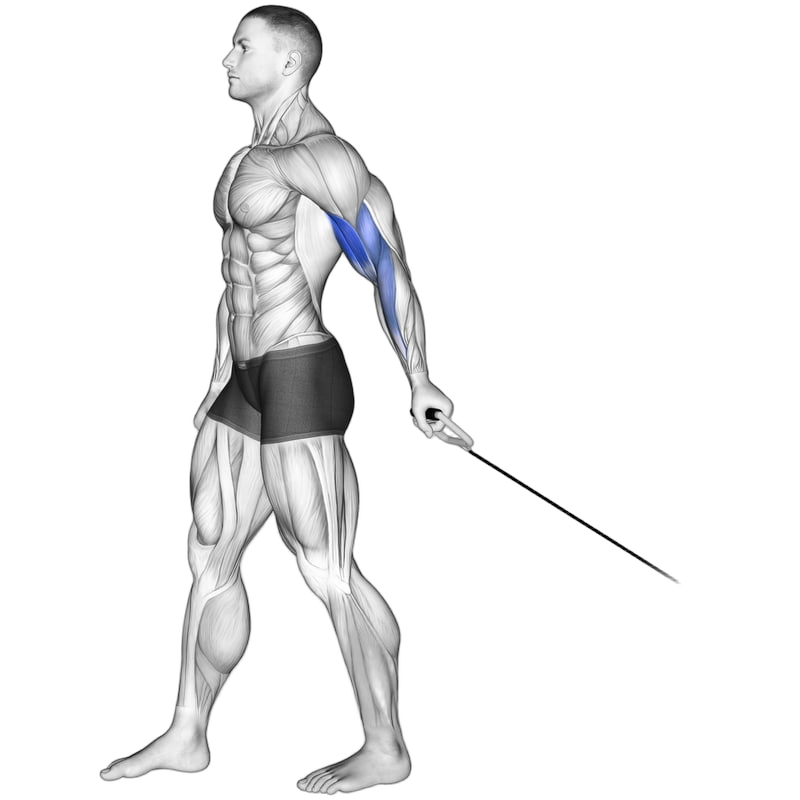
Constant tension top to bottom for a relentless pump.
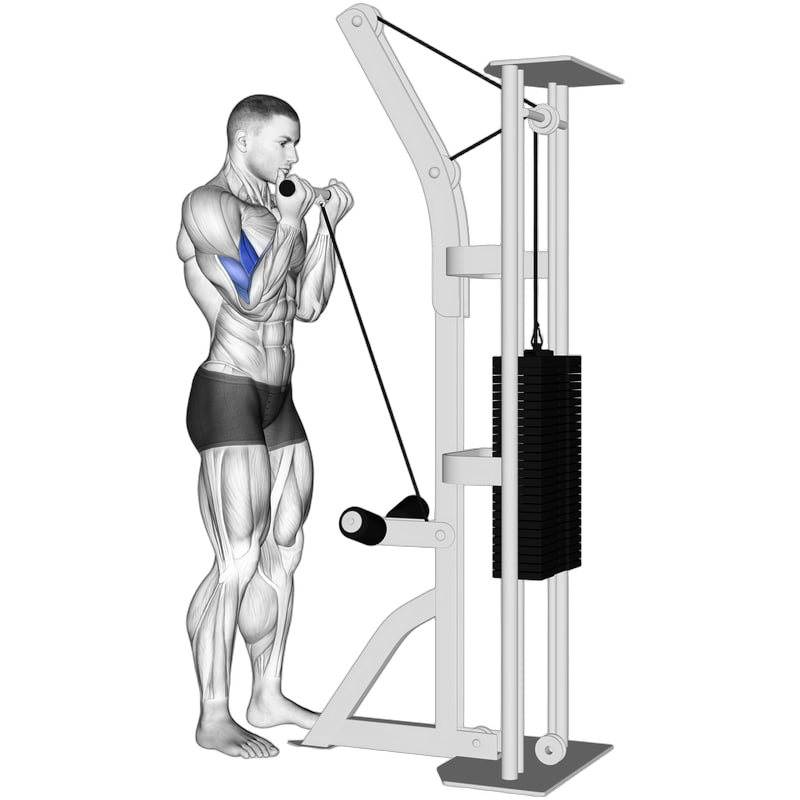
Don't let the stack touch down between reps, stay loaded the whole set.
Curling off a low pulley changes one crucial thing versus free weights: the cable pulls against your biceps through every centimetre, including the bottom stretch and the top squeeze where a dumbbell goes quiet. Elbows pinned, bar travelling from full hang to chest, tension never blinking. It is the pump you can steer, one pin adjustment at a time.
Not better, differently loaded. Free weights are heaviest mid rep, cables stay loaded at the stretch and the squeeze too. Smart arm training usually keeps a free weight curl for load and a cable curl for the constant tension.
The second the plates rest, your biceps get a free break and the set loses its best feature. Stop just short of the stack settling, keep the cable taut, and the muscle works from the first rep to the last.
The straight bar locks in a full underhand grip for maximum bicep bias, but it can nag some wrists. A rope or EZ attachment gives a friendlier angle. Both work, comfort should pick.