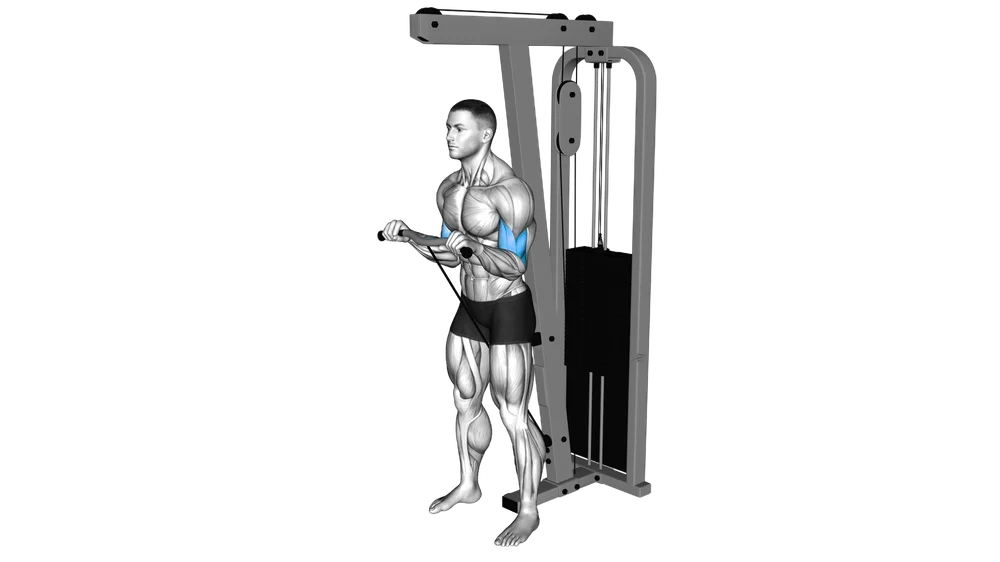
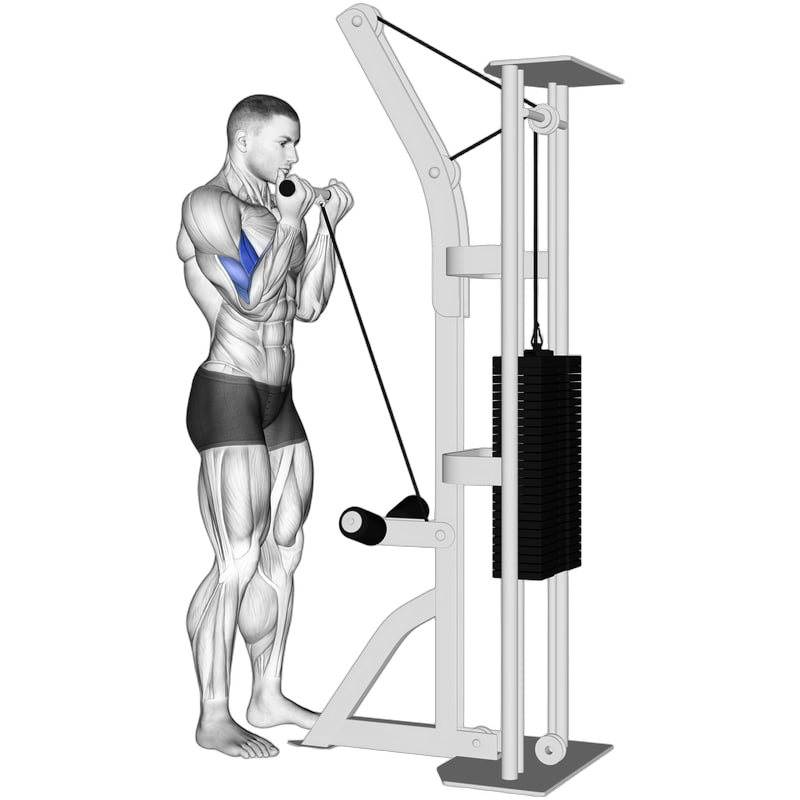
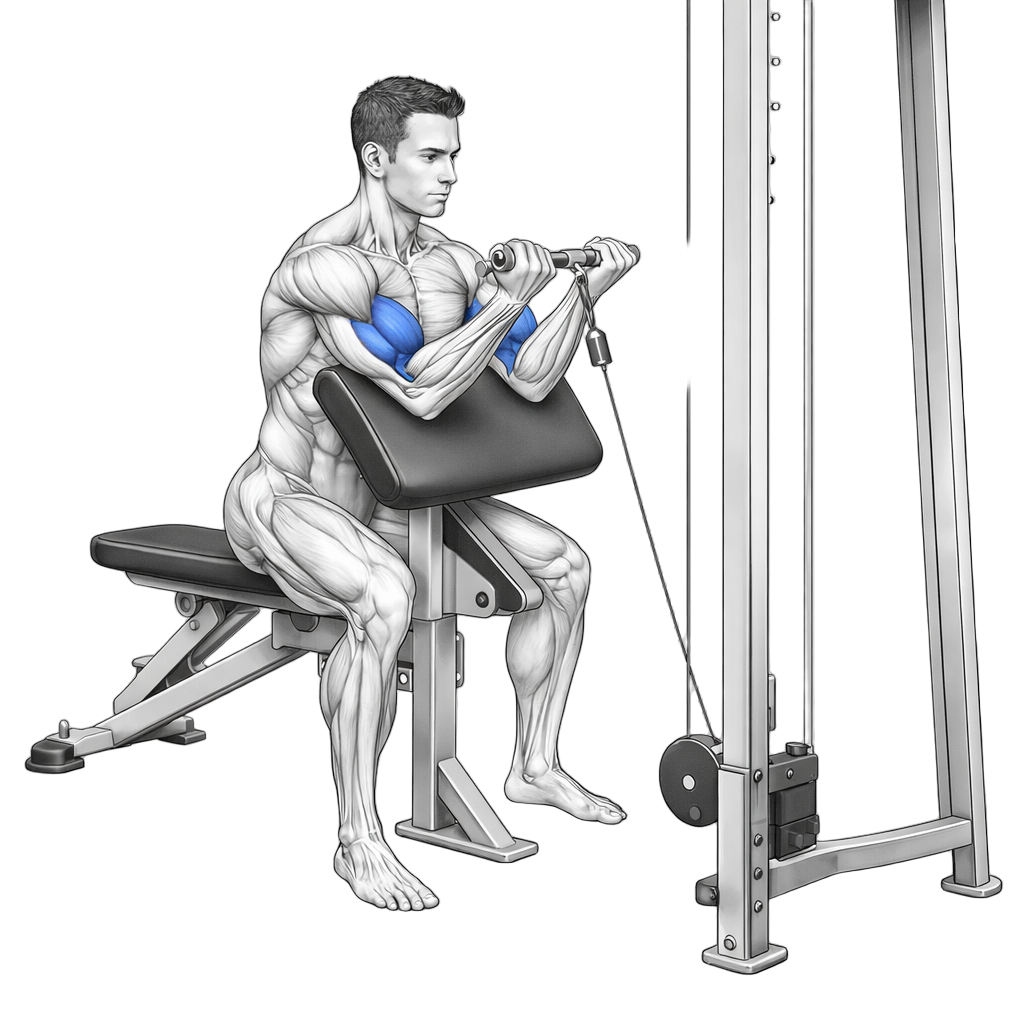
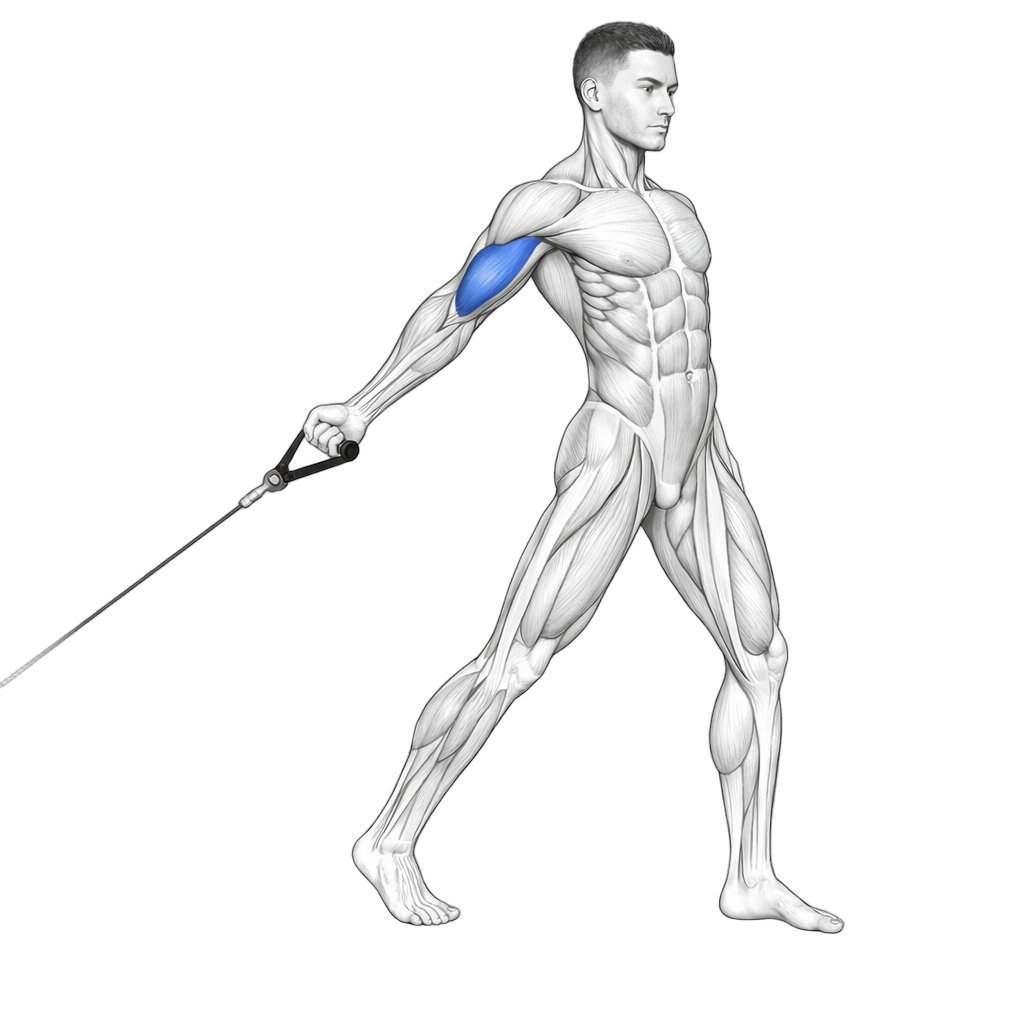
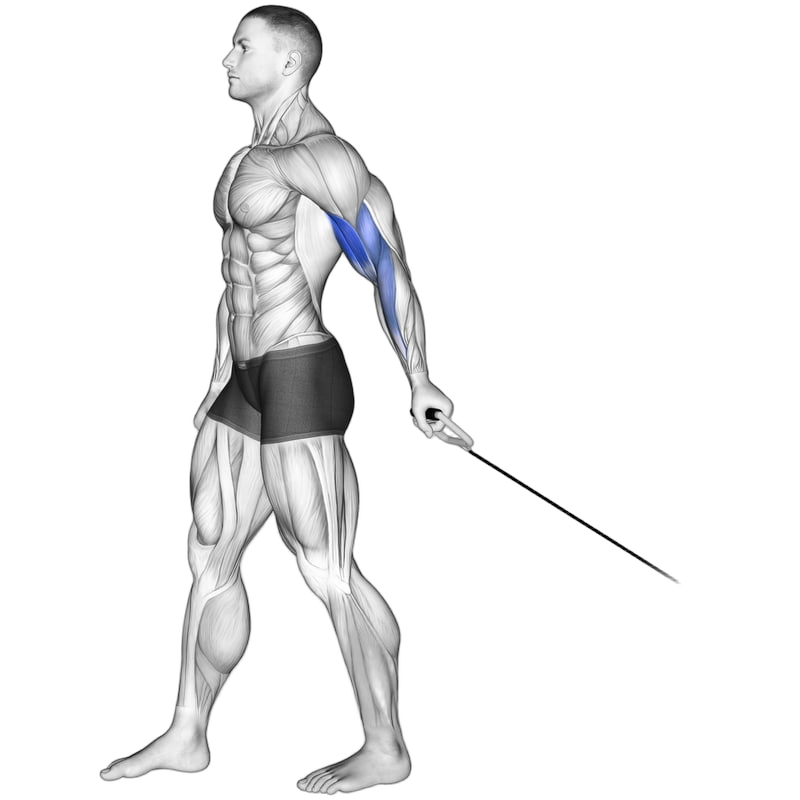
Biceps under tension from bottom to top.
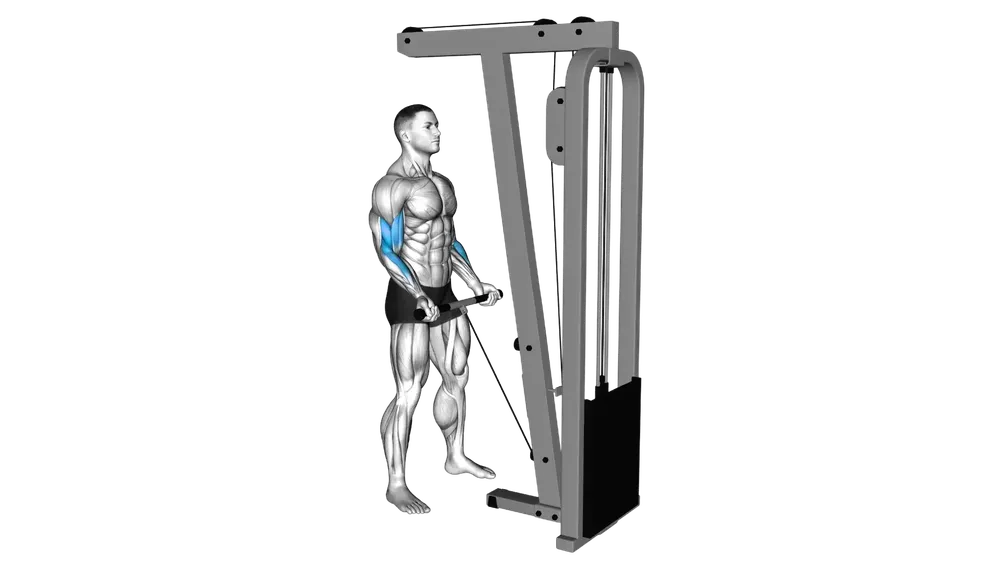
Keep your elbows still at your sides, don't let them drift forward to cheat.
Curling from a low pulley means your biceps face resistance from the very bottom of the rep, where a barbell or dumbbell hangs almost effortlessly, right through to the squeeze at the top. That unbroken tension is why cable curls produce a pump that free-weight curls struggle to match at the same weight. It earns its place as an arm-day staple, especially for higher-rep work where continuous tension does the growing.
Barbells let you go heavier, cables keep tension on the muscle through the whole range including the bottom. Most complete arm training uses both, but if your curls are all free weights, the cable version is the missing piece.
Your front delts are sneaking in to lift the weight higher. Pin your elbows to your sides, accept a slightly shorter range, and let the biceps do all the work, the squeeze will be twice as sharp.
The bar locks your wrists supinated, which is the classic biceps position. A rope lets your wrists stay neutral, shifting some work along the forearm, so use the bar as the default and the rope as a variation.