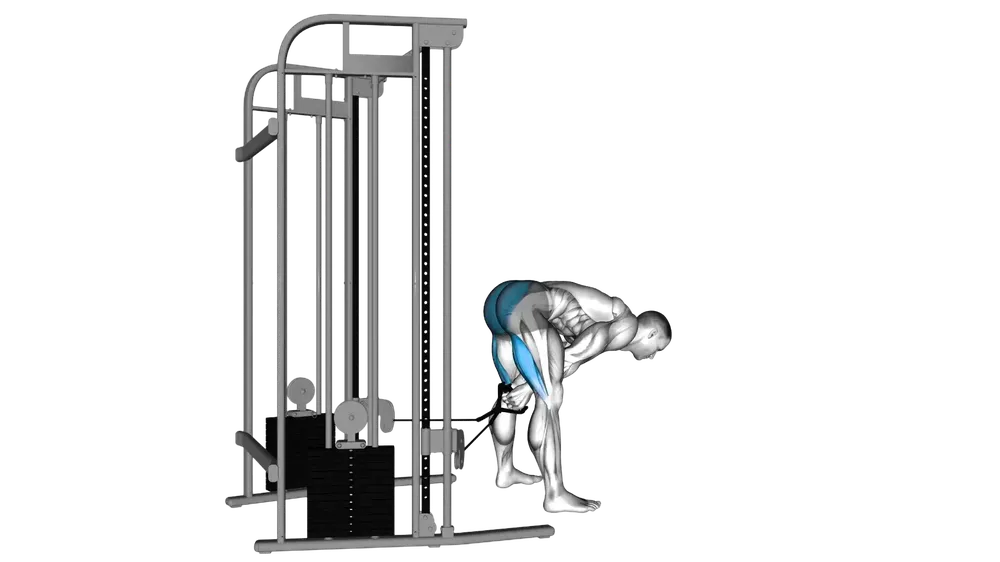
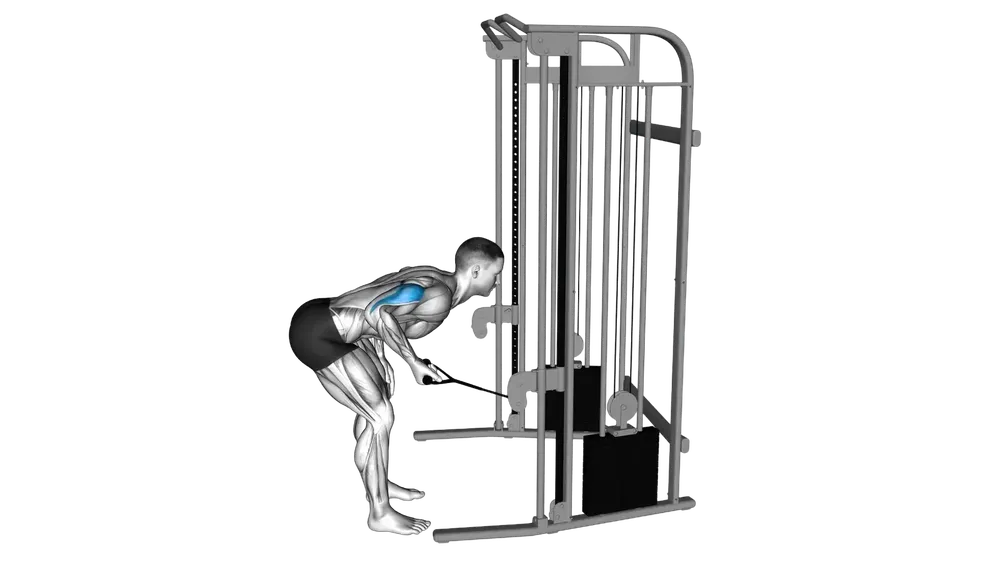
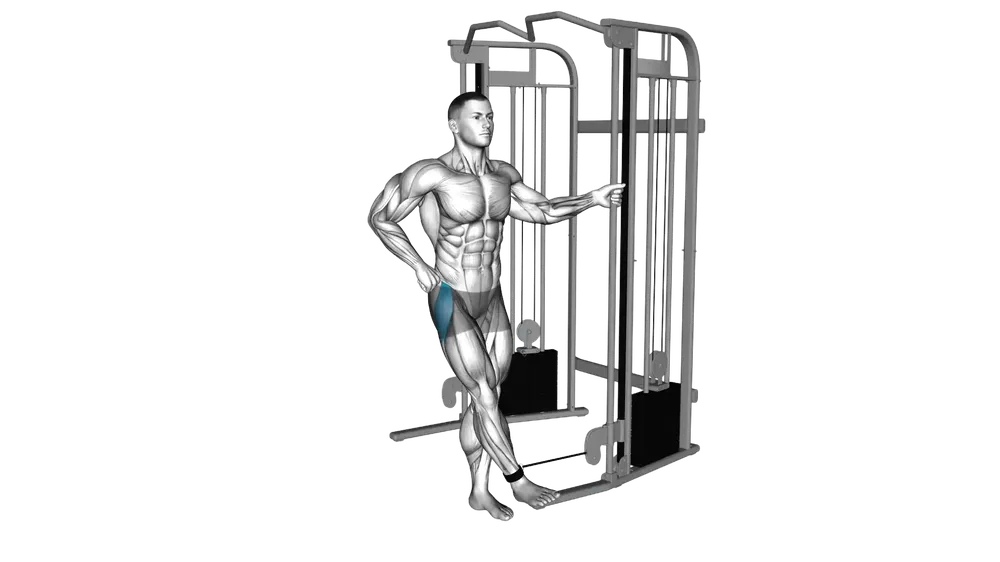
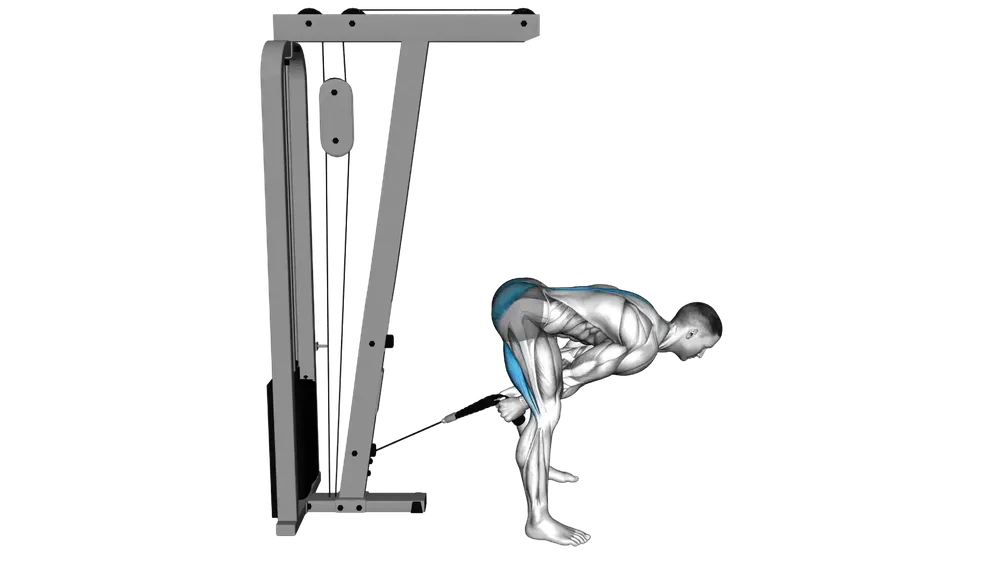
Isolated glute fire on the cable.
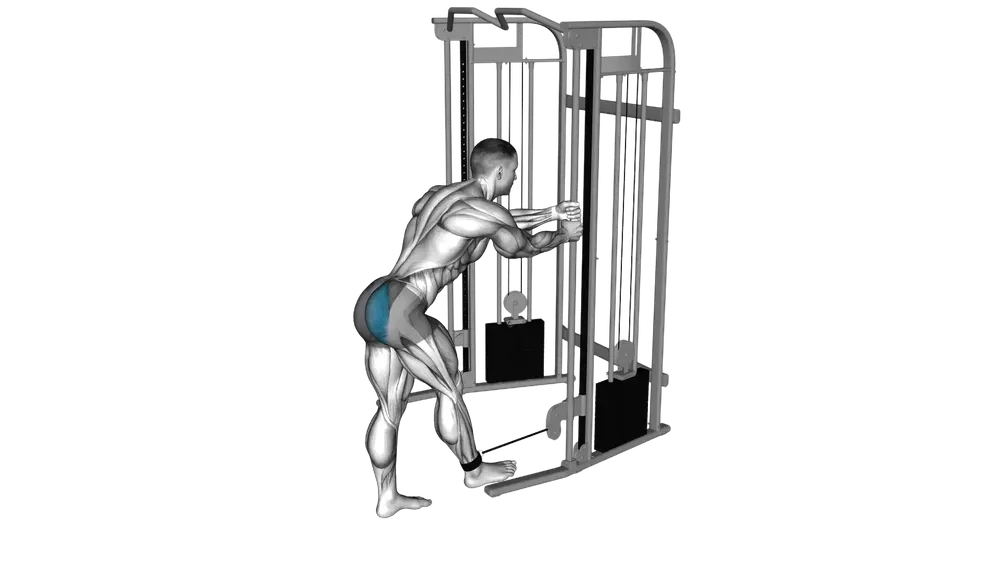
Move from the glute, not the lower back. Don't arch to gain extra range.
Cuffing one ankle to the low pulley and driving that leg straight back turns hip extension into an isolation lift, your glute powers the sweep while your hamstring assists behind the thigh, one leg working at a time with no squat or hinge to share the load. The cable resists from the very start of the arc, so even the first few degrees count. It earns a spot when you want direct glute volume without loading your spine, or when one side needs catching up.
You're arching to fake extra range. Your hip only extends so far, so brace your core, stop the leg where the glute stops it, and squeeze there, the range is shorter than most people want it to be.
Same pattern, different resistance. The cable pulls smoothly from the floor through the whole arc and lets you fine-tune your torso angle, while machines fix your position for you. Both work, the cable just travels to any gym with a stack.
Keep a slight, fixed bend. A locked knee turns it into a hamstring-dominant swing, and a knee that bends and straightens through the rep means you're kicking, not extending from the hip.