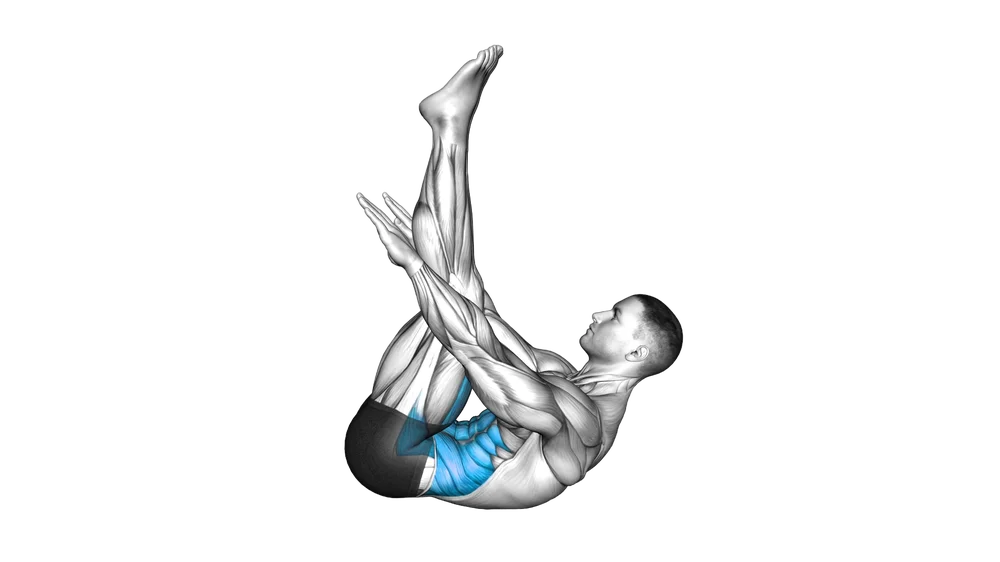
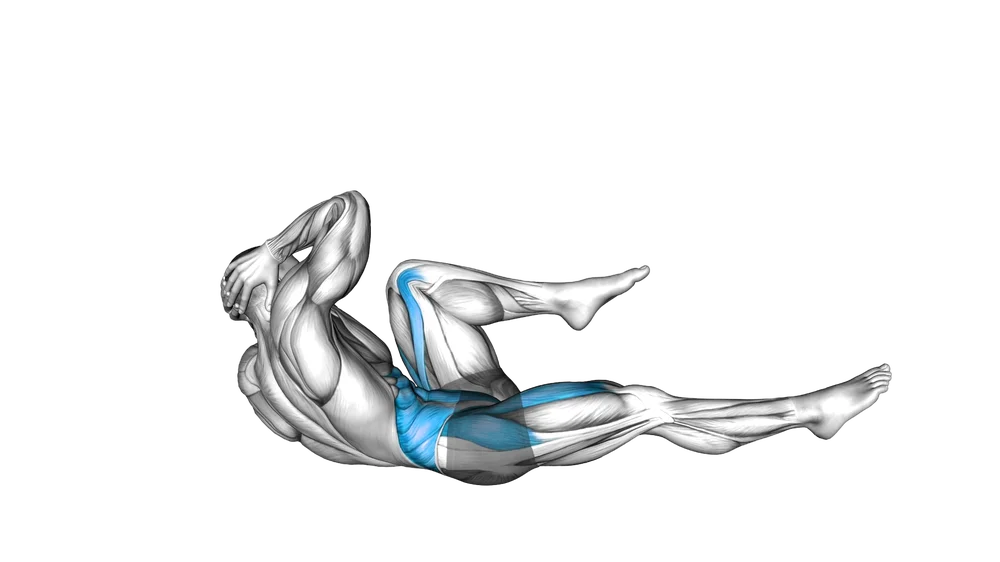
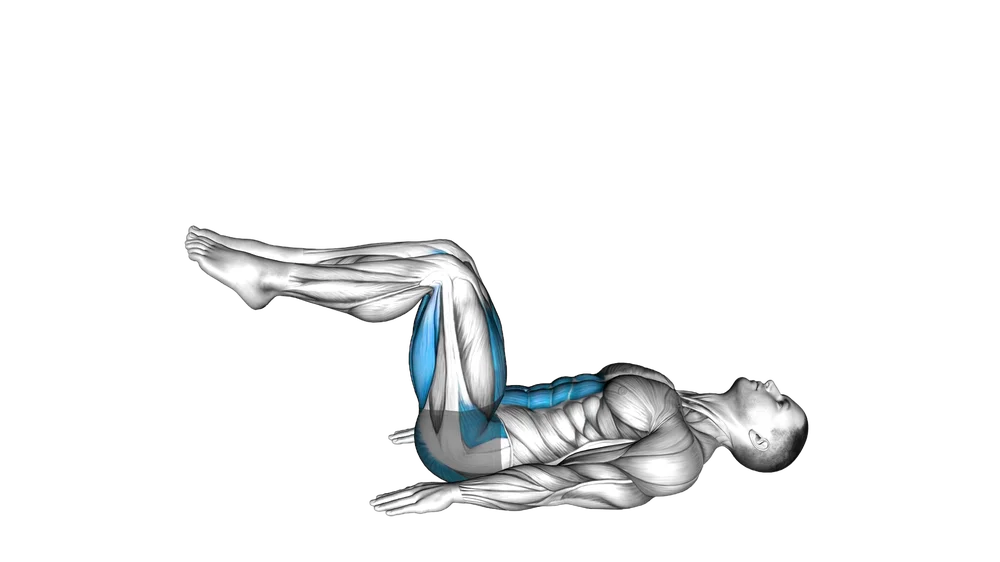
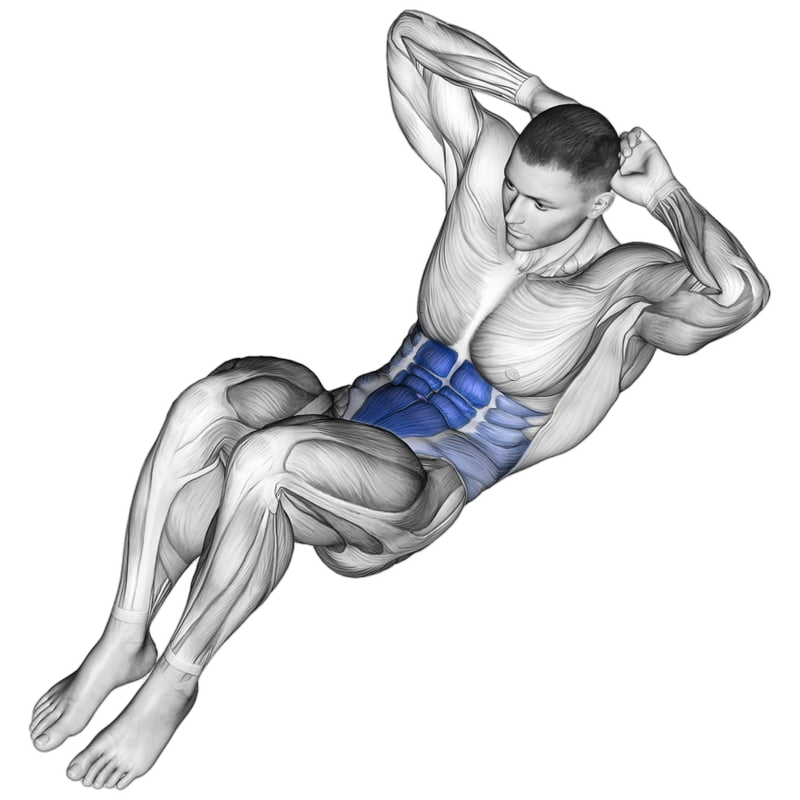
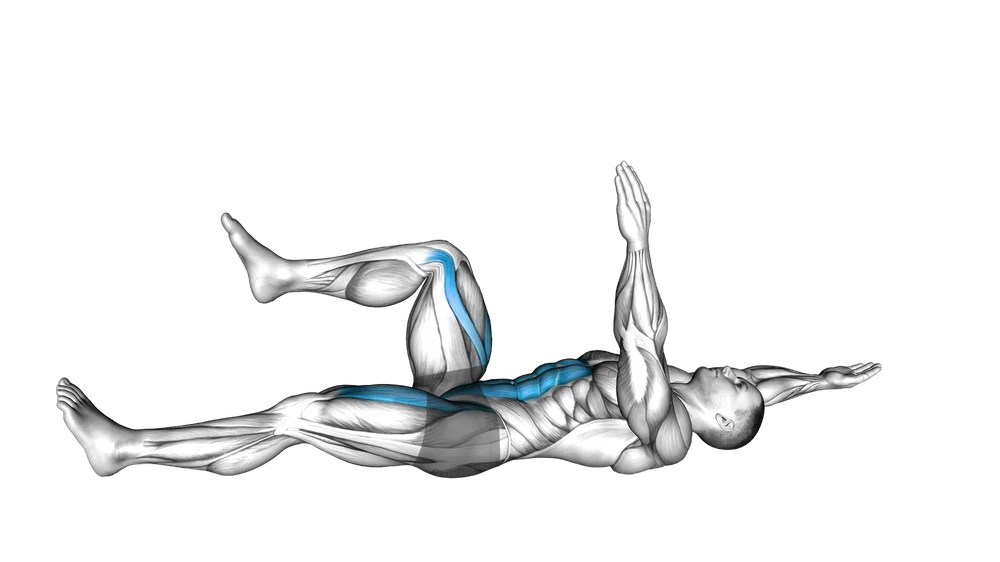
Hang the elbows, raise the knees, own your abs.
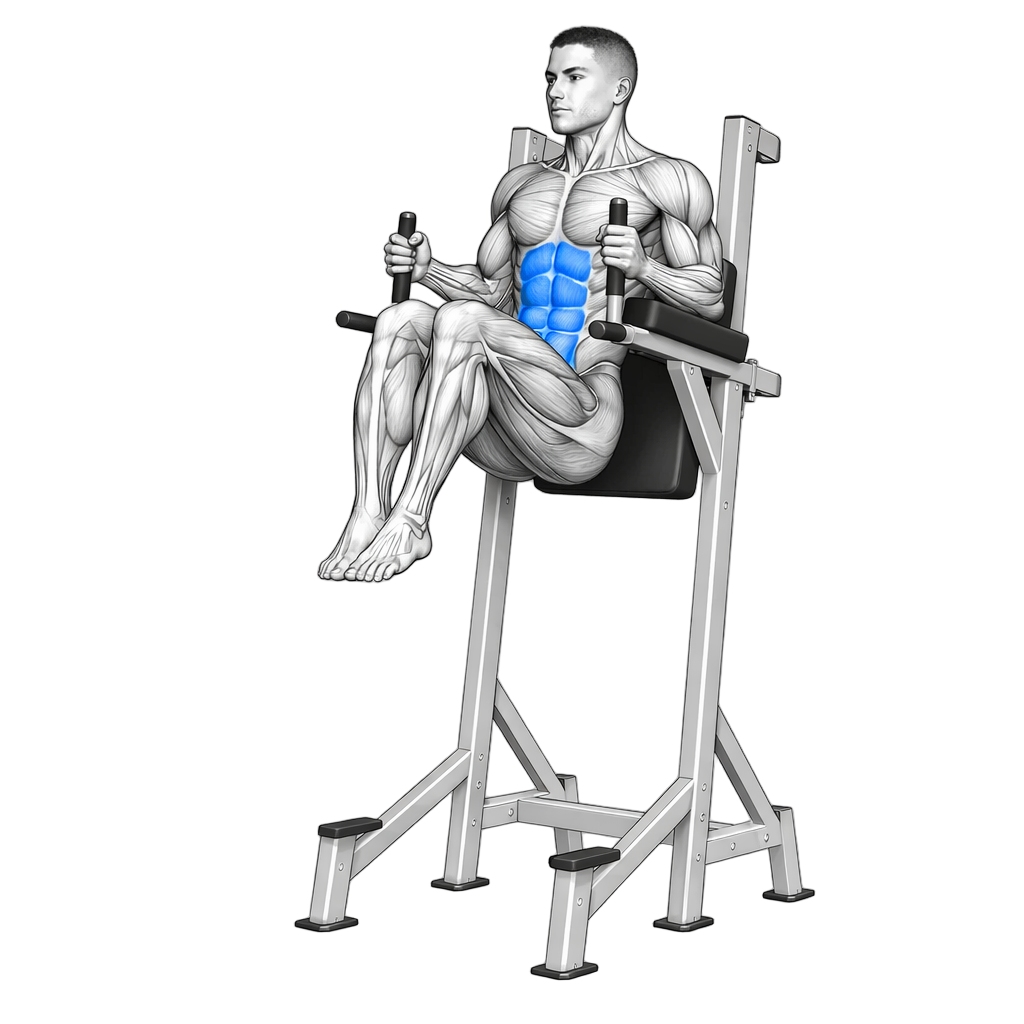
Curl your pelvis up at the top instead of just bending at the hips.
In the captain's chair your forearms take your weight so your lower body hangs free, and every knee raise makes the abs, especially the stubborn lower region, curl your pelvis and legs upward against gravity. The dead-hang start of each rep removes momentum, which is exactly why this feels so much harder than crunches. It earns its place as the standard progression toward hanging leg work, hitting the core hard without grip strength getting a vote.
Because just lifting the knees is a hip flexor job. The abs only take over when you curl your pelvis up and round your lower back at the top of the rep, think about tilting your hips toward your ribs, not just raising knees.
They are the more accessible version, your forearms rest on pads so grip and shoulder fatigue never cut the set short. Hanging raises add a stretch and grip demand, graduate to them when the chair version is easy.
Lower your legs slowly and pause for a beat at the bottom before the next rep. If you still swing, you are lowering too fast, the controlled descent is half the exercise.