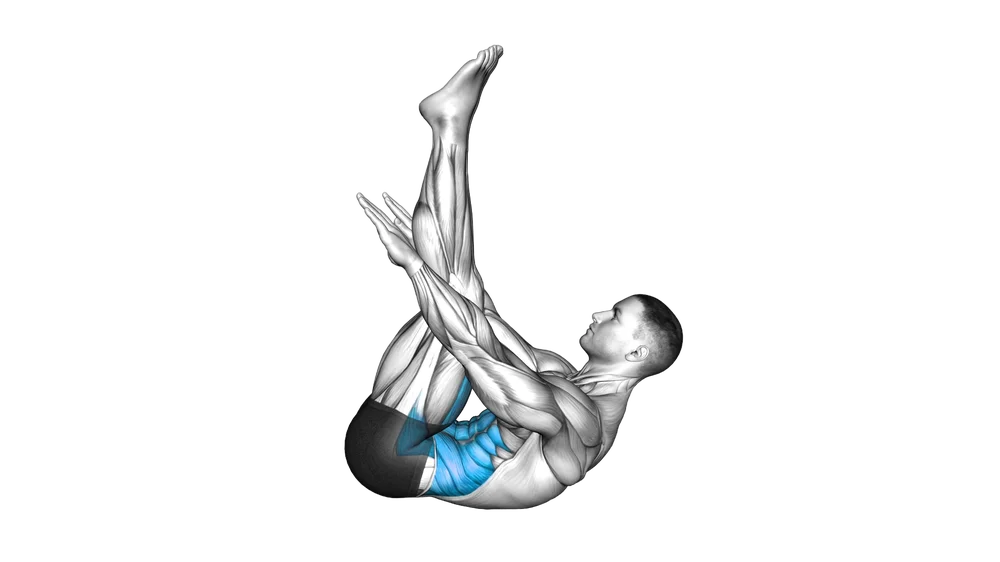
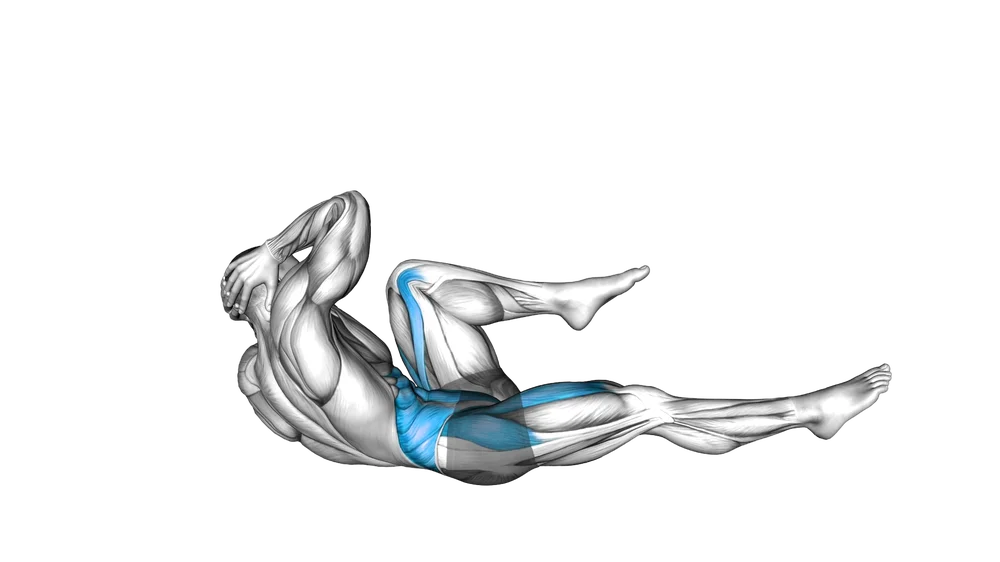
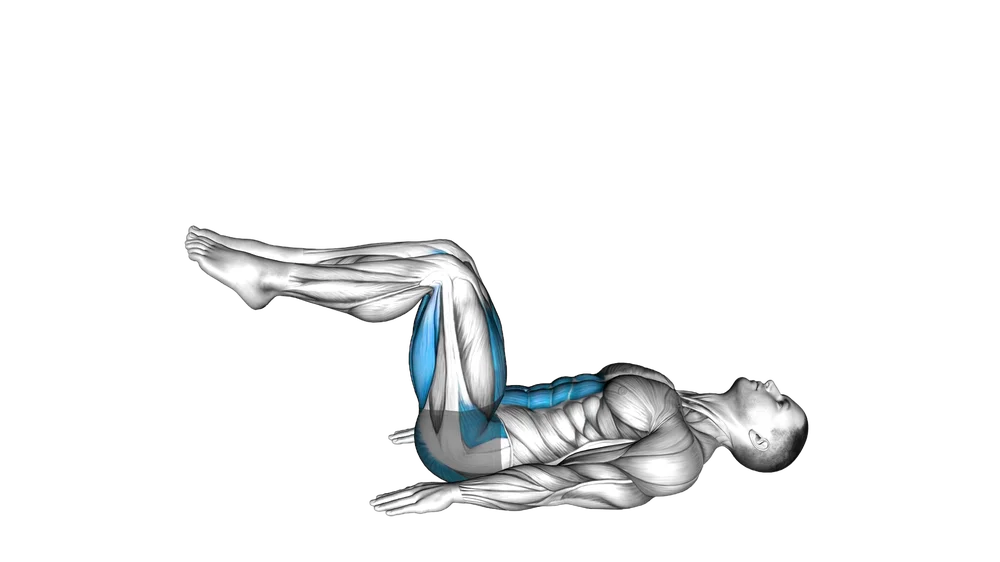
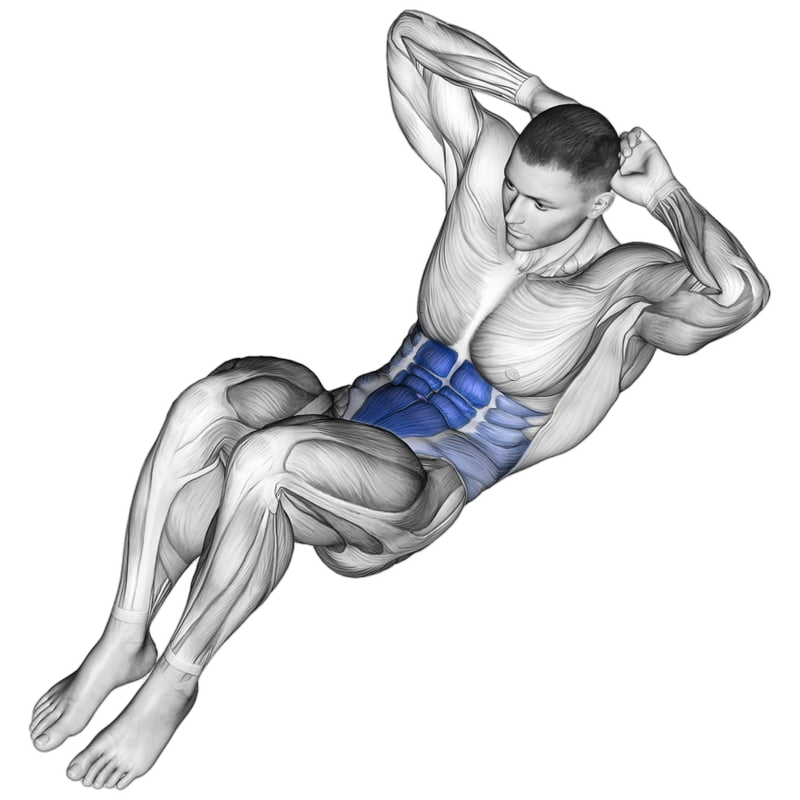
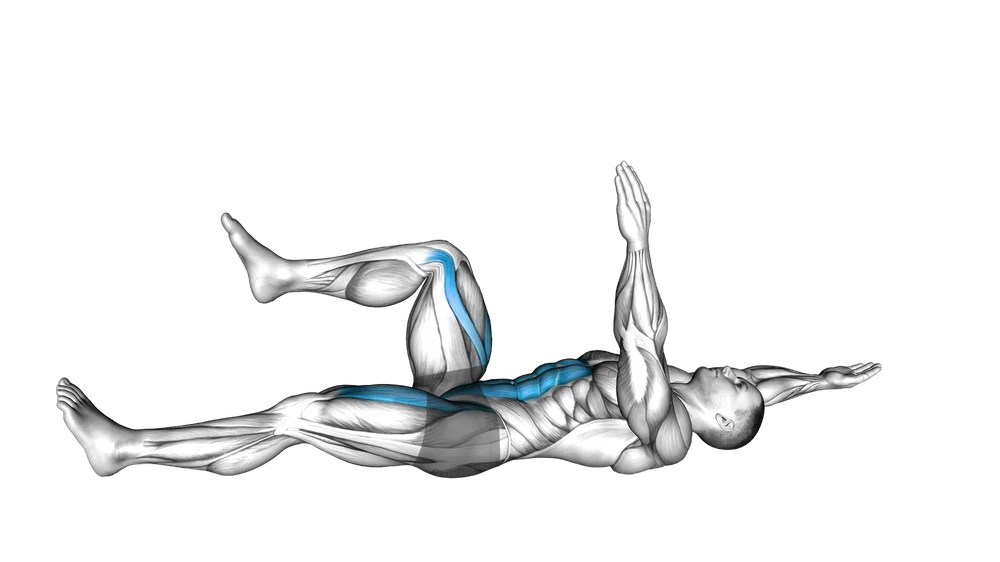
Lower abs on lockdown.
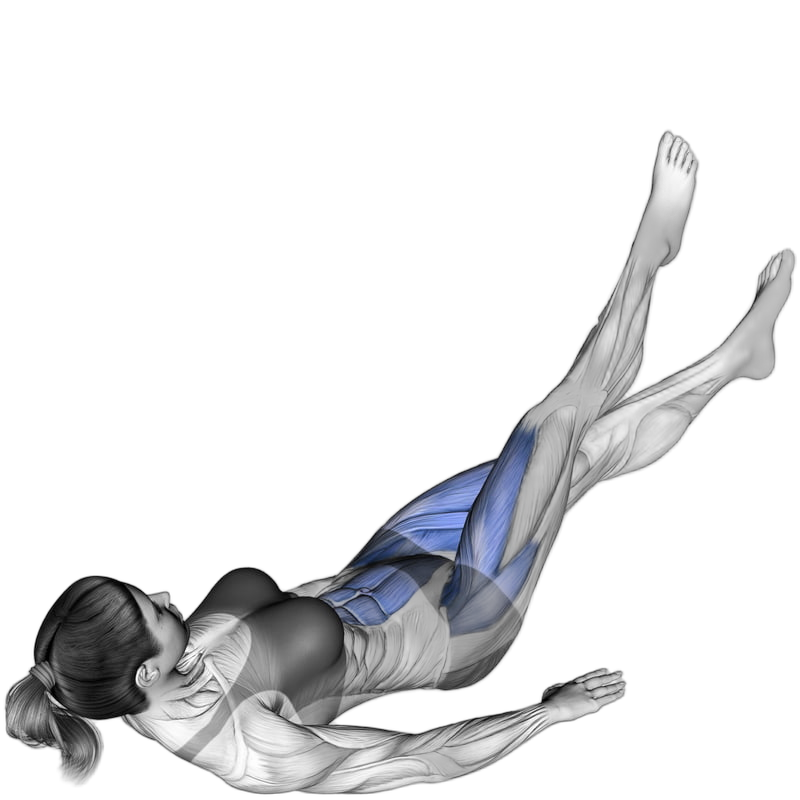
Glue your lower back to the floor, if it arches raise your legs higher.
Straight legs are a long lever, and holding them off the floor forces the lower region of the abs to fight the pull toward an arched back for the entire set. The alternating scissor motion means there is never a moment of rest, one leg is always loading the core while the other moves. It is a zero-equipment burner that builds the exact bracing you need for hanging leg raises later.
They are close cousins and the names get mixed constantly. Both alternate straight legs off the floor, flutters are usually smaller and faster while scissors use a bigger, more deliberate range. Either way the job is identical, keep the lower back pressed down while the legs move.
Your legs are working lower than your abs can currently control. Raise the height of the scissor, slow it down, and press your lower back into the floor before you start. As you get stronger, gradually work the legs lower.
Not at all, it is part of the setup. Tucking the hands under tilts your pelvis slightly and helps you keep the lower back glued down. As your core gets stronger, move the hands out and make the abs do all of it.