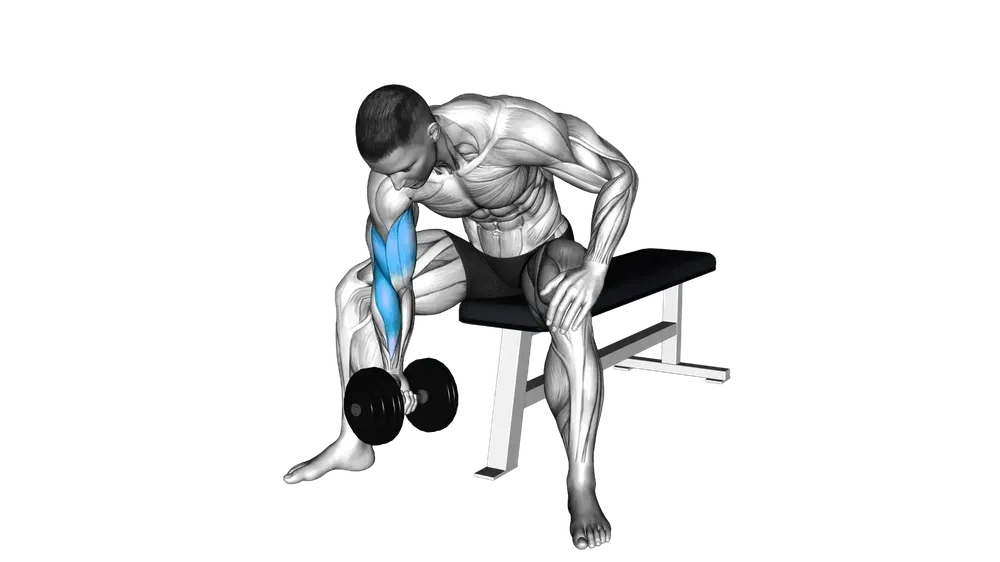
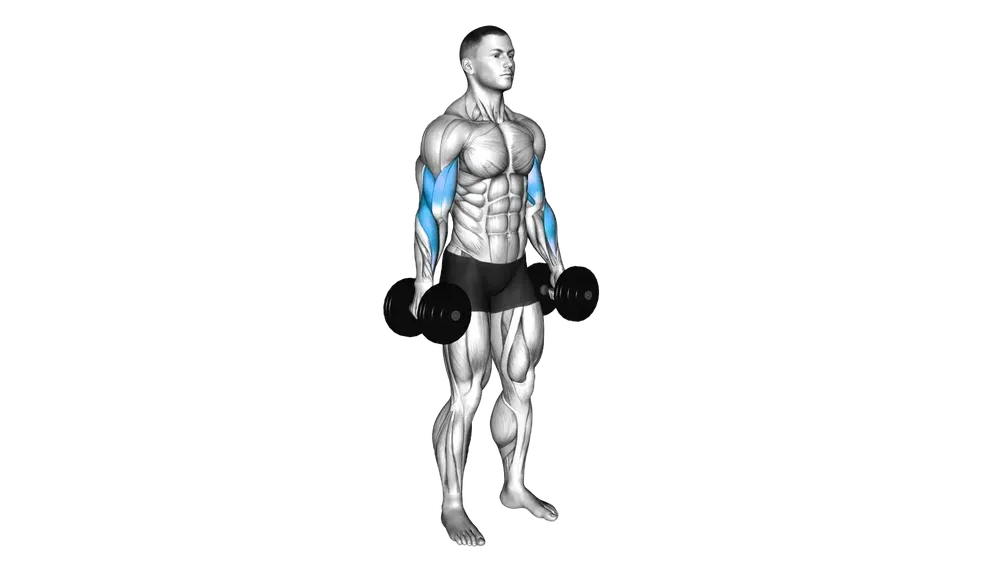
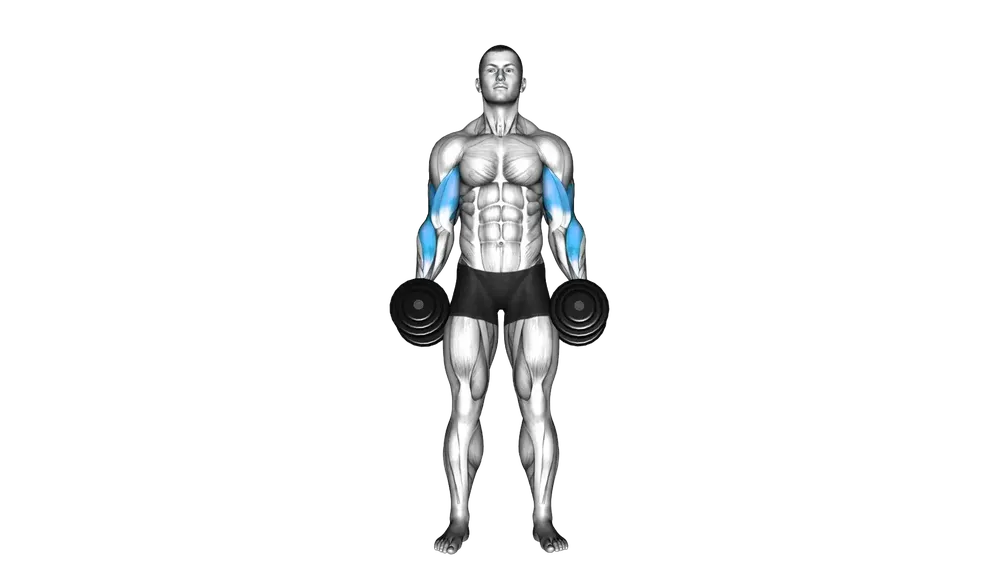
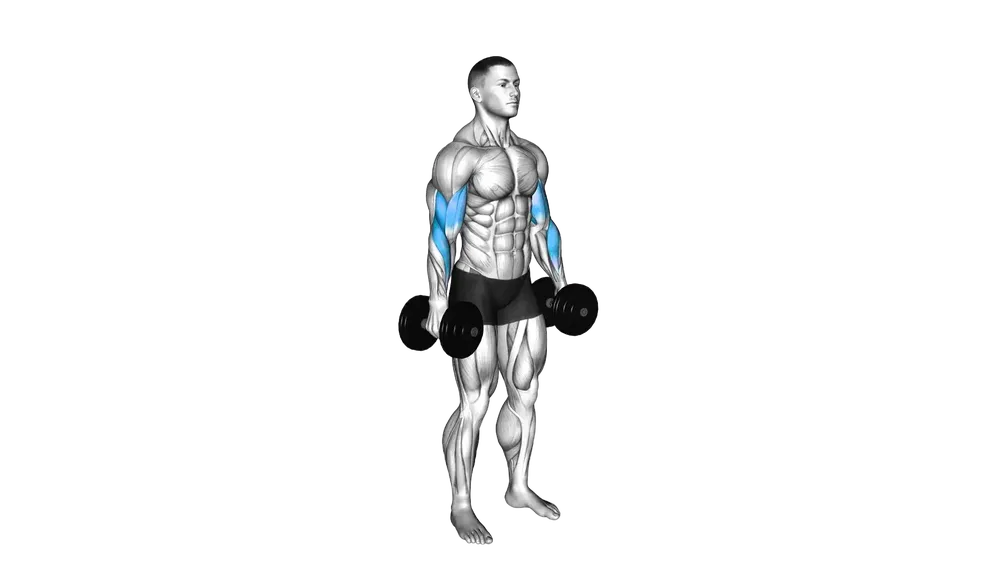
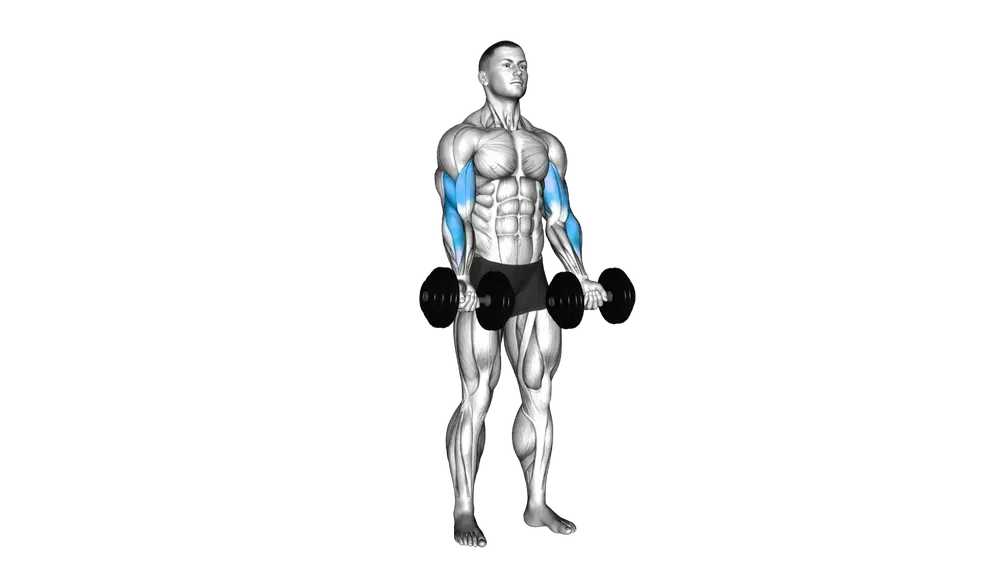
Flip your grip and hit the forearms most curls forget.
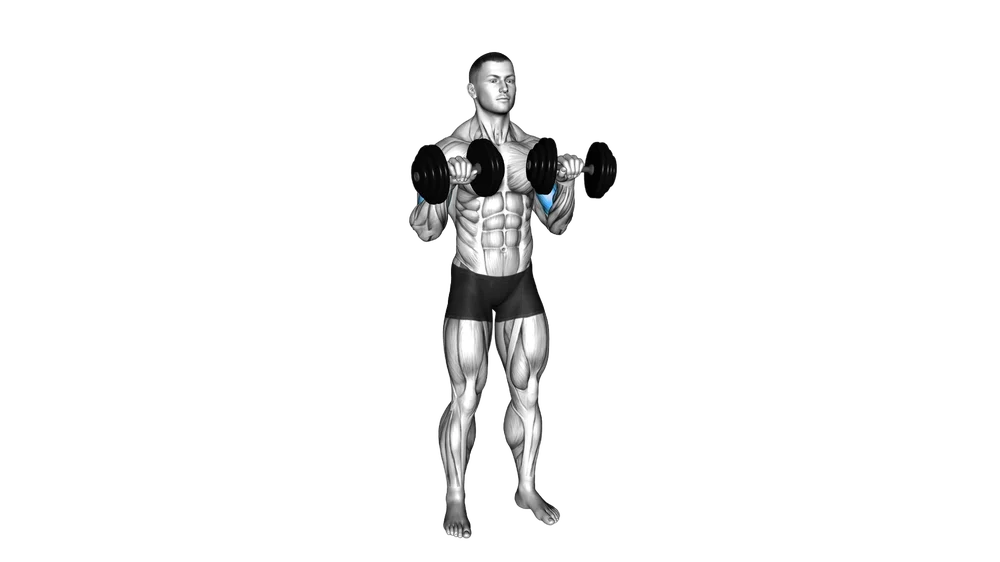
Go lighter than a normal curl. Overhand is weaker, so ego lifting wrecks your wrists.
Curling with your palms facing down shifts the load away from the biceps' favourite palms-up position and onto the brachialis and the forearms. Doing it with dumbbells lets each wrist settle into its own comfortable line and stops a stronger arm from carrying a weaker one. It is a small investment per session that pays out in thicker forearms and a fuller upper arm.
Dumbbells let each wrist find its own angle and force both arms to work equally, while a bar lets you load slightly heavier. If your wrists are fussy or one arm dominates, dumbbells win.
Lighter than feels respectable. The overhand grip is your weakest curling position, so pick a weight you can lift with pinned elbows and firm wrists for clean reps. Loading it like a normal curl just batters your wrists.
Hammer curls use a thumbs-up grip, reverse curls go full palms-down. Both hit the brachialis, but the reverse grip brings the forearm muscles in far more, making it the better pick for forearm size.