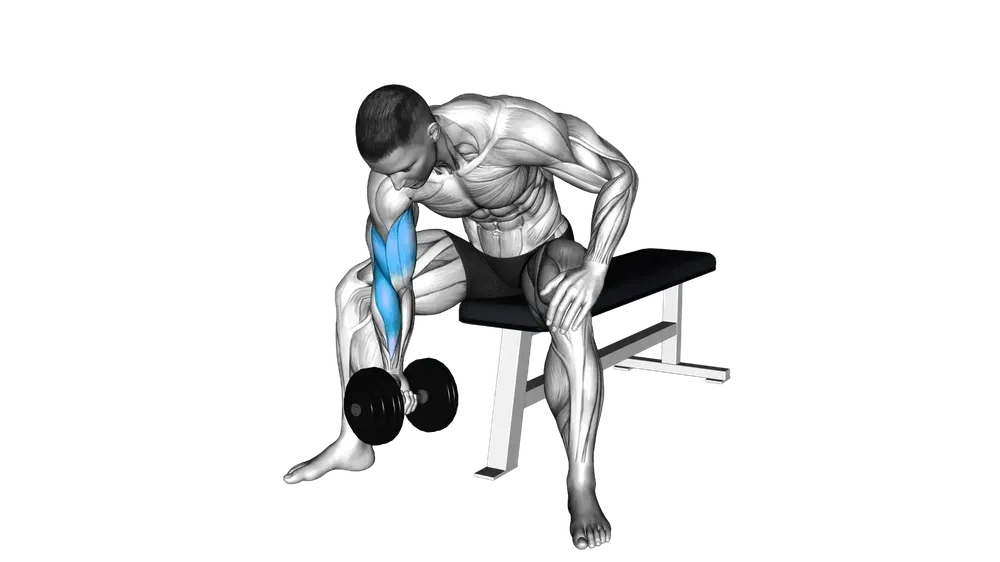
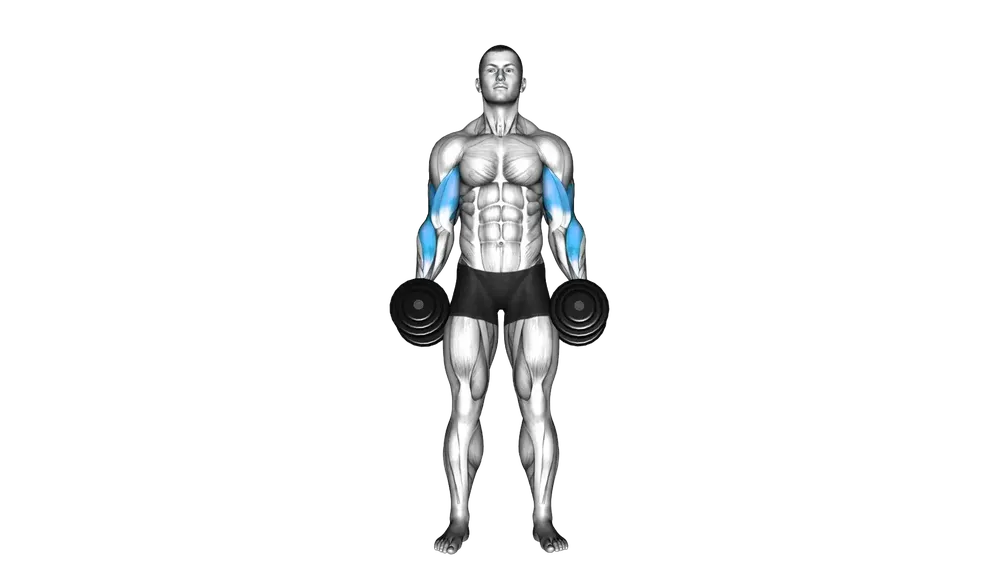
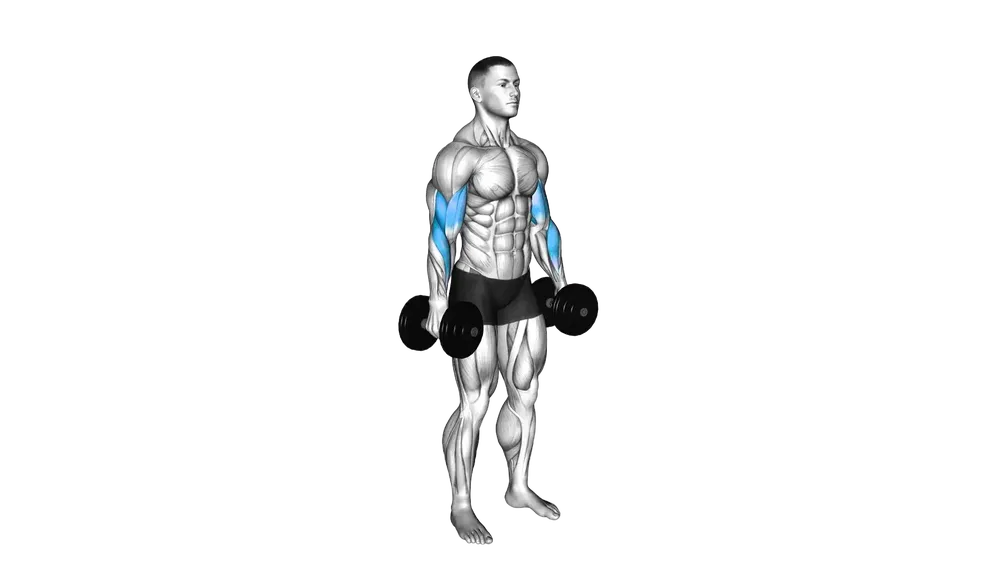
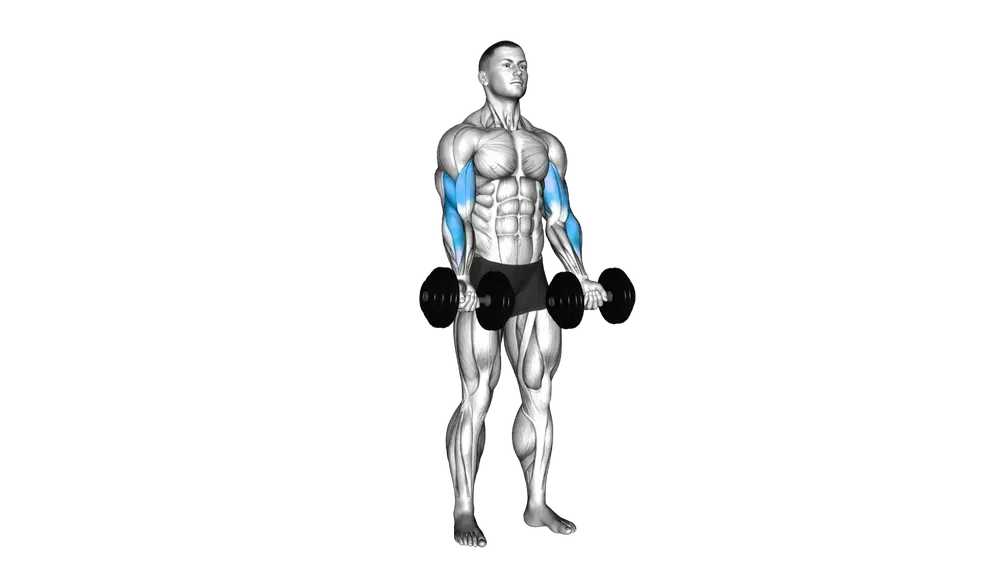
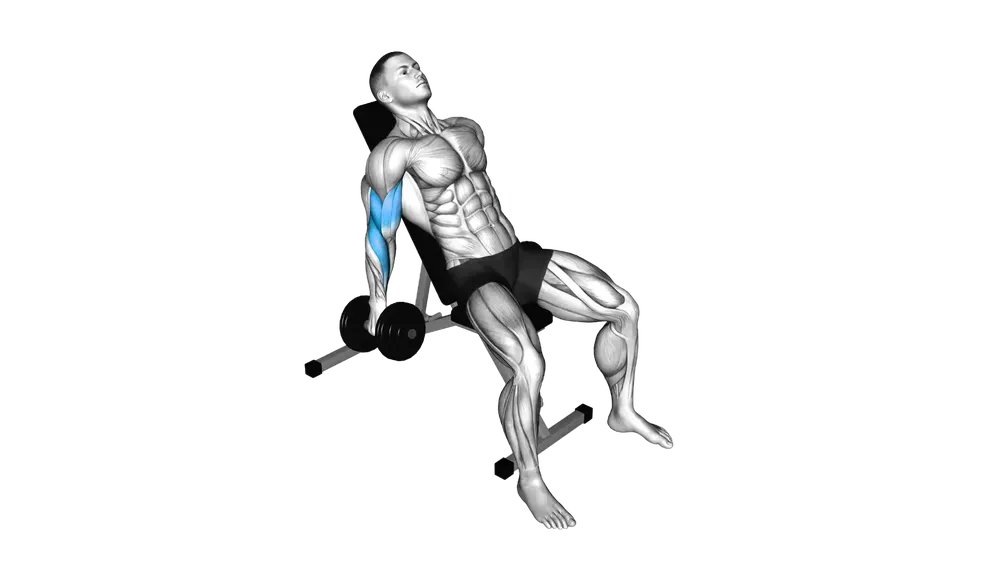
Thicker arms by hitting the brachialis.
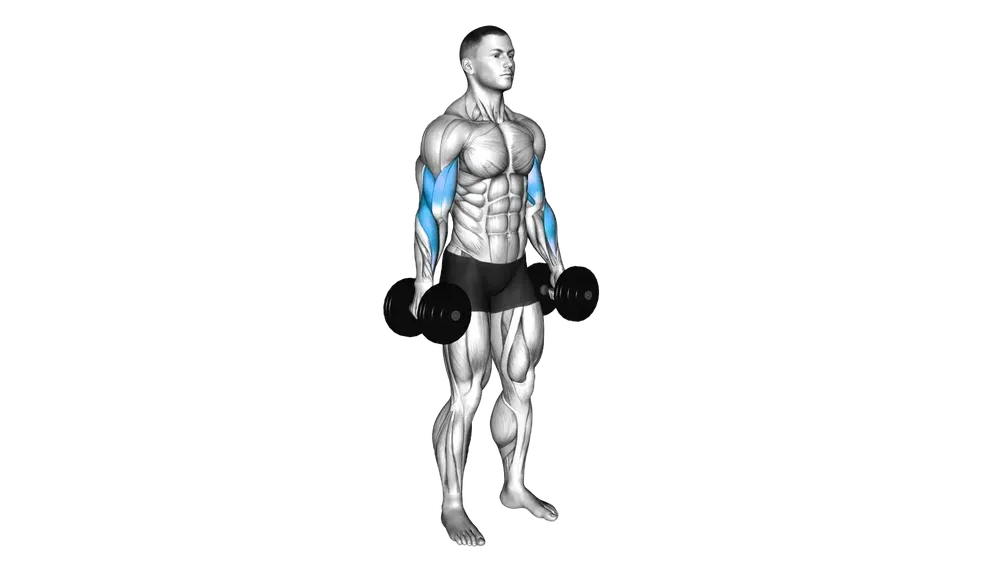
Keep palms facing in the whole rep. No swinging the elbows forward.
The neutral, palms-in grip of the hammer curl shifts the load onto the brachialis, the muscle underneath the biceps that pushes the whole arm up and out when it grows, along with the biceps themselves. Because the wrist stays neutral, most lifters are stronger here than in a standard curl, meaning more load through the elbow flexors. It's the arm-thickness move, the partner to regular curls rather than a replacement.
The grip. Palms in shifts emphasis to the brachialis and forearm side of the arm, palms up keeps it on the biceps proper. Train both if you want arms that are thick and peaked.
Both work. Together keeps the set honest and quick, alternating lets you focus each rep and sneak a touch more weight. Just don't use the alternating pause to start swinging.
Usually yes, the neutral grip is your strongest curling position. Take the extra load, but the elbows stay pinned and the palms stay facing in, no rotating out to cheat the top.