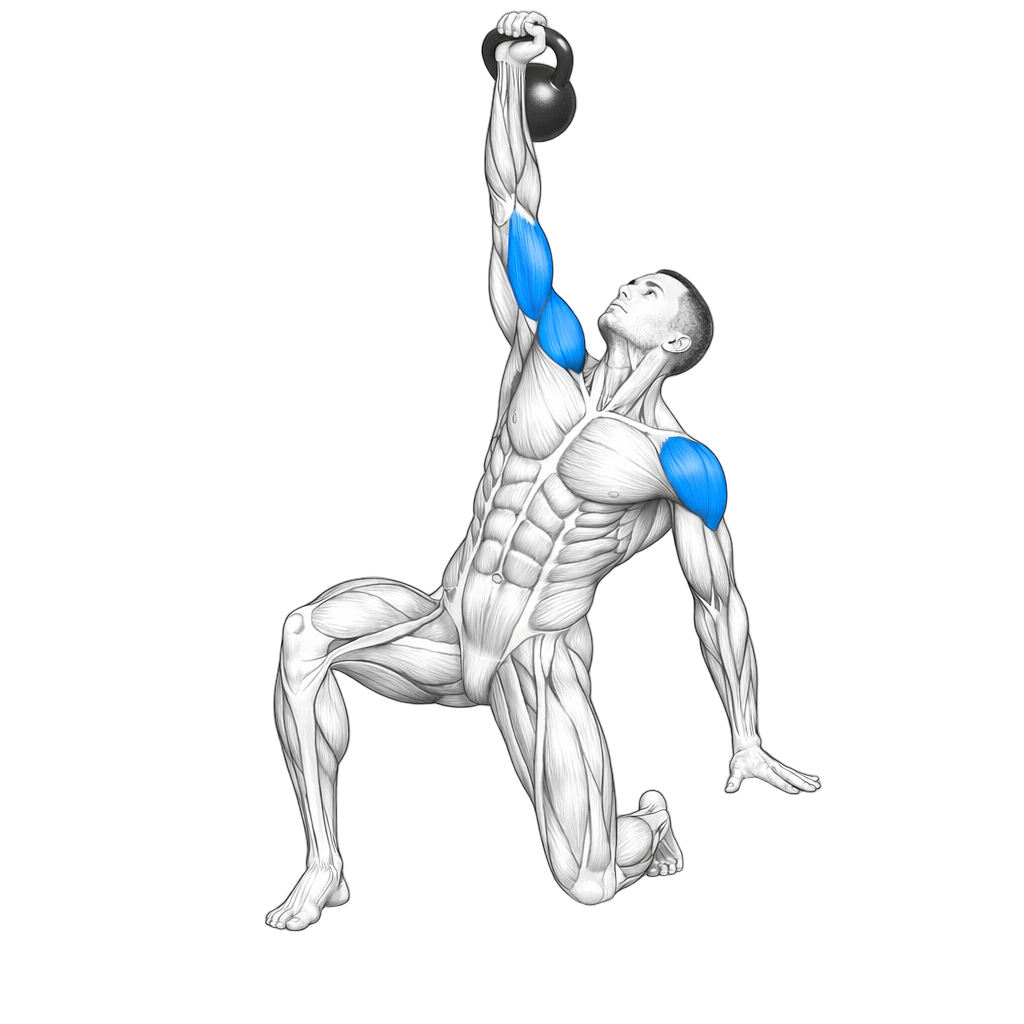
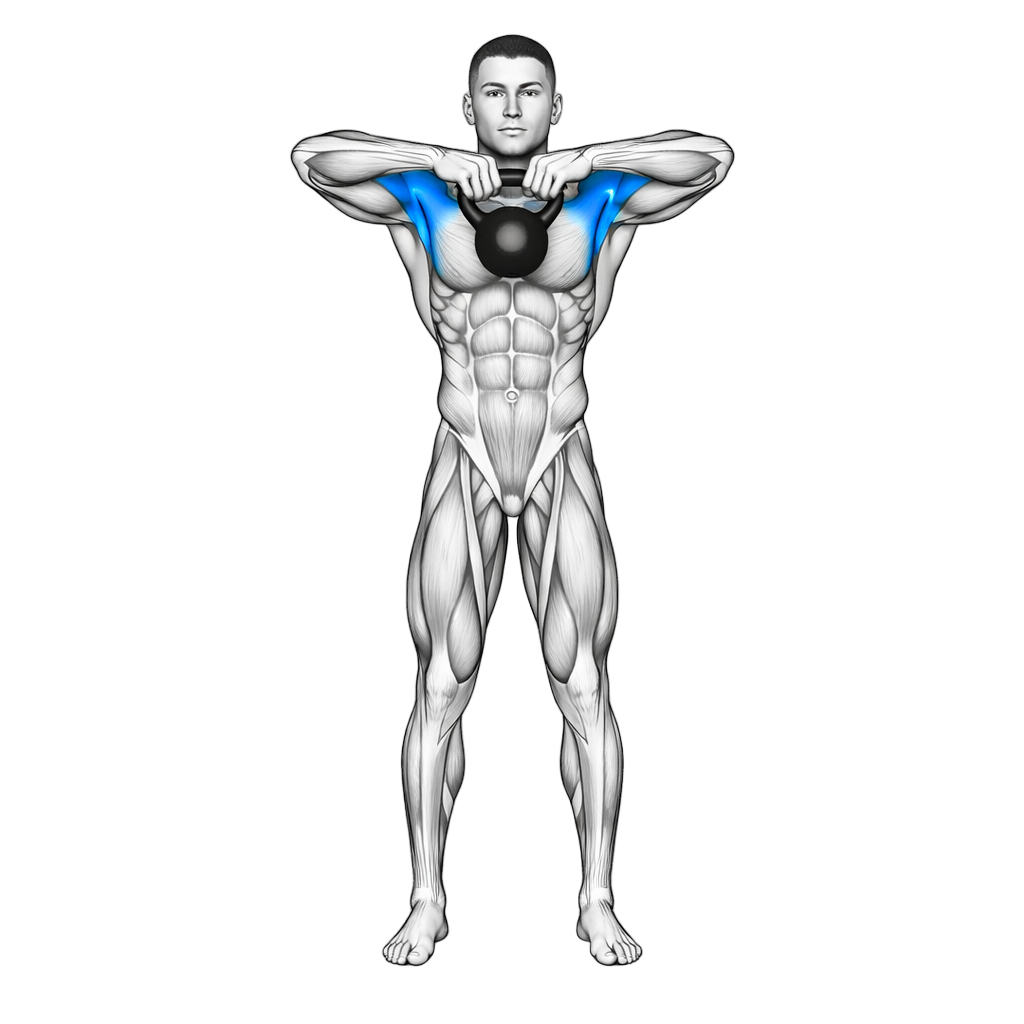
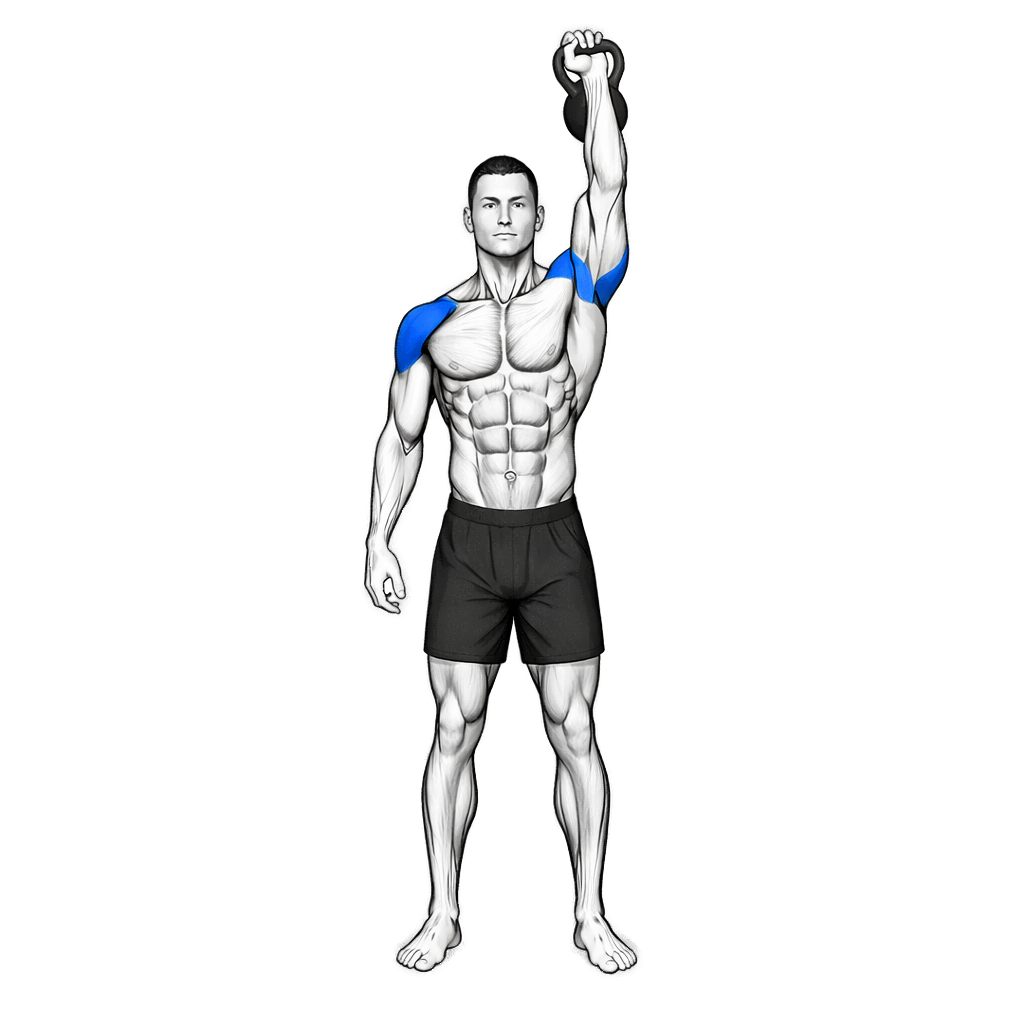
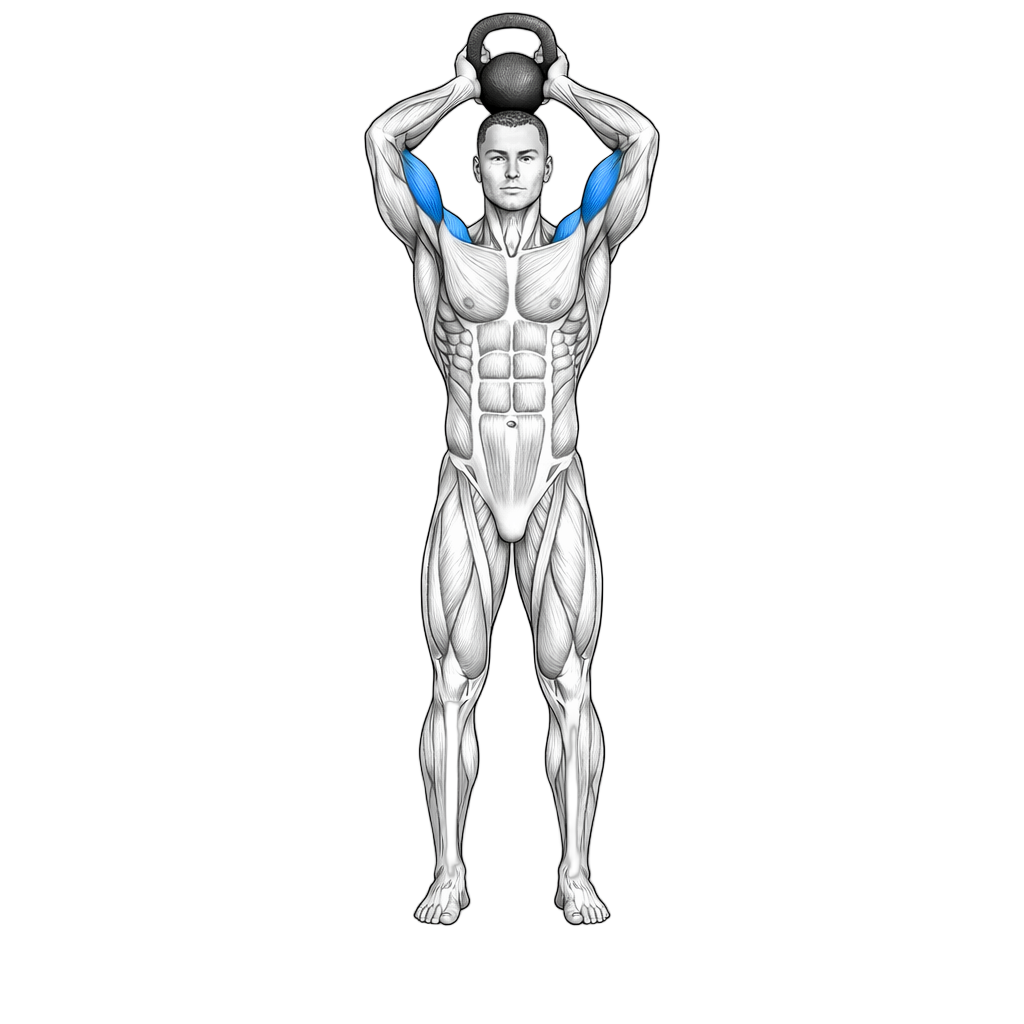
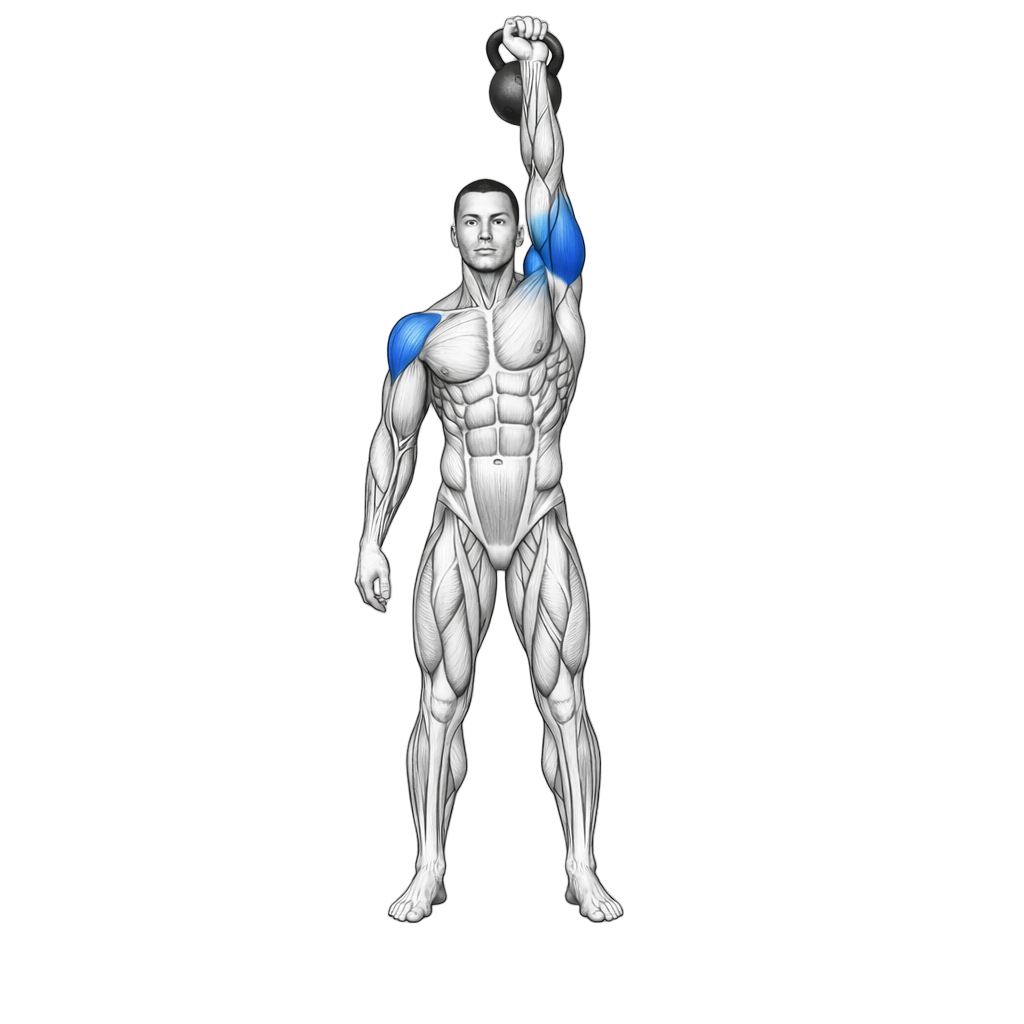
Squat meets press in one explosive full-body rep.
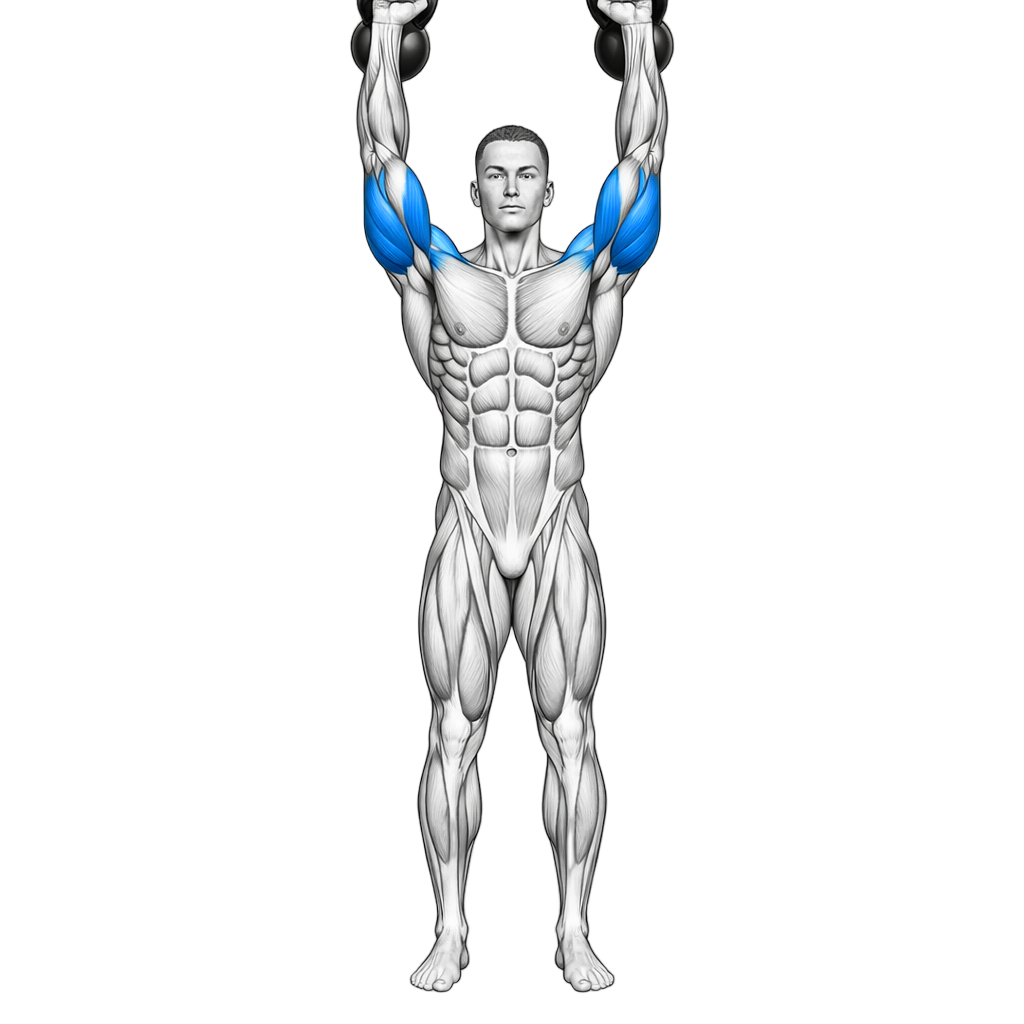
Let the leg drive launch the press, don't muscle it up with a dead stop.
The thruster chains a front squat into an overhead press, and the shoulders are the muscle that finishes every rep, catching the momentum from the legs and driving the bell to lockout. Because the leg drive helps the bell through the sticking point, your delts get to handle more weight and more reps than strict pressing allows. It earns its place as a full body conditioning staple, few moves spike the heart rate faster than a set of honest thrusters.
A push press uses a shallow dip, a thruster starts from a full squat, so the press rides a much bigger wave of leg drive. Thrusters are more of a total body conditioning move, push presses are more of an overhead strength move.
You are moving a load through the longest range possible, from the bottom of a squat to overhead lockout, with no pause anywhere. Big range plus continuous reps equals huge oxygen demand, that is the point.
No, the rep should flow. Catch the bell in the rack as you drop into the next squat, letting one movement feed the next, a dead stop at the shoulder kills the rhythm and wastes energy.