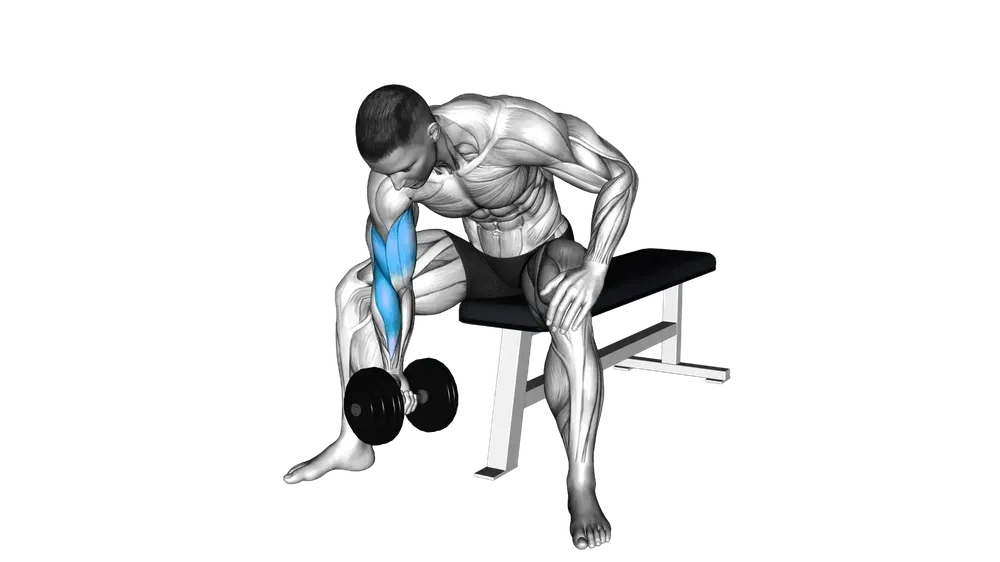
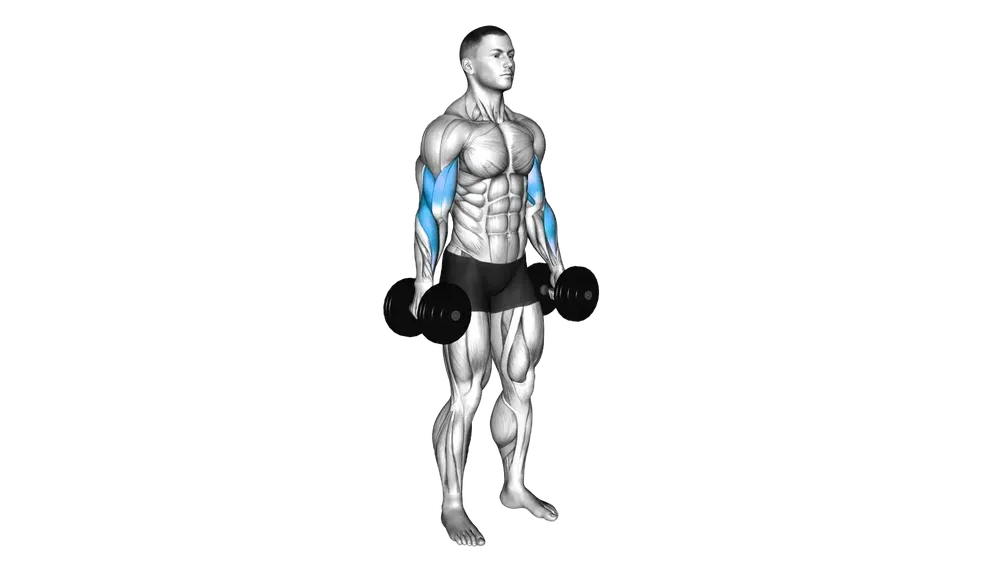
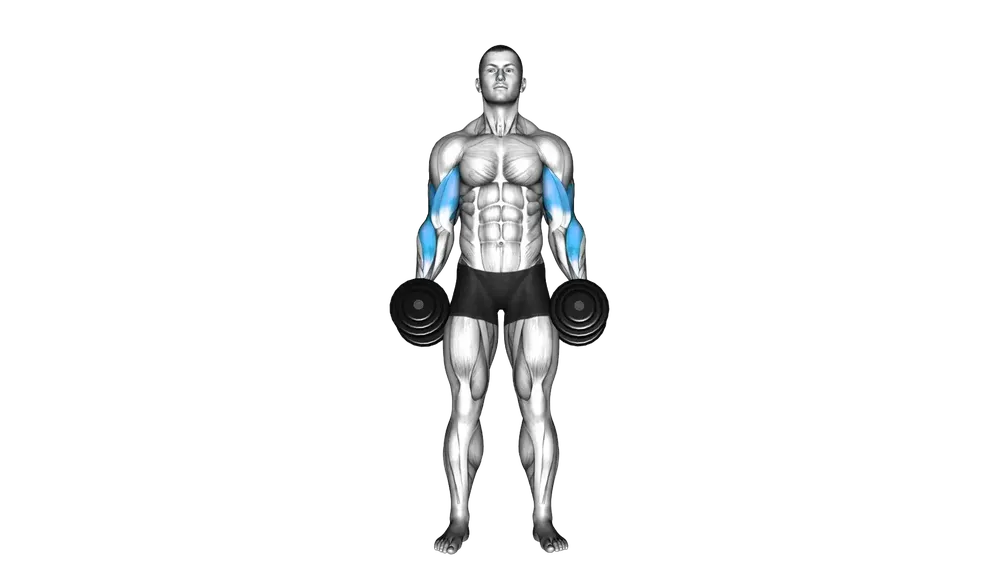
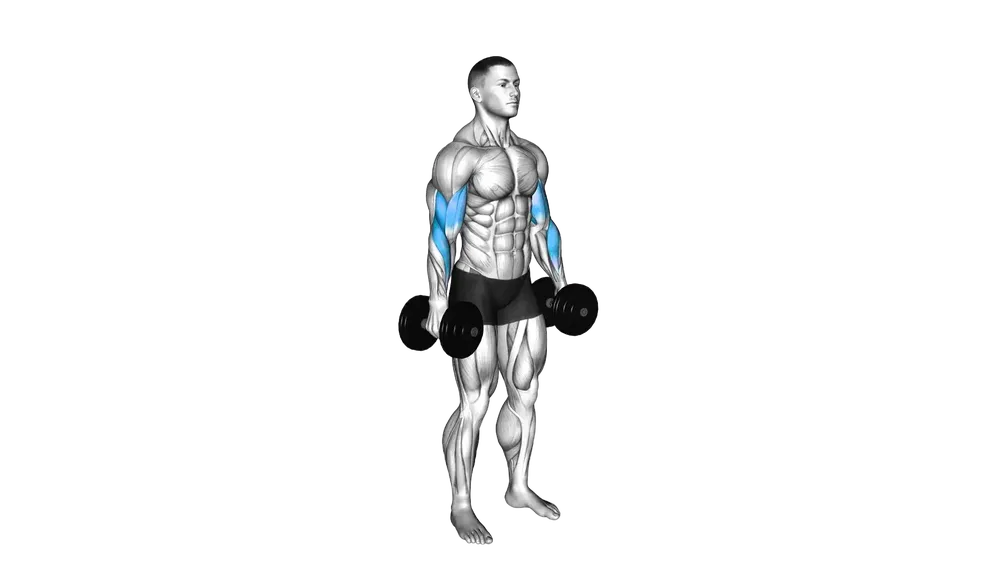
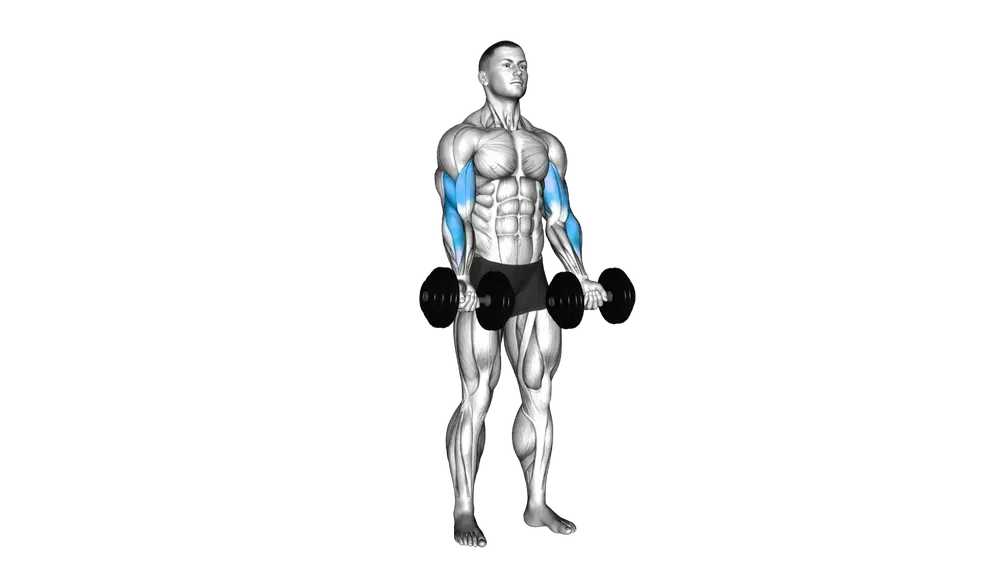
No reps, just a dead hold that lights your biceps on fire.
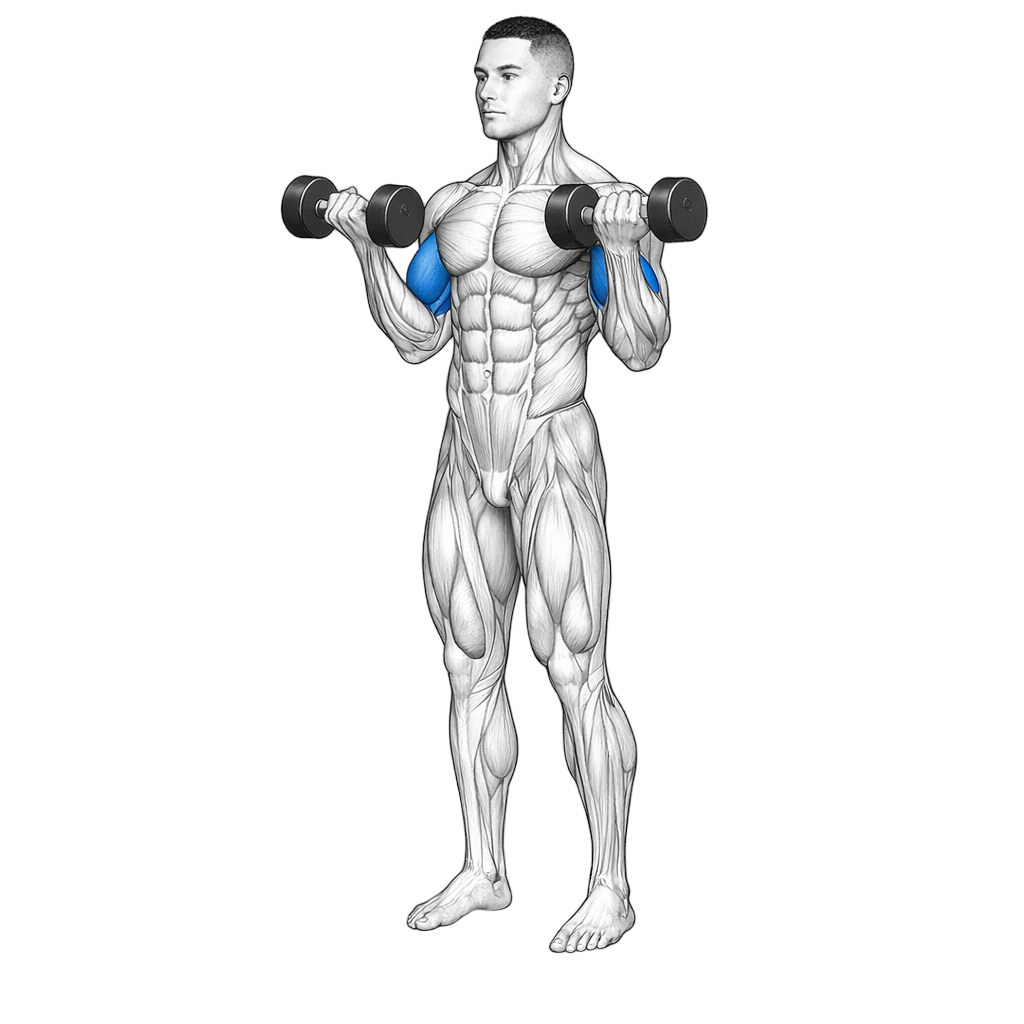
Don't let your elbows drift forward, fight to keep that 90-degree angle frozen.
Freezing the dumbbells at a 90-degree elbow bend parks the biceps at their strongest mid-range length and forces them to produce unbroken tension for the entire clock. There is no top of the rep to rest at and no momentum to steal from, just a contraction that has to survive as fatigue stacks up second by second. It earns its place as a finisher after curls, a tension-teaching drill for lifters who rush their reps, and a way to train the arms hard when joints want a break from moving load.
It is the position where the biceps fight the longest lever, so the hold is honest from the first second. Higher and the bones stack to help you, lower and the tension eases off. Ninety degrees gives fatigue nowhere to hide.
Pick a time you can just barely survive without the angle creeping, usually somewhere between 20 and 45 seconds. When you can hold clean past that, add a little weight rather than endless seconds.
Held hard and near your limit, isometrics contribute to growth, especially as extra volume alongside curls. Their sharpest benefits are tension quality and sticking-point strength, so treat them as a complement to full-range curling, not a replacement.