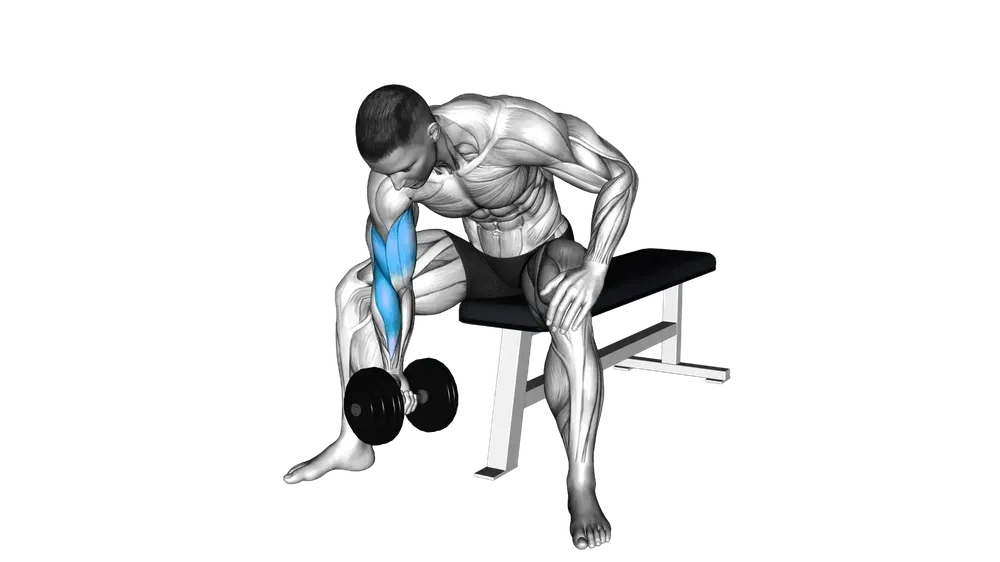
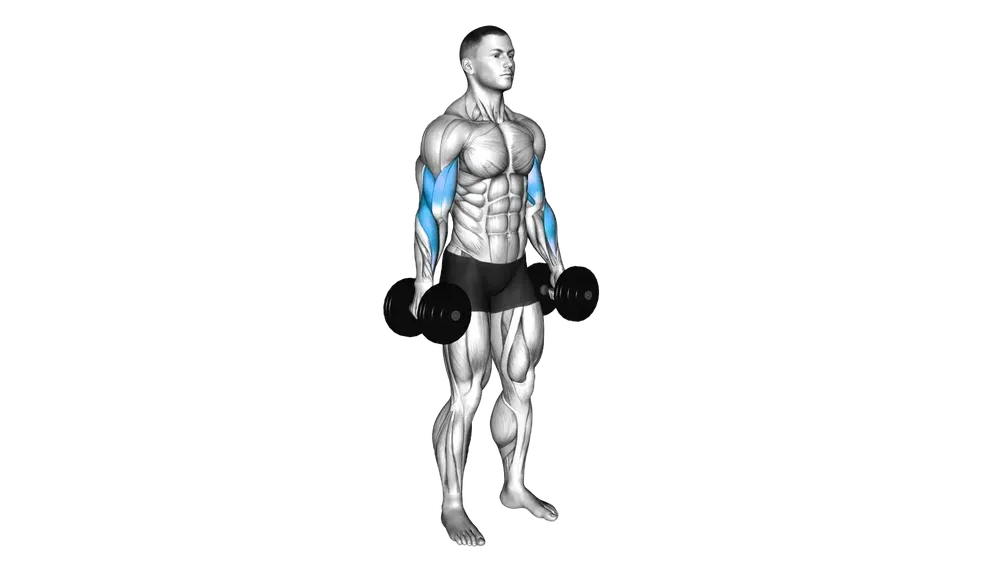
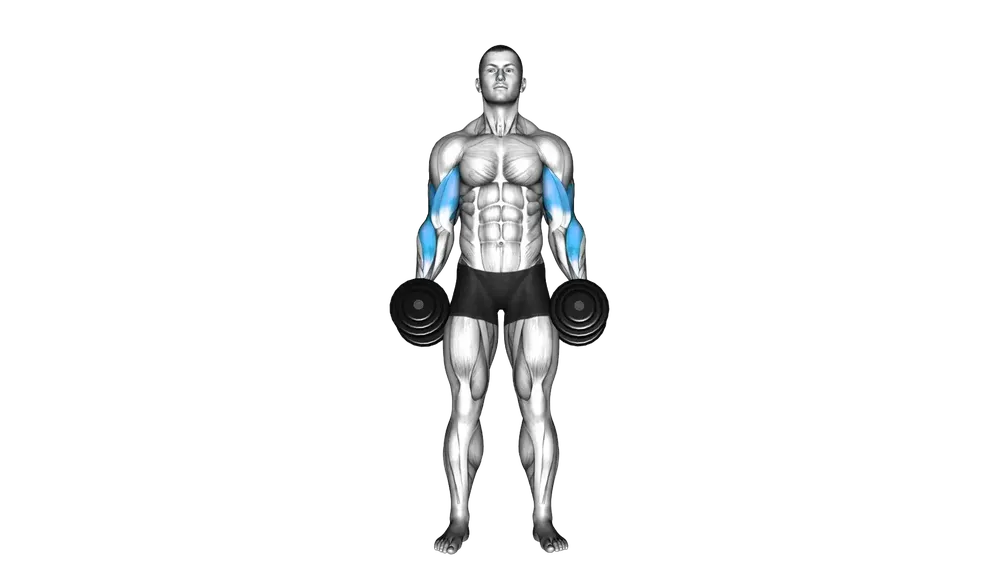
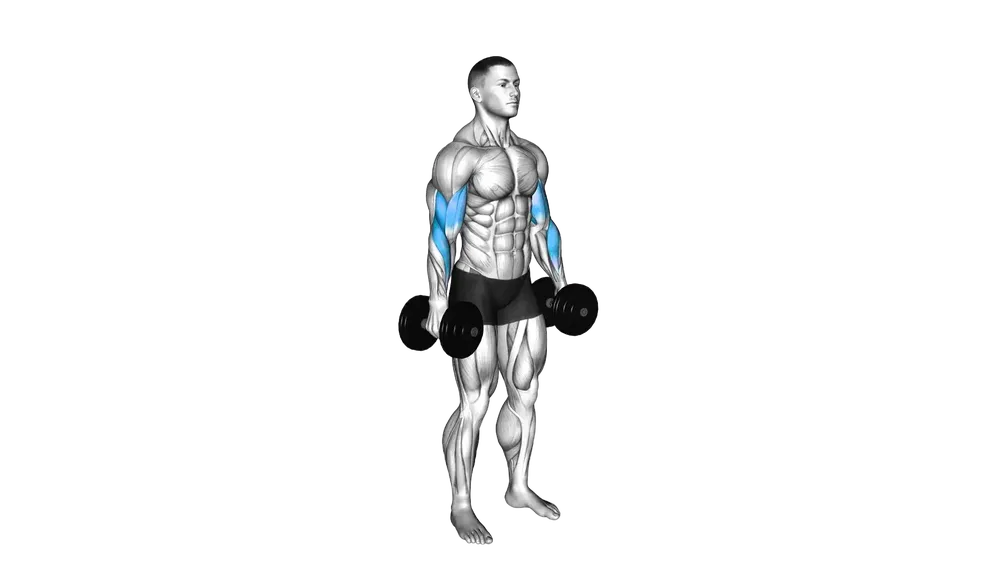
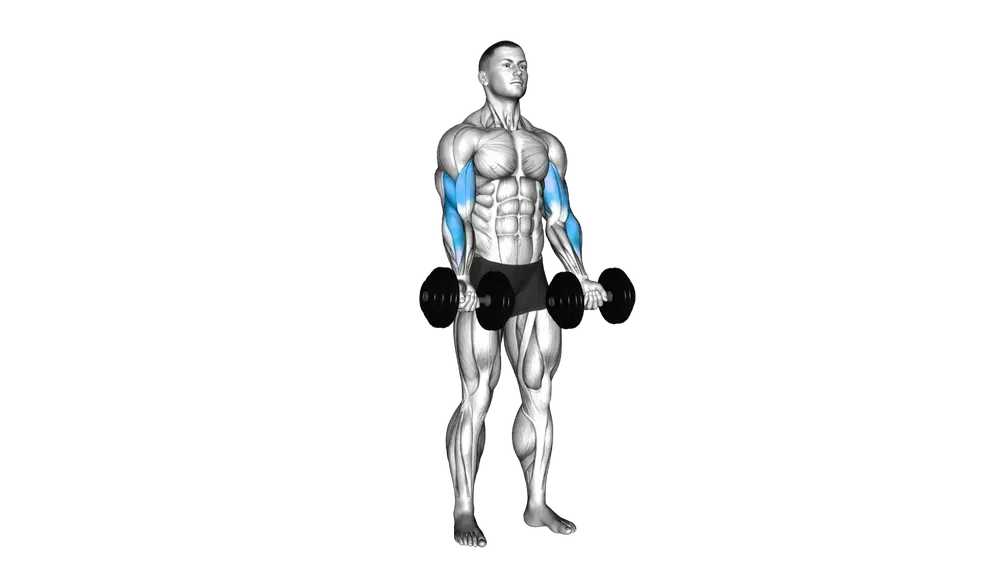
Lean back, stretch the bicep, build thick forearms.
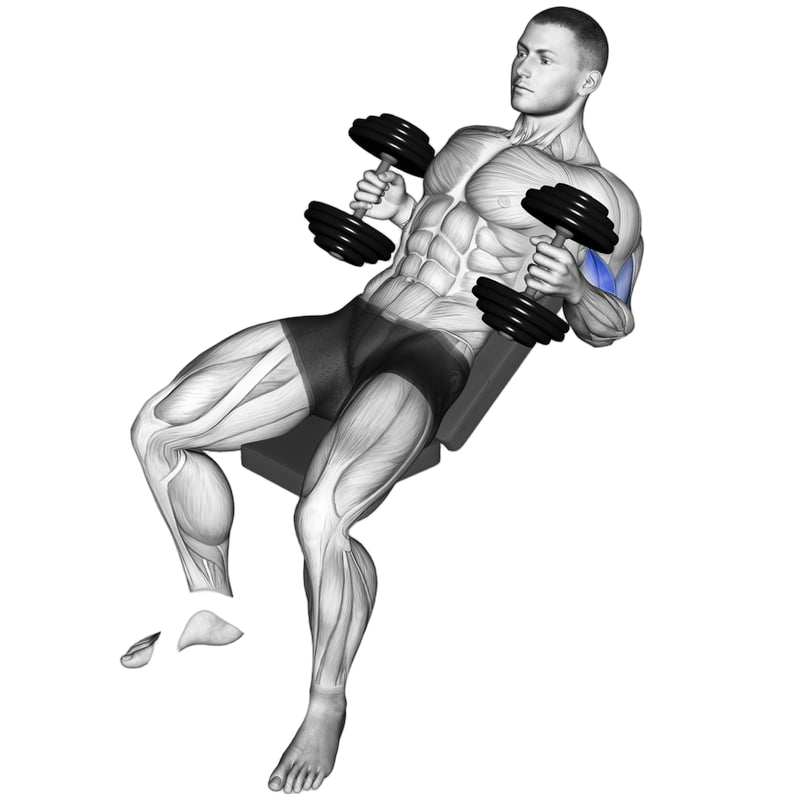
Keep your palms facing in the whole rep and don't let your elbows drift forward.
The incline hangs your arms behind your body for a deep stretch, and the neutral palms-facing grip shifts a healthy share of the work into the forearms alongside the biceps. That combination loads the whole elbow-flexing chain through its longest range, which is why hammer variations are the go-to for arms that look thick from the side, not just flexed from the front. It earns its place as the stretch-position builder for forearm and arm mass in one movement.
The neutral grip pulls the forearms into the movement much more than a palms-up curl does, spreading the work across the arm rather than concentrating it in the biceps peak. Most people can also handle slightly more weight this way.
The stretch. Standing, your arms start beside your body with some slack. On the incline they hang behind you, so the biceps and forearms start from a fully lengthened position with no momentum available. Lighter weight, bigger stimulus.
Hanging straight down and slightly behind your torso, and pinned there. Letting them drift forward as you curl turns the stretch curl into a front raise hybrid and throws away the exact position you chose the incline for.