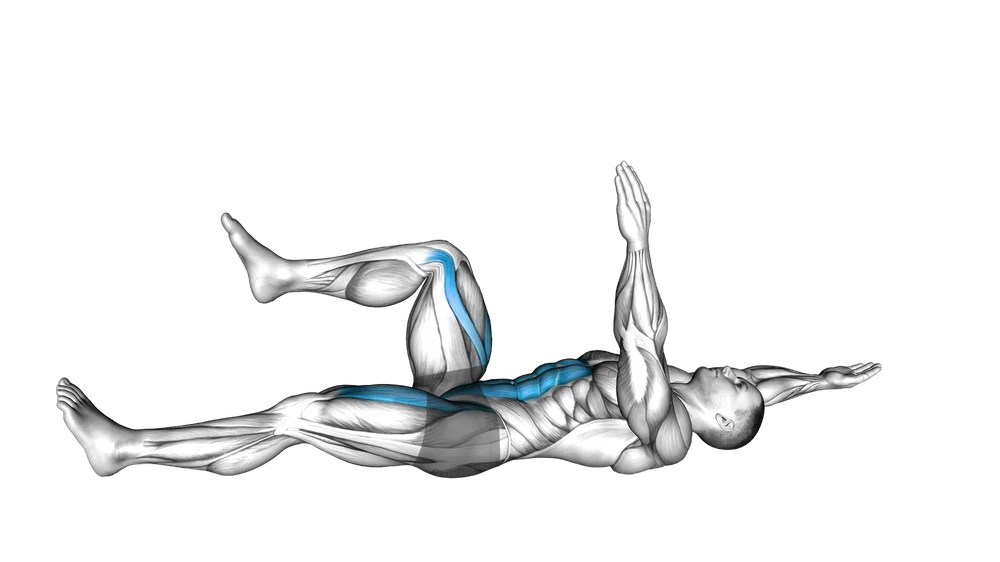
Bridge up, then march without dropping.
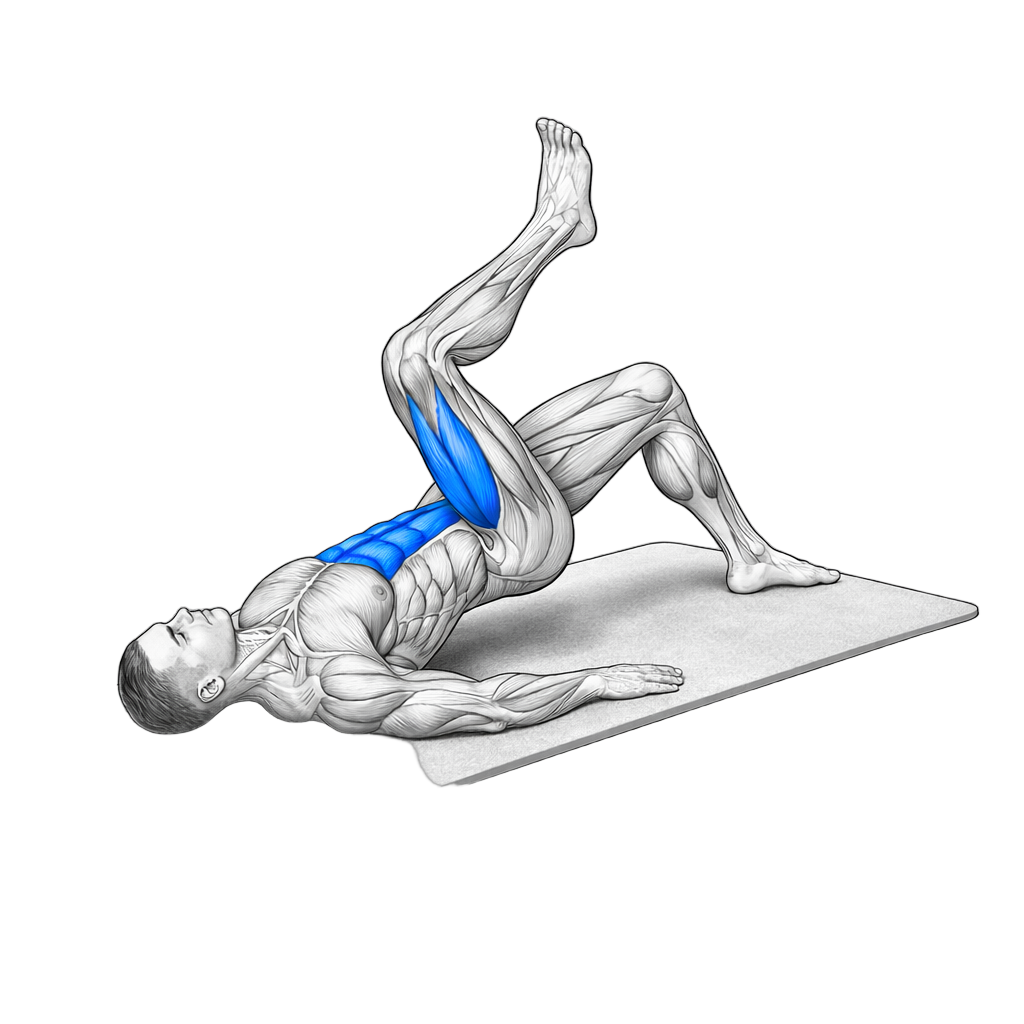
Keep your hips dead level, don't let them dip or rotate as you switch legs.
Holding a bridge is one thing; keeping it dead level while half your base disappears is another entirely. Every time a knee drives up, your core has to stop the pelvis dipping or rotating toward the unsupported side, turning a simple bridge into a moving anti-rotation drill. It earns its place as a floor-based stability builder that exposes side-to-side weaknesses lunges and squats let you hide, using nothing but your bodyweight and a patch of floor.
Because the supporting side is not braced before the foot leaves the floor. Squeeze your glutes hard, brace like you are about to be poked in the stomach, then march. If the drop persists, slow down and shrink the knee drive.
It is common. It usually means your feet are too far from your hips, turning the hamstrings into the main hip lifters. Walk your heels closer to your body so the glutes take over holding the bridge.
A regular bridge is two legs up, two legs down, mostly a hip exercise. The march holds the bridge while legs alternate, shifting the challenge to your core keeping the pelvis level. Same shape, completely different job.