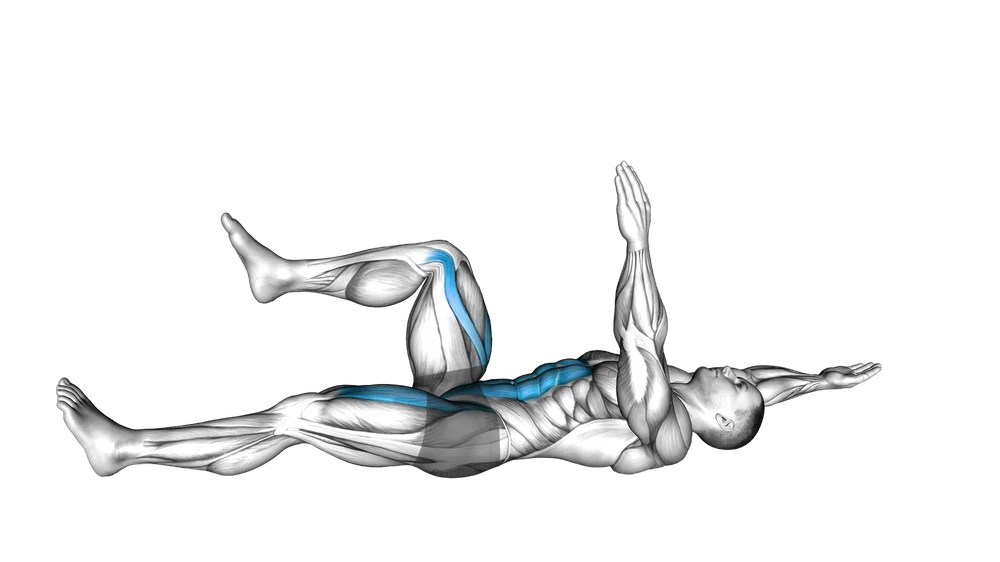
Hips high, crawl on opposite limbs, stay tight.
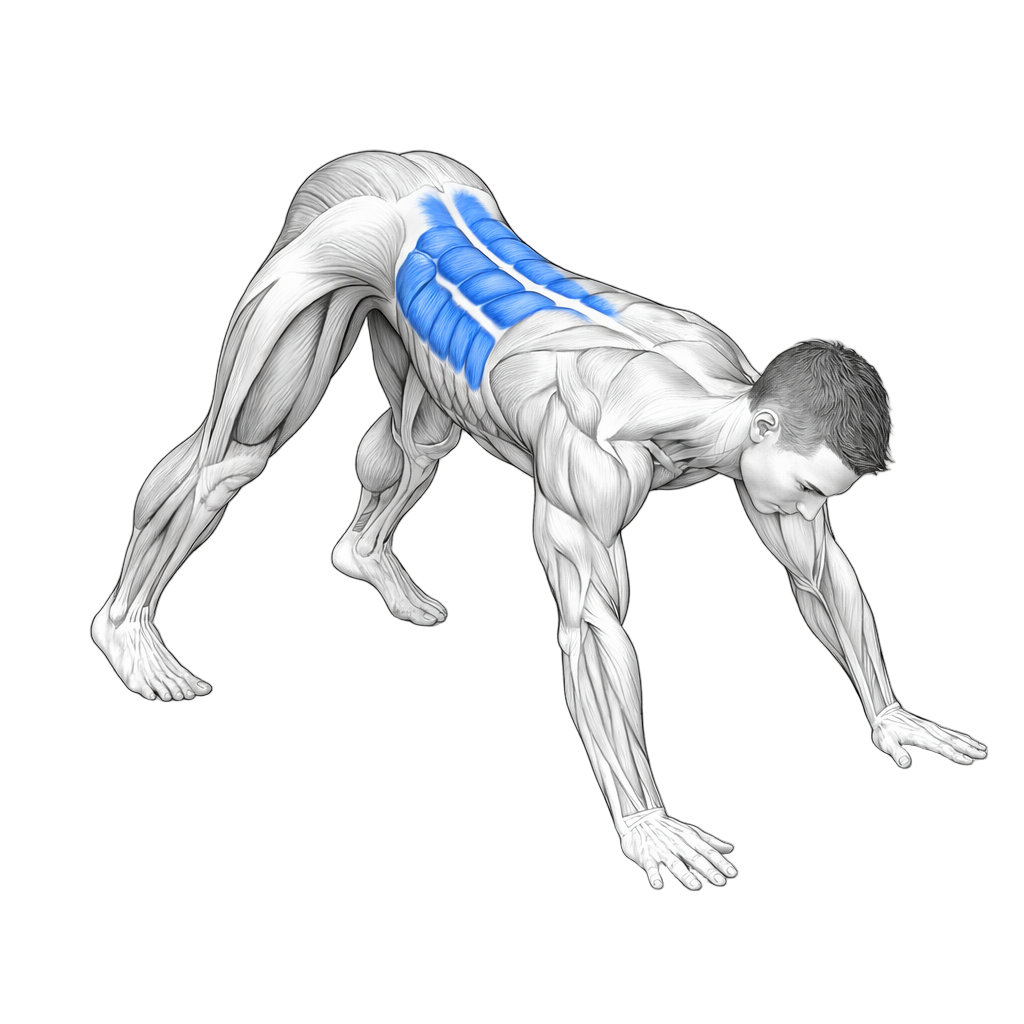
Keep your hips high and back flat, take small steps to stay stable.
Crawling with your hips pushed high turns every step into an anti-rotation test: as one hand and the opposite foot lift, your core has to stop the trunk twisting and the hips tipping. The elevated-hip position keeps the load pitched forward into your upper body while the core holds the bridge between moving limbs steady. It earns its place as a warm-up and conditioning piece that trains coordination and trunk stiffness at the same time, with nothing but floor space required.
Hip height. A standard bear crawl keeps hips low and knees hovering just off the floor, which is heavier on the shoulders and quads. Pushing the hips high shifts the challenge toward core control and hamstring flexibility.
Mostly, with a soft bend if your hamstrings demand it. The goal is hips staying high and back staying flat. If straight legs force your back to round, bend the knees slightly rather than dropping the hips.
Your steps are too big. Large steps leave you balancing on two points for too long. Take small, quick steps with opposite hand and foot moving together, and brace your core before each step, not during it.