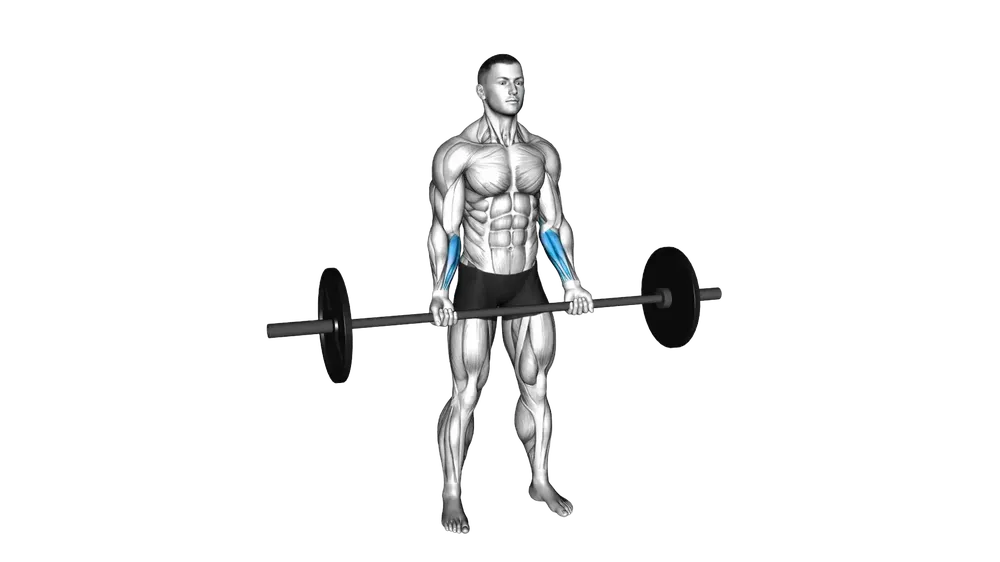
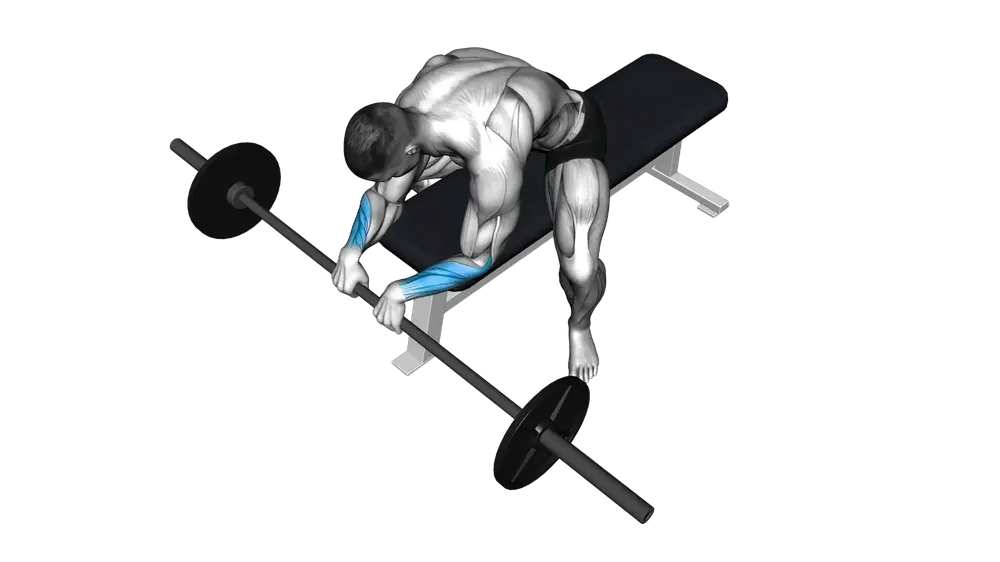
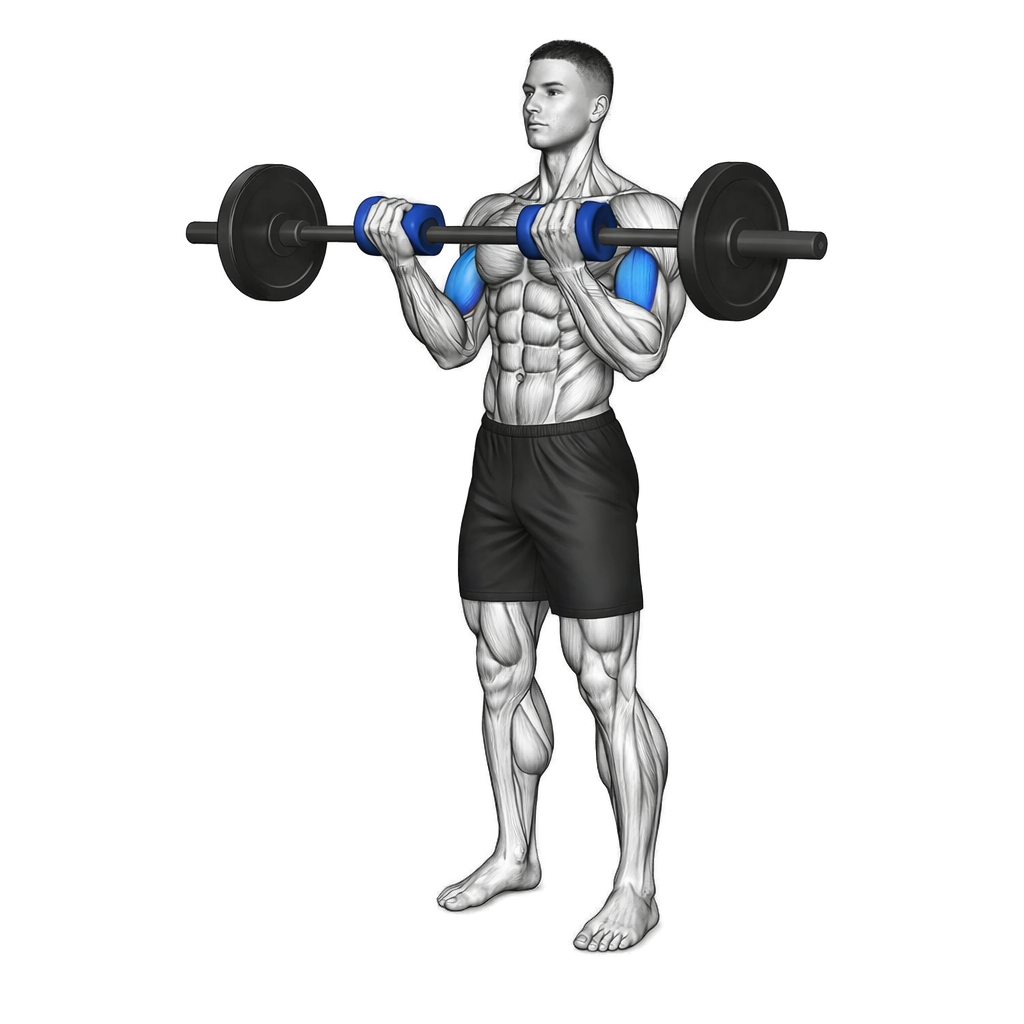
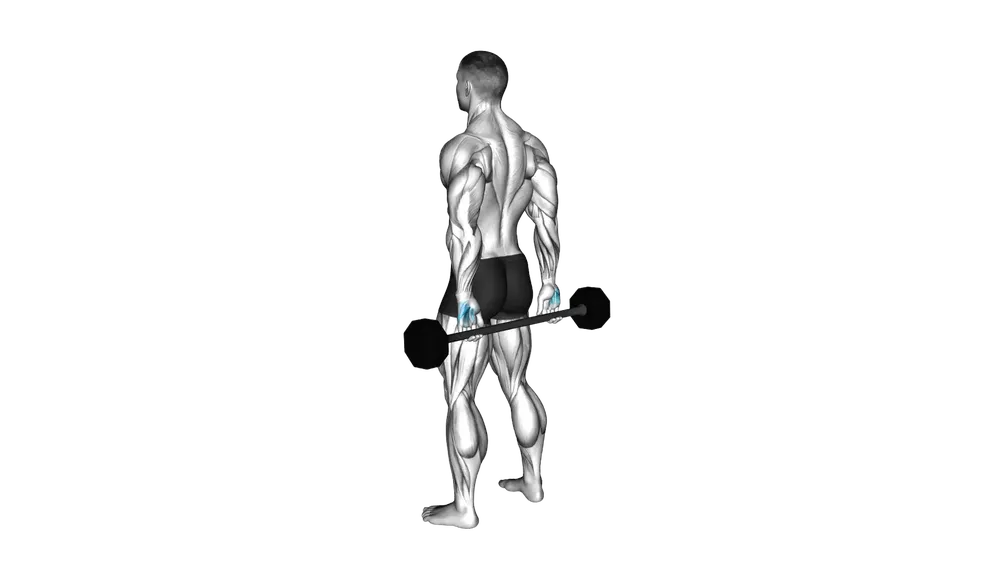
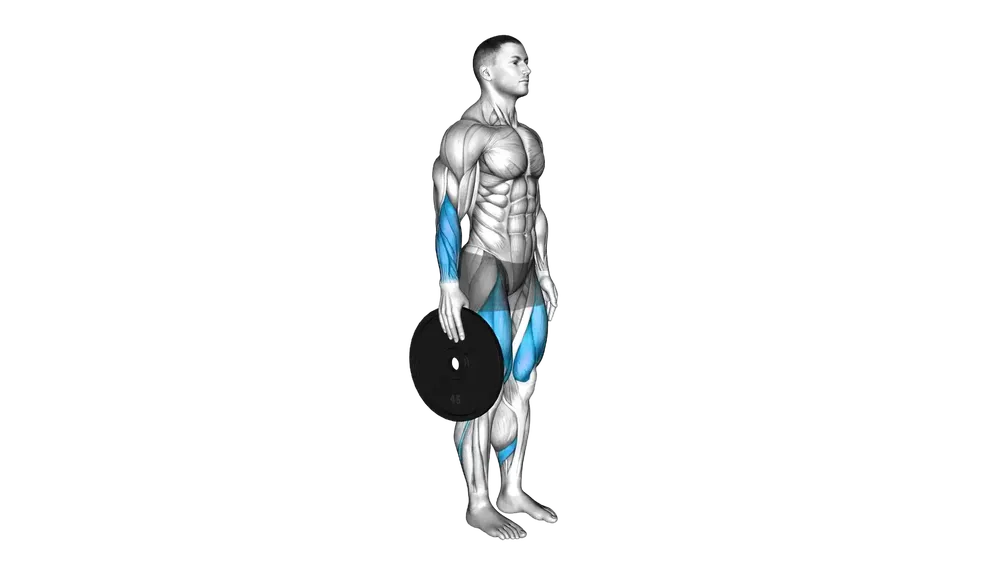
Palms-down band curls that hit the forearms and outer arm.
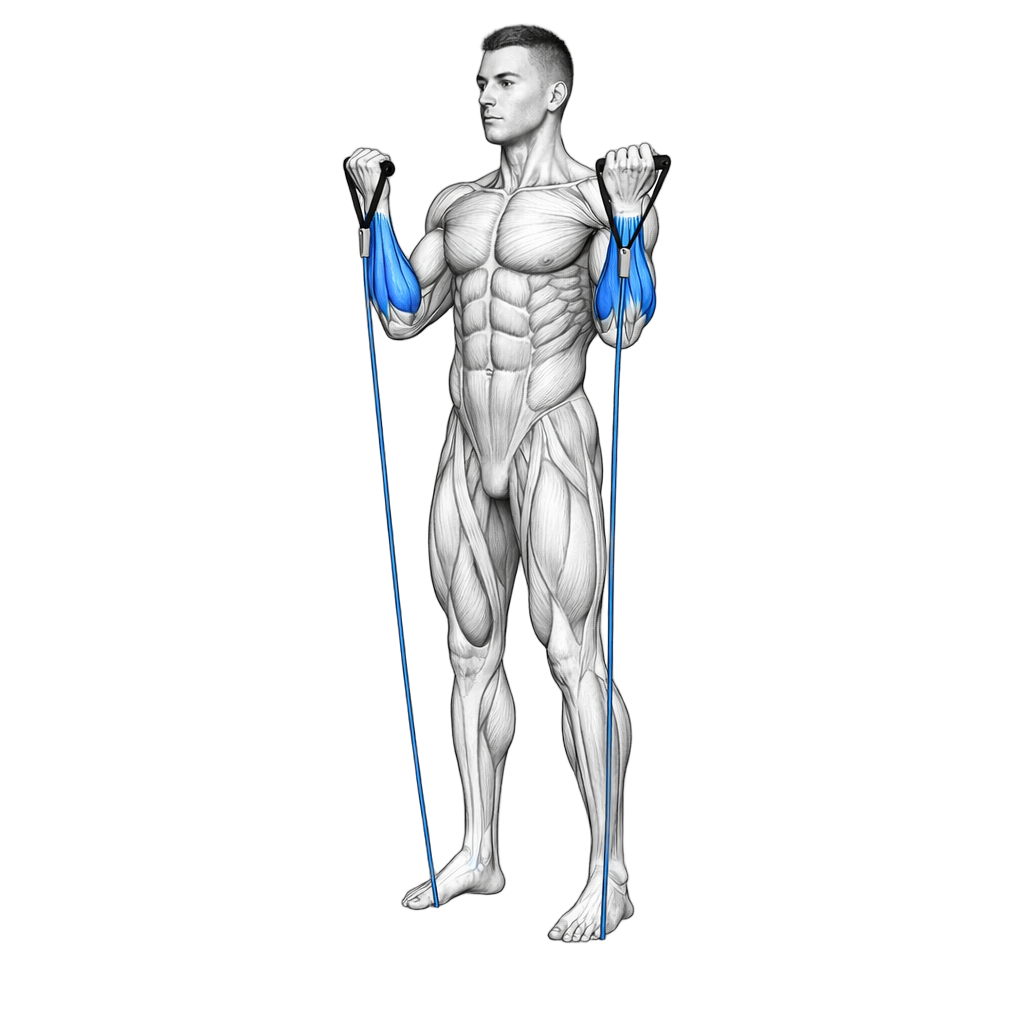
Keep your wrists straight and palms down the whole way, no rotating to a regular curl.
Flipping your grip palms-down shifts the curl's workload onto the forearms and the brachioradialis, the muscle running along the top of your forearm into the elbow. Standing on the band with elbows tucked, the overhand grip forces the wrist extensors to hold position against tension that climbs all the way to the top of the curl. It is the quiet accessory that thickens forearms and toughens grip structures, which pays rent every time you deadlift, row or hang.
The overhand grip takes the biceps out of their strongest position, handing the work to the brachioradialis and forearm muscles. It is one of the most direct ways to build forearm size and elbow resilience.
Palms-down is a mechanically weaker position for the arm flexors, so the same band feels heavier. Expect to work with less resistance than your normal curl and treat that as correct, not as a problem to fix with cheating.
No, dead straight from start to finish. Letting the wrists curl upward hands the work back to the forearm flexors and stresses the joint, keep the knuckles pointing up and the wrist locked as one line with the forearm.