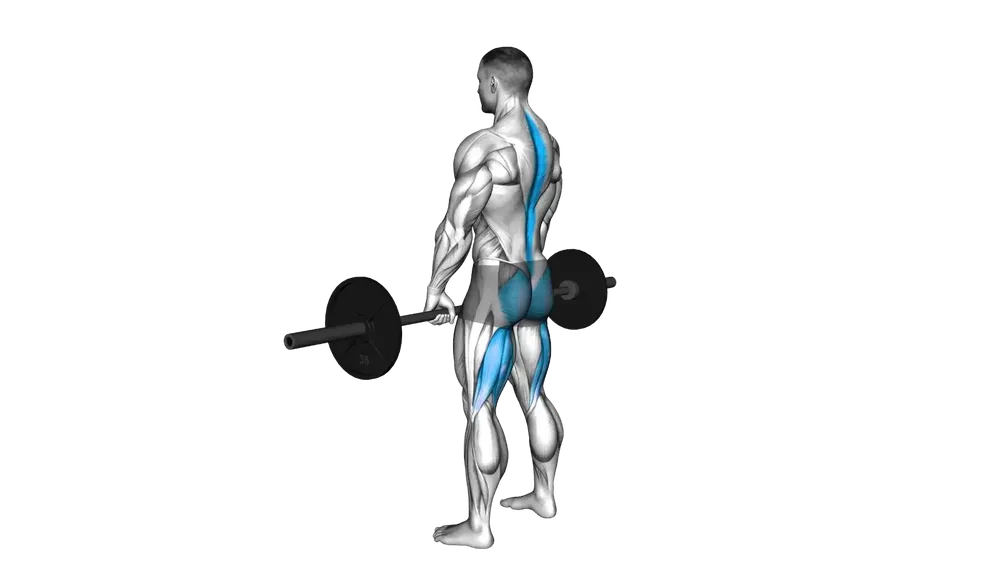
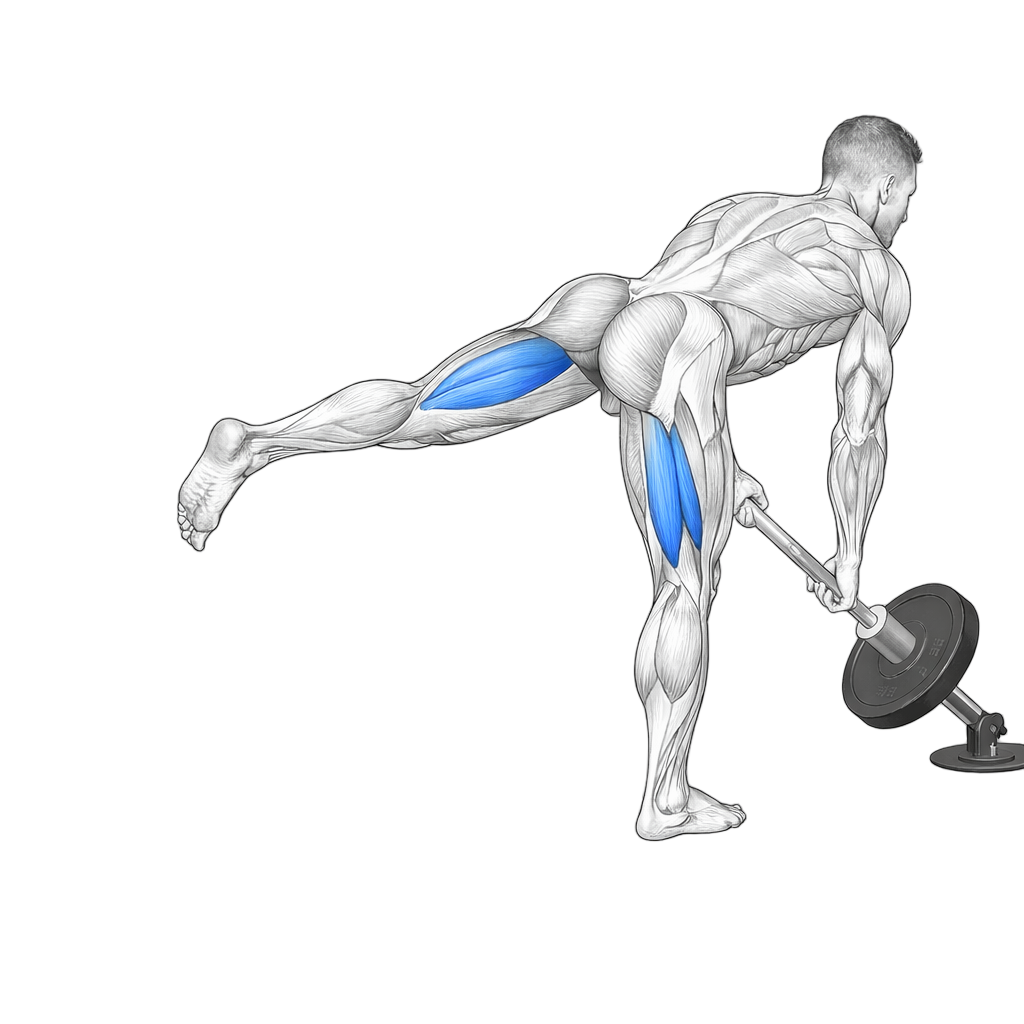
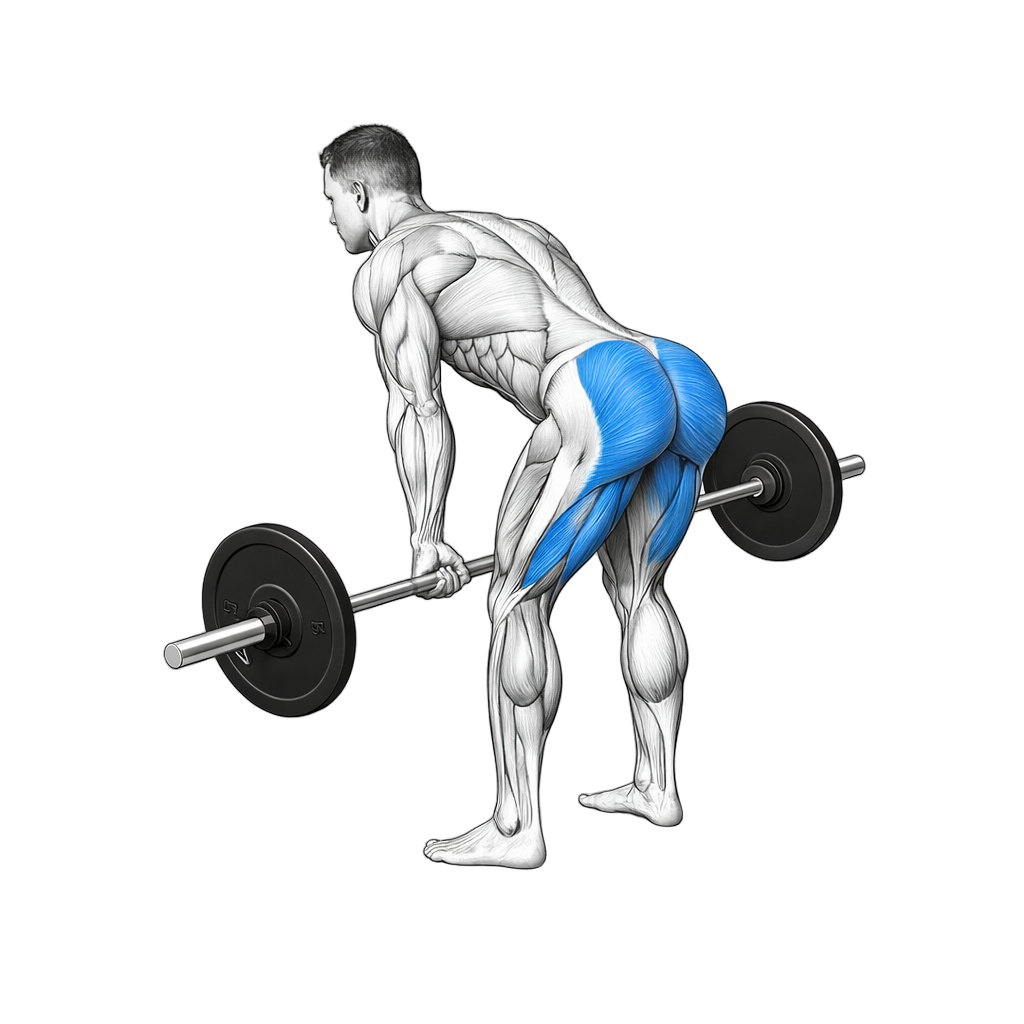
Pull from a deficit for a longer, harder range of motion.
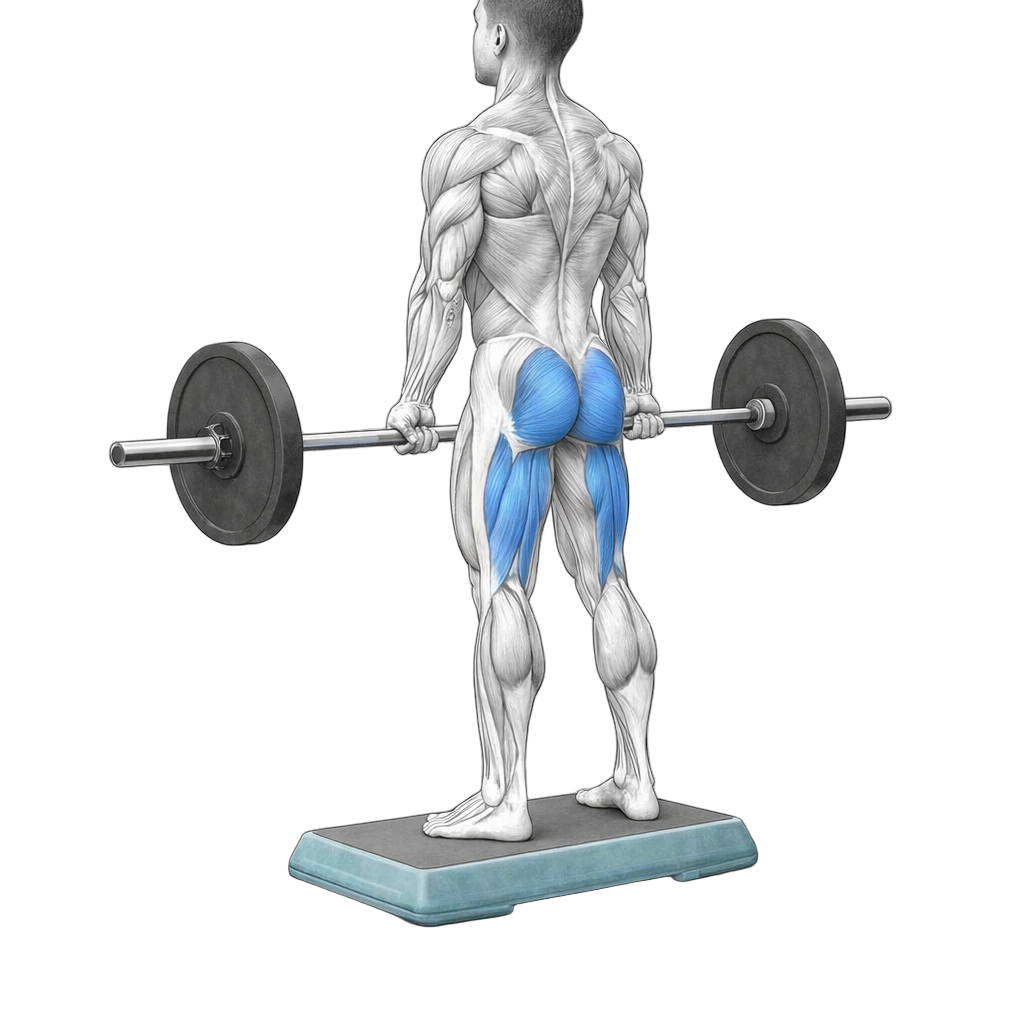
The deficit drops your hips lower, brace hard and keep your chest up off the floor.
Pulling from a deficit starts the bar lower than a standard deadlift, forcing a deeper hip position and stretching out the hardest phase of the pull, the break off the floor. The hamstrings and glutes work through that extended bottom range, which is why lifters use it to fix a slow start. Treat it as a targeted tool within a training block, not your everyday pull.
Strength off the floor. If your deadlifts stall at shin height, the deficit builds power exactly in that zone by making the bottom range longer and harder.
Only as much as lets you keep a flat back in the start position, which for most people means a low platform or a single plate's height. A deficit you cannot set up neutrally for is just practising bad pulls.
The rack pull or block pull, which shortens the range to overload the lockout. Deficit work trains the bottom, elevated bar work trains the top, and both feed the full lift.