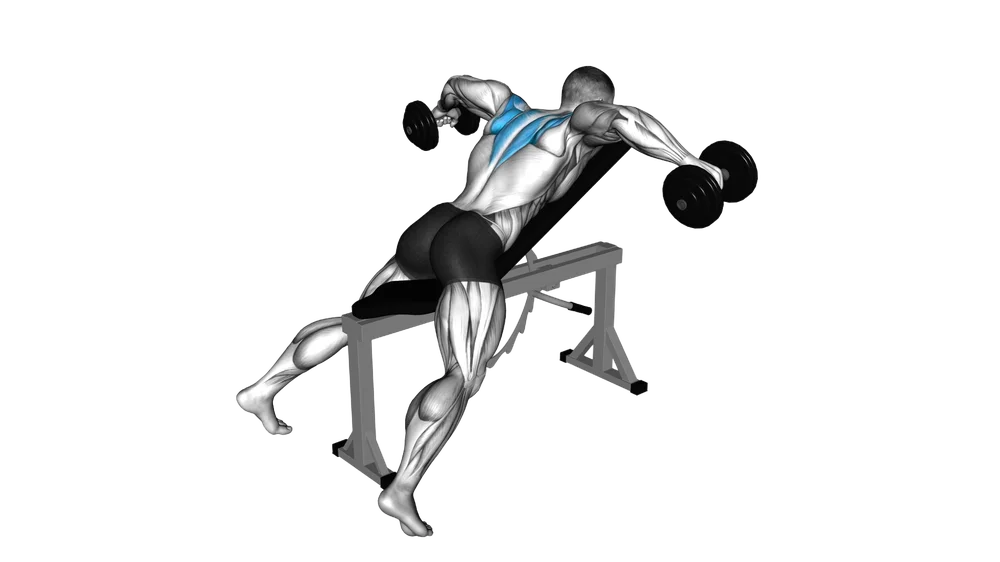
Flare the elbows and hammer those rear delts.
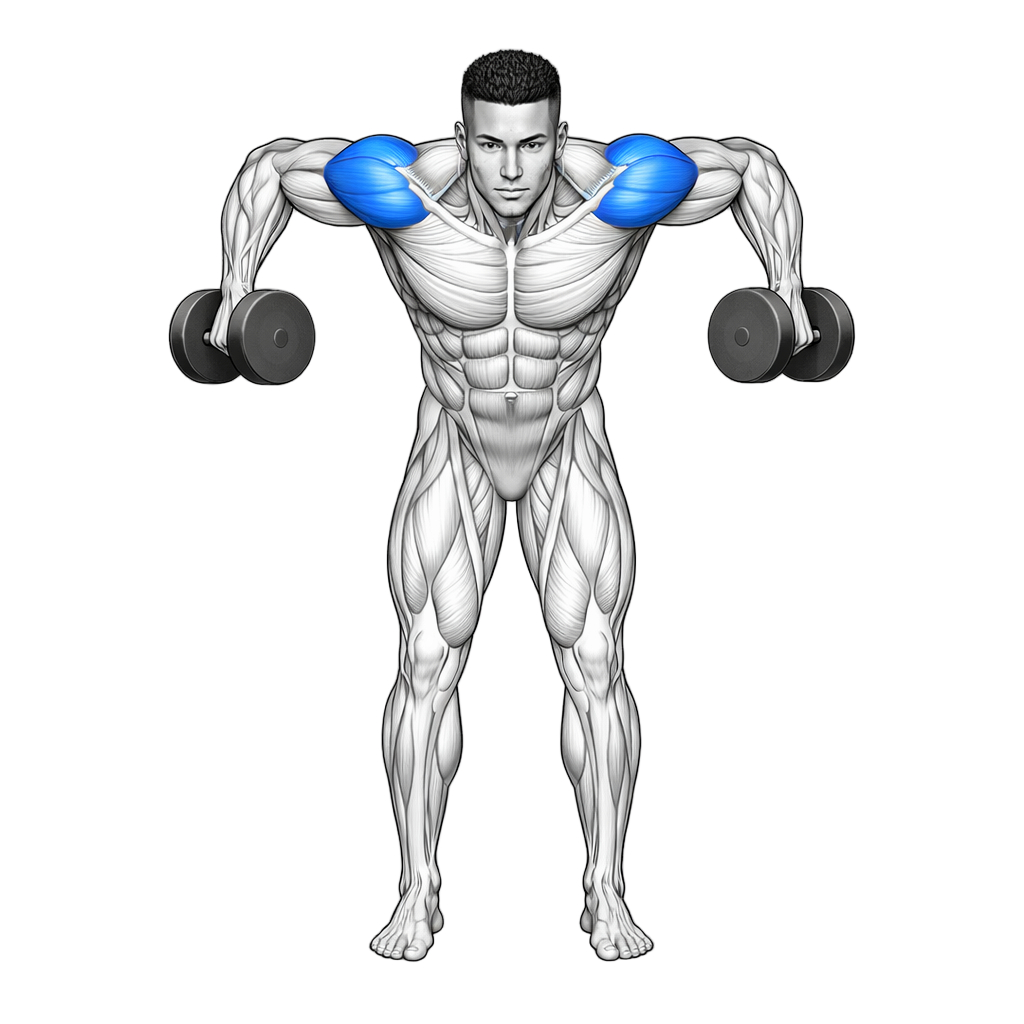
Elbows go out wide, not tucked. That flare is what fires the rear delts instead of the lats.
Flaring the elbows wide moves the pull out of the lats' strong line and hands it to the rear delts, the chronically undertrained back of the shoulder. The hinged position lets you load them with more weight than raises ever could, while the wide path keeps them in charge of the movement. If your shoulders look full from the front and flat from the side, this is the correction.
Elbow path is everything. Tucked elbows drag the weight to your hips and train the lats, flared elbows pull the weight toward your chest line and train the rear delts. Same hinge, completely different target.
Noticeably lighter than your regular rows. The rear delts are small, and once the weight forces your elbows to drop and tuck, the lats have quietly taken the set over.
The bent-arm row lets you use more load, the reverse flye isolates with a longer lever and lighter weight. They complement each other, rotating both covers strength work and detail work.