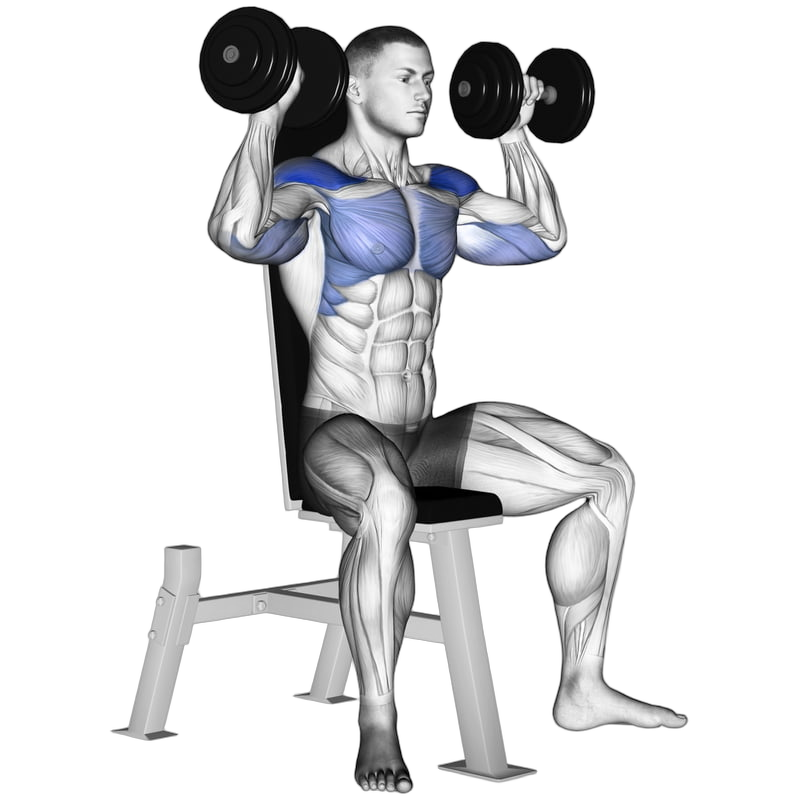
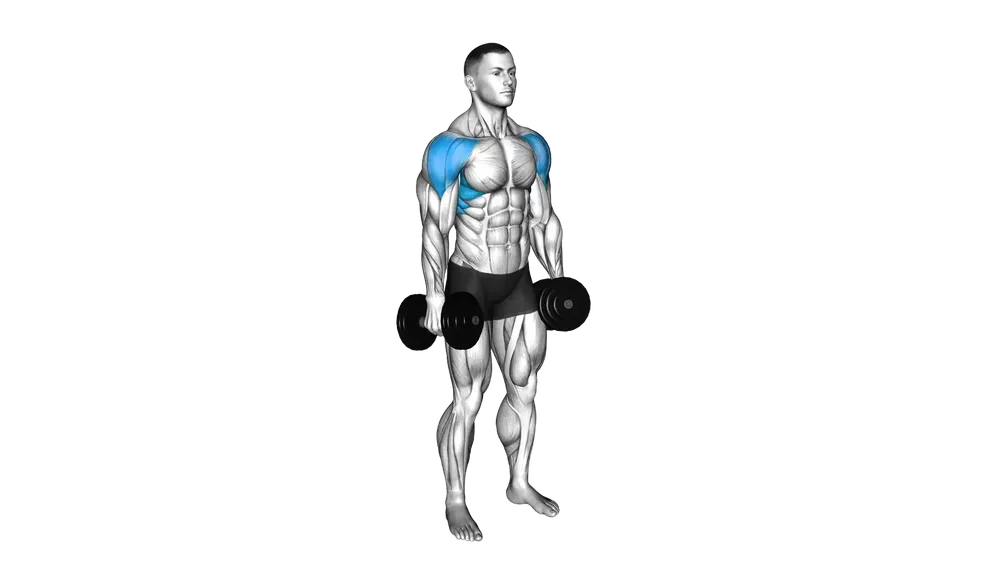
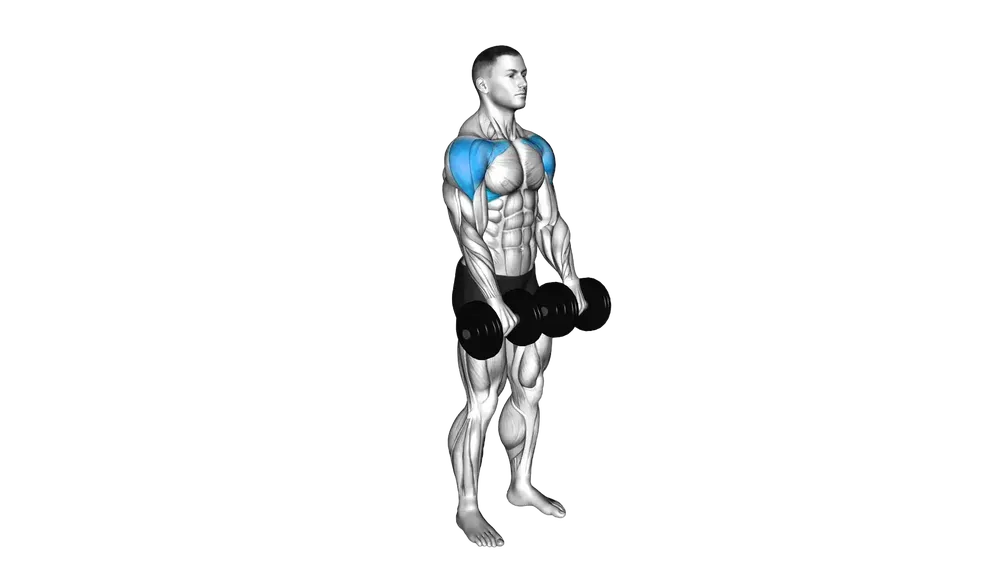
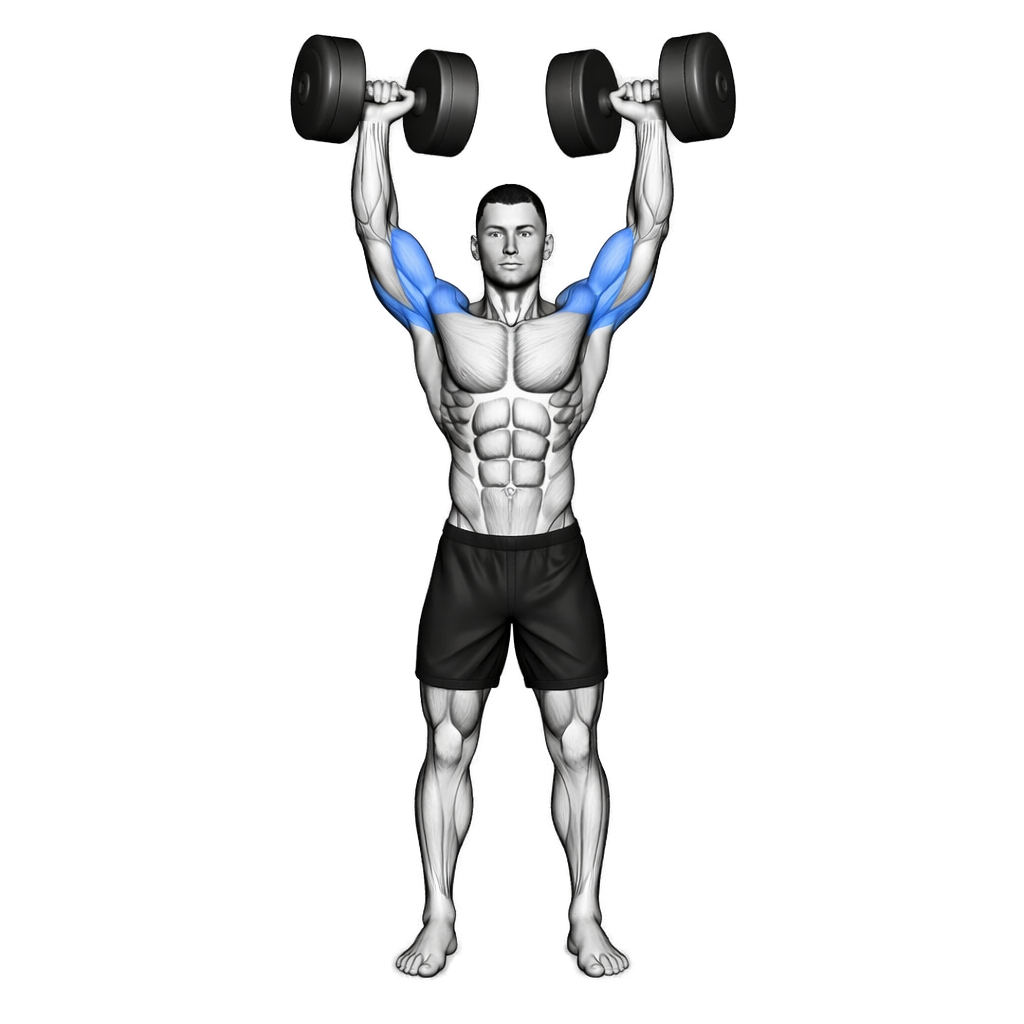
Seated, one arm, all shoulder, no momentum.
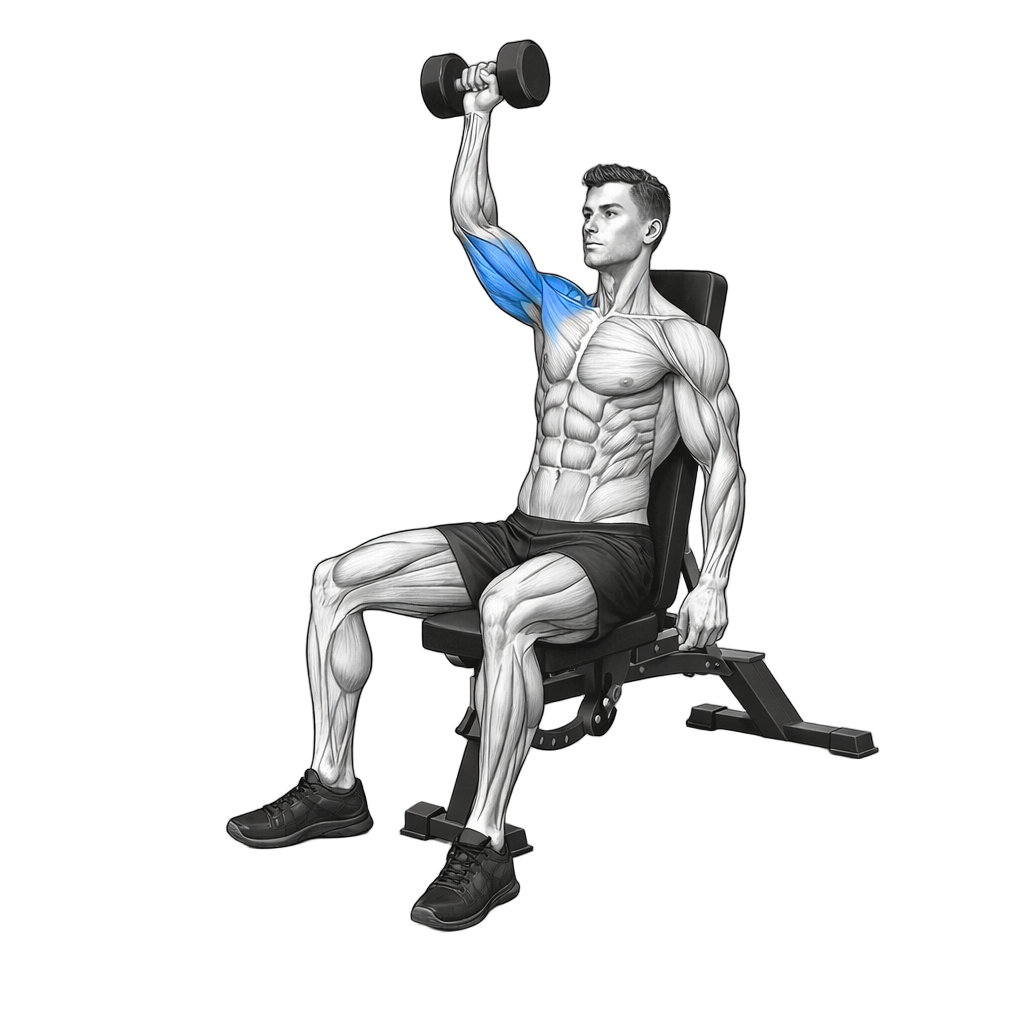
Keep your back on the pad and don't twist your torso to help the weight up.
Pressing one dumbbell at a time with your back against the pad leaves the shoulder nowhere to hide, no leg drive, no torso lean, no stronger arm sharing the load. The delt drives the press with the triceps finishing the lockout, while the offset weight makes your trunk fight to stay square against the pad. Working each side alone is how pressing imbalances get found and fixed.
Each shoulder does its own work with no help from the stronger side, which exposes and fixes imbalances that two-dumbbell pressing hides. The offset load also makes your core resist tipping, so you get trunk work for free.
Rest it on your thigh or lightly hold the bench for balance. Do not grip the bench and heave, the point is that the pressing shoulder and your brace do the stabilising, not your spare arm.
Brace your core before the dumbbell moves and keep your back pinned to the pad, as cued. If the twist persists, the dumbbell is too heavy. Drop a size and build up with reps that finish as square as they start.