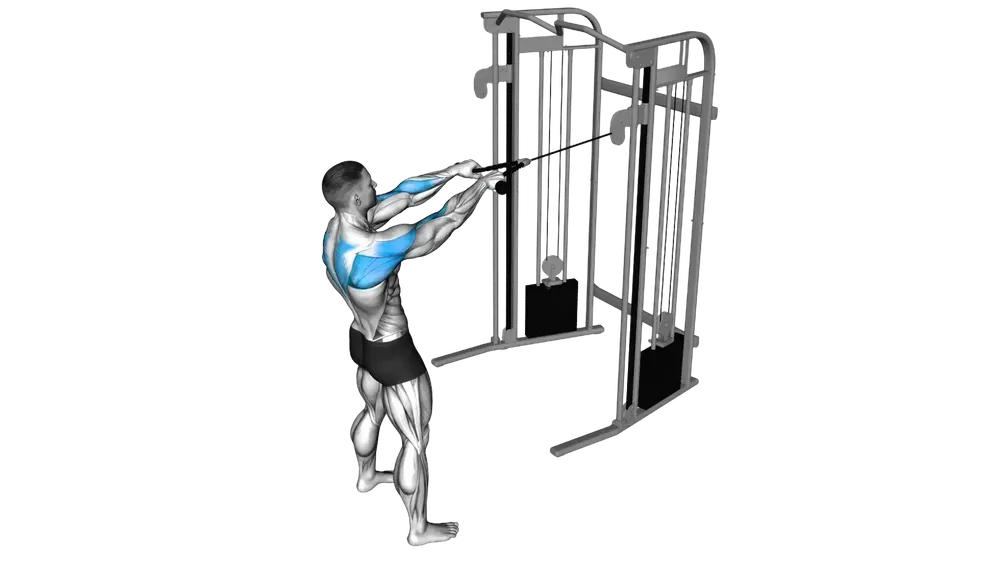
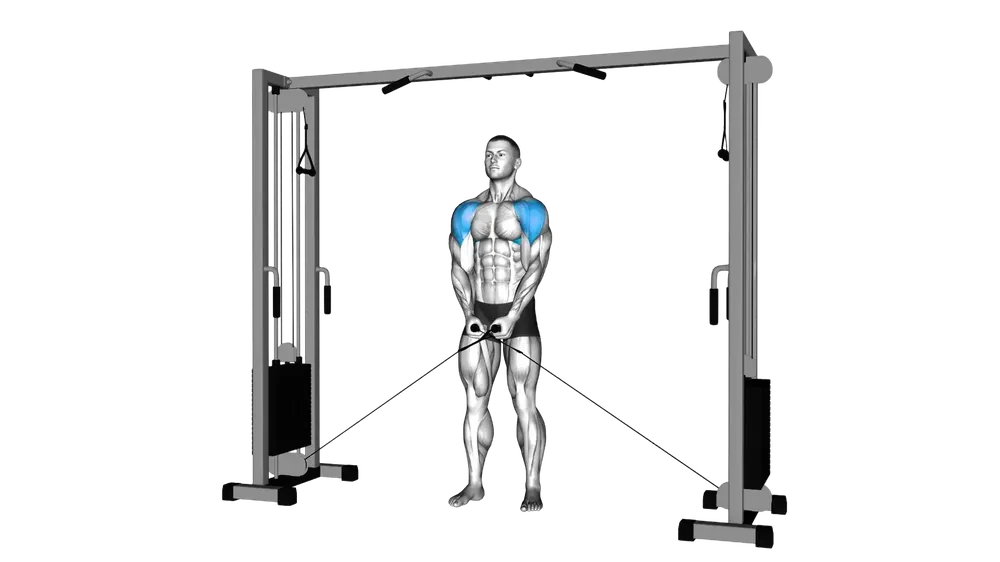
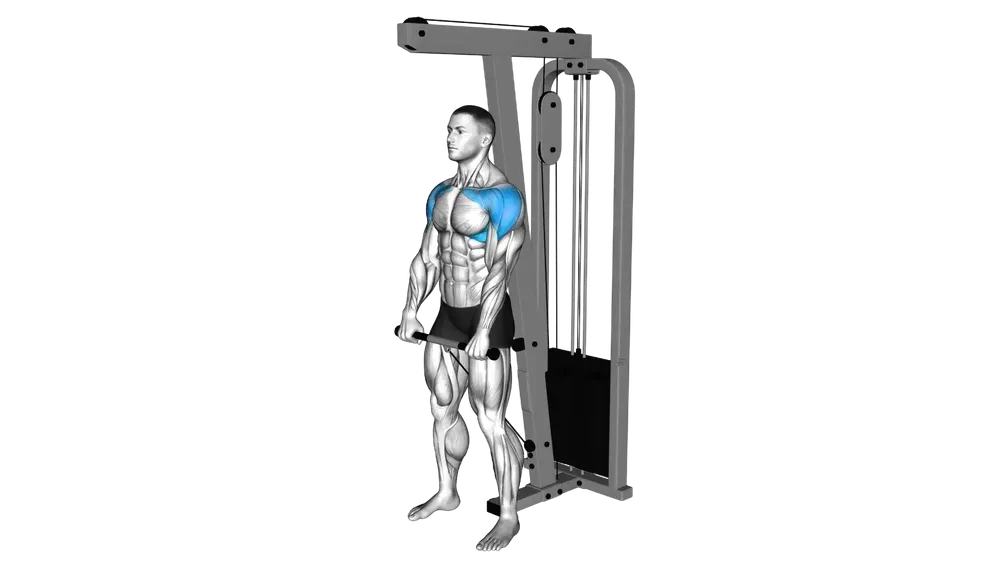
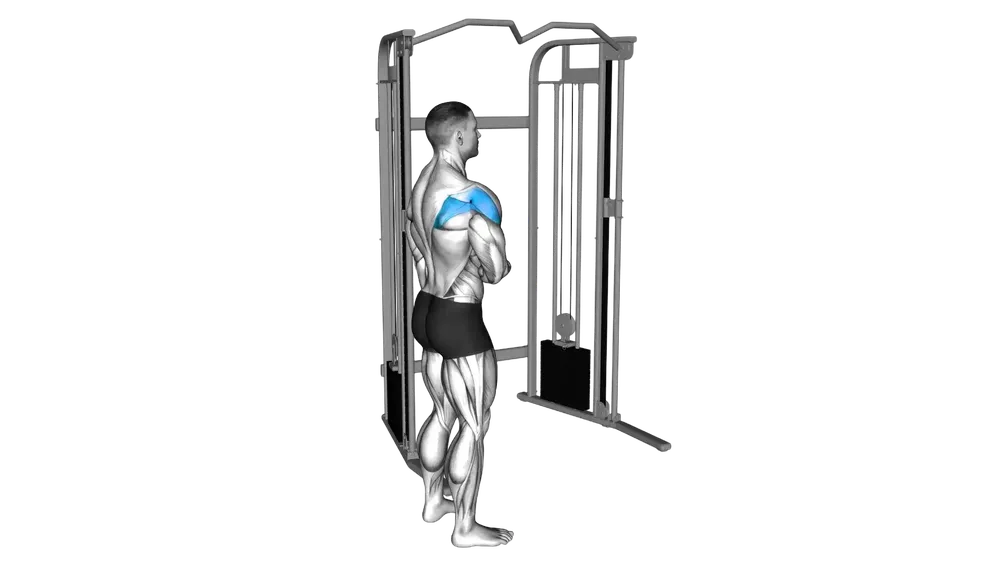
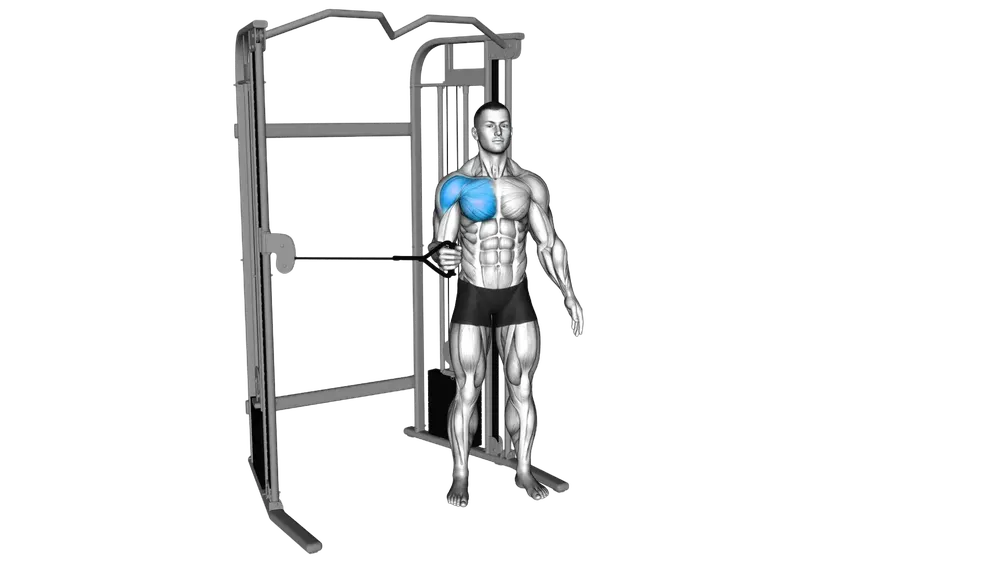
Rotator-cuff insurance in the pressing position.
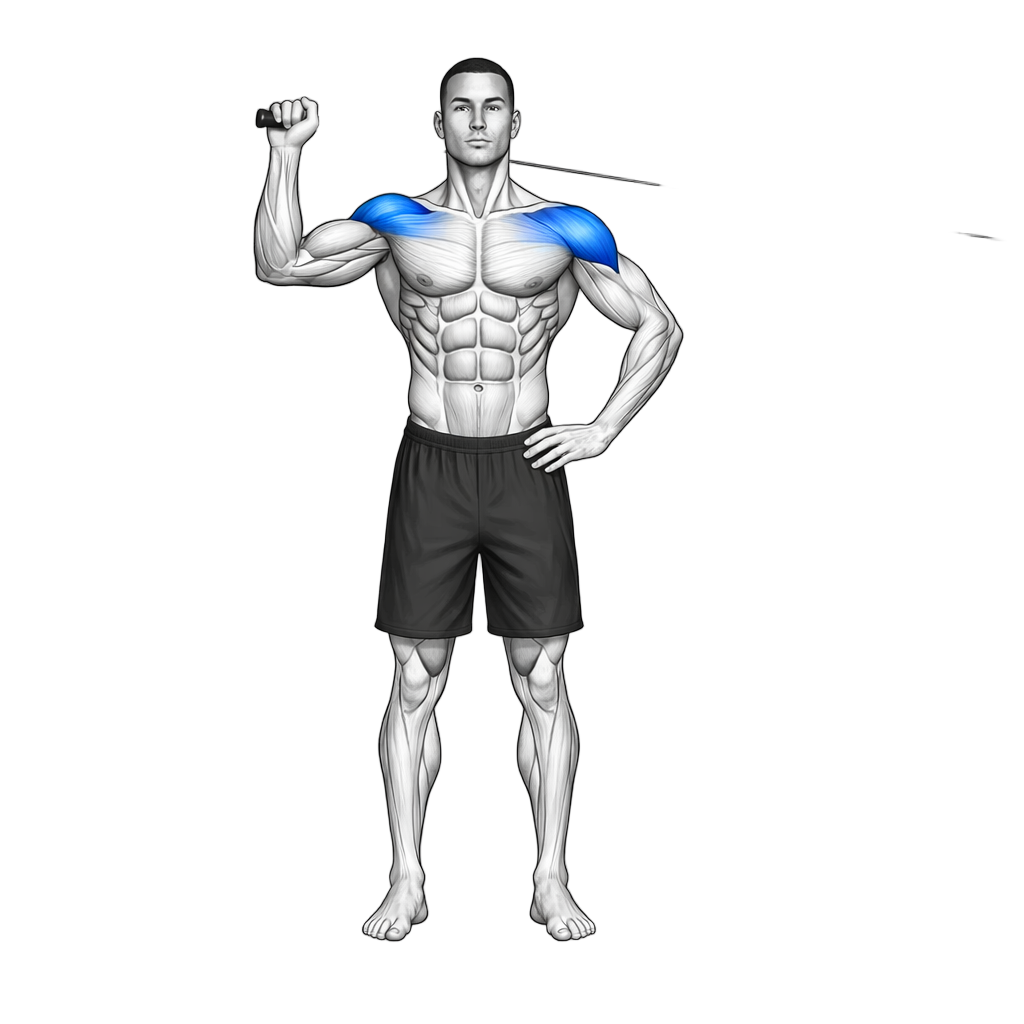
Keep the upper arm parallel to the floor throughout the rep.
Raising the elbow to shoulder height before rotating puts your rotator cuff to work in the abducted position, the same arm angle you press, throw, and serve from. Rotating the forearm up and back against the cable trains the cuff exactly where overhead athletes and pressers need it, which the elbow-at-side version can't replicate. It earns its place for anyone who lives overhead, because a cuff trained only by your side never learns the position that matters.
Because your shoulder mostly gets in trouble with the arm raised, pressing, throwing, reaching overhead. Training the cuff at 90 degrees builds strength in that exact position, the elbow-at-side version is the entry point, this is the graduation.
That's fatigue or too much weight. Keep the upper arm parallel to the floor for every rep, and the moment it sags, end the set, reps with a dropped elbow train a different, easier position.
Anyone pressing overhead regularly, plus throwers, swimmers, and racket sport players. If your training or sport puts your arm up, this is the cuff position worth being strong in.