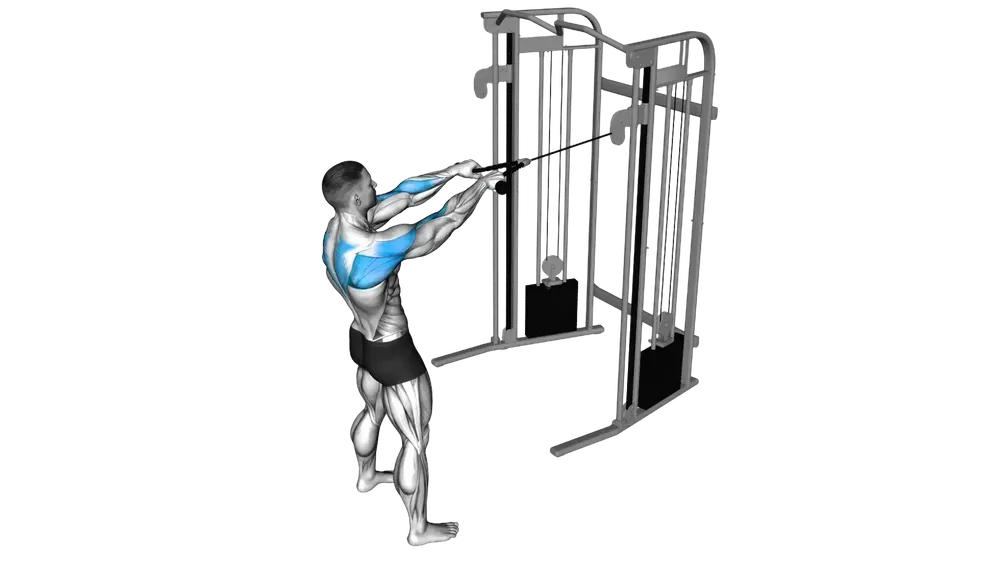
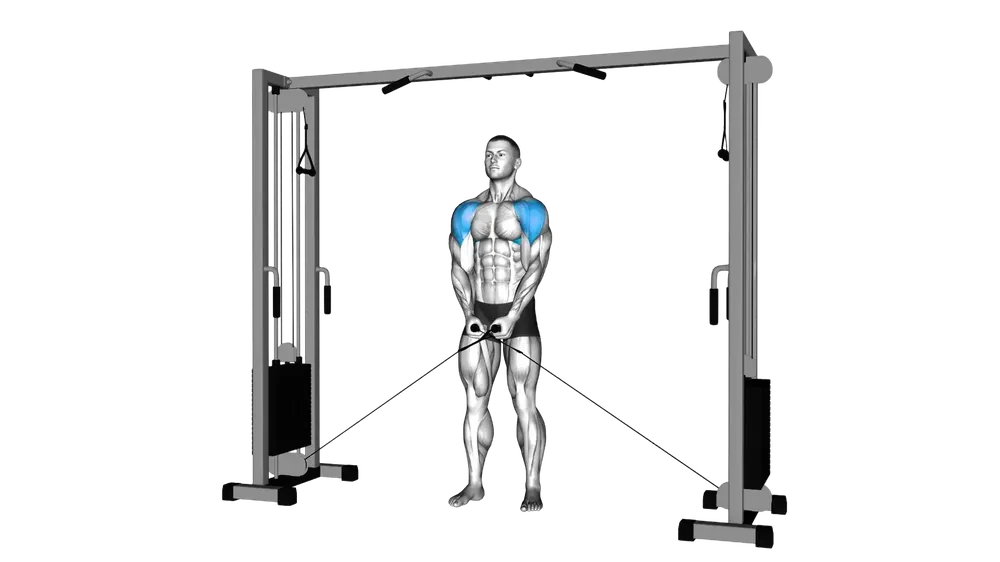
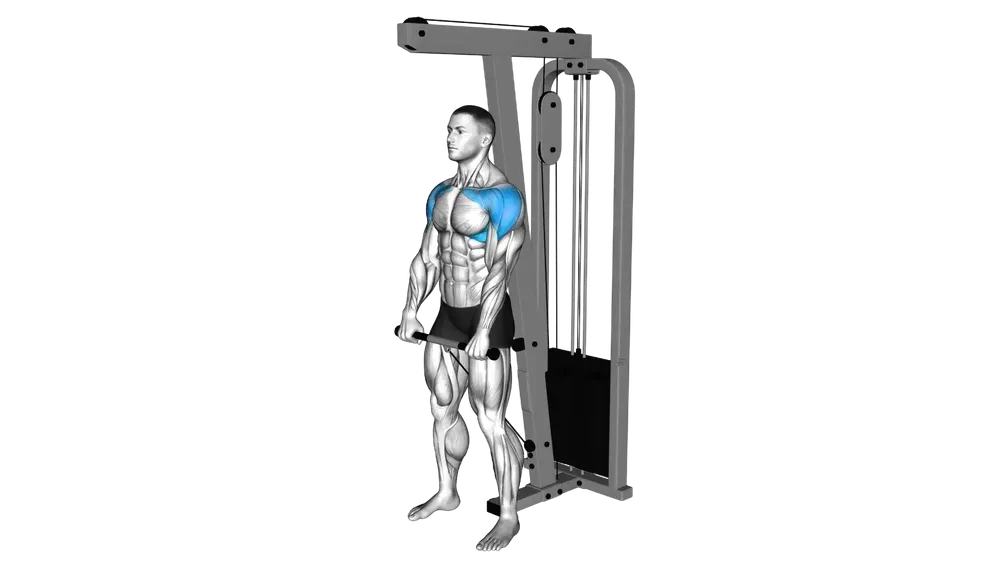
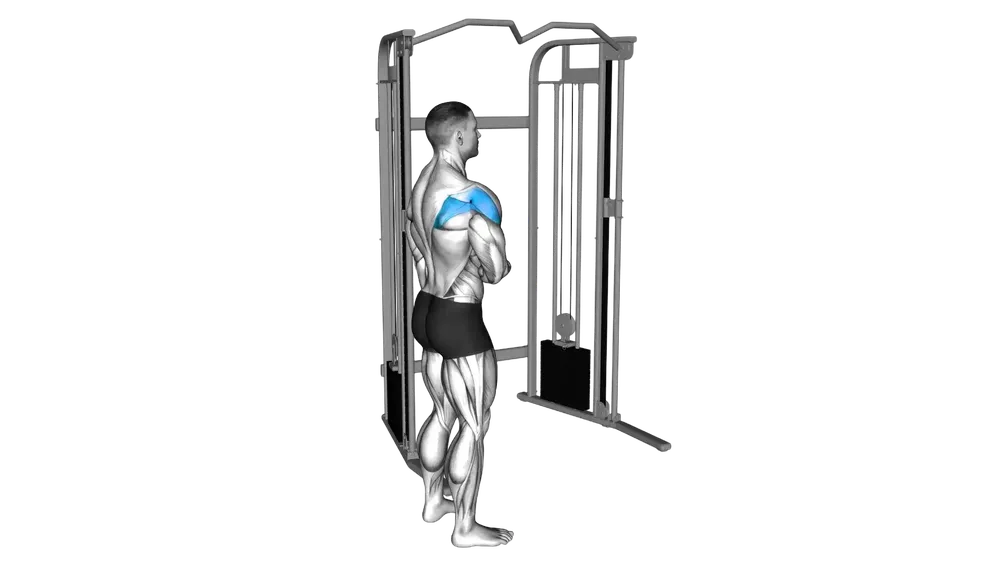
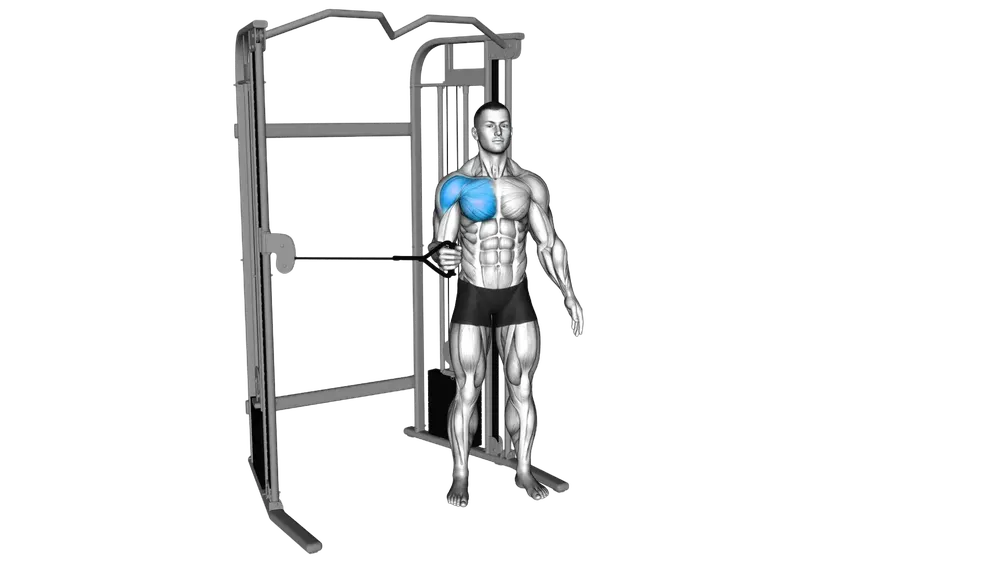
Cable behind you for constant side-delt tension.
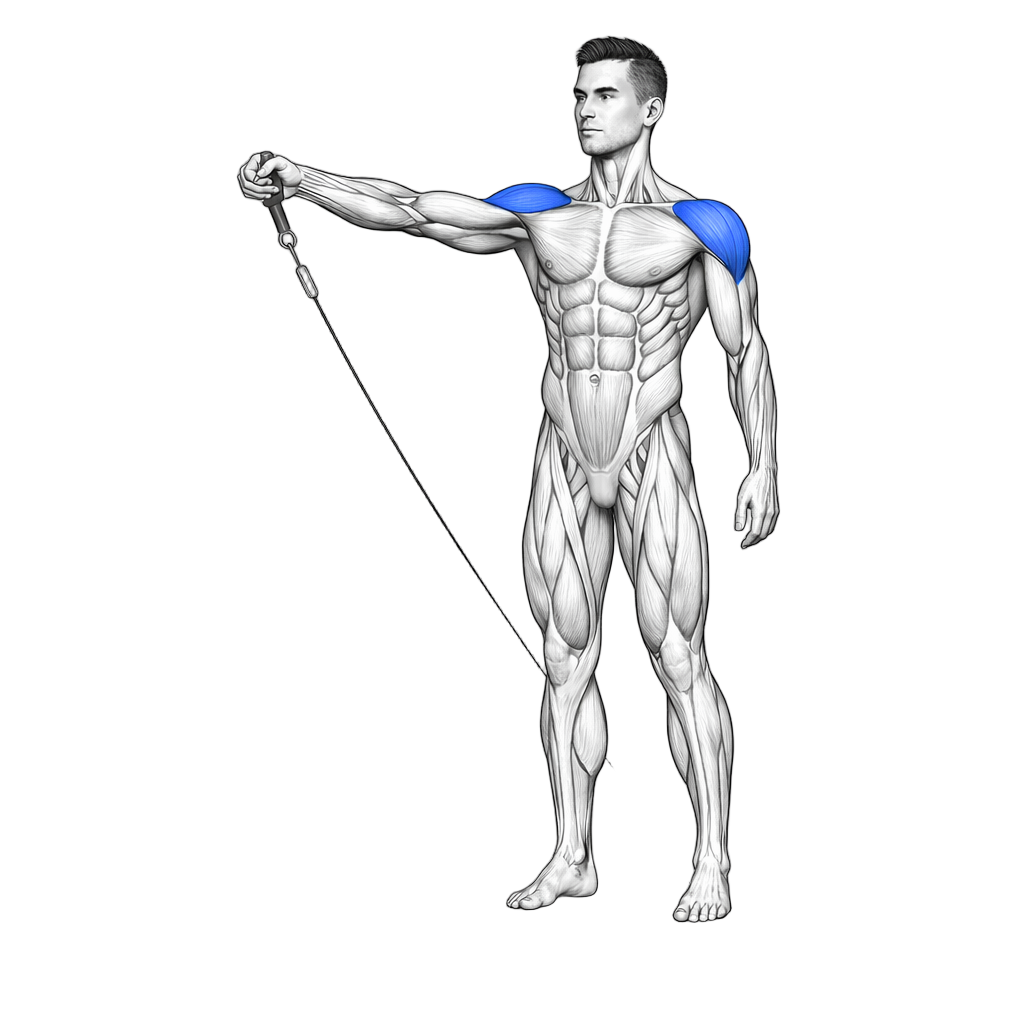
The behind-the-back angle keeps tension on the side delt at the bottom. Stay slow and strict.
Running the cable behind your back changes the line of pull so the side delt is under load from the very bottom of the raise, the exact zone where a dumbbell version has almost nothing to offer. Working one arm at a time lets you stay strict and match effort side to side. It earns its place as the lateral raise for people who want tension through the whole rep, not just the top half.
The behind-the-back path pulls the arm down and across, loading the side delt hard from the first inch of the raise. The front path tends to drag the front delt into the movement. Behind is stricter and stays on target.
Lighter than you think. The constant tension at the bottom makes any weight feel heavier than the same load on dumbbells, and swinging ruins the whole point. Pick a load you can raise slowly to shoulder height with a still torso.
A slight natural lean from standing side-on is fine, but do not actively hinge away to lengthen the range. Stand tall, raise strictly to shoulder height, and let the cable angle do the clever part.