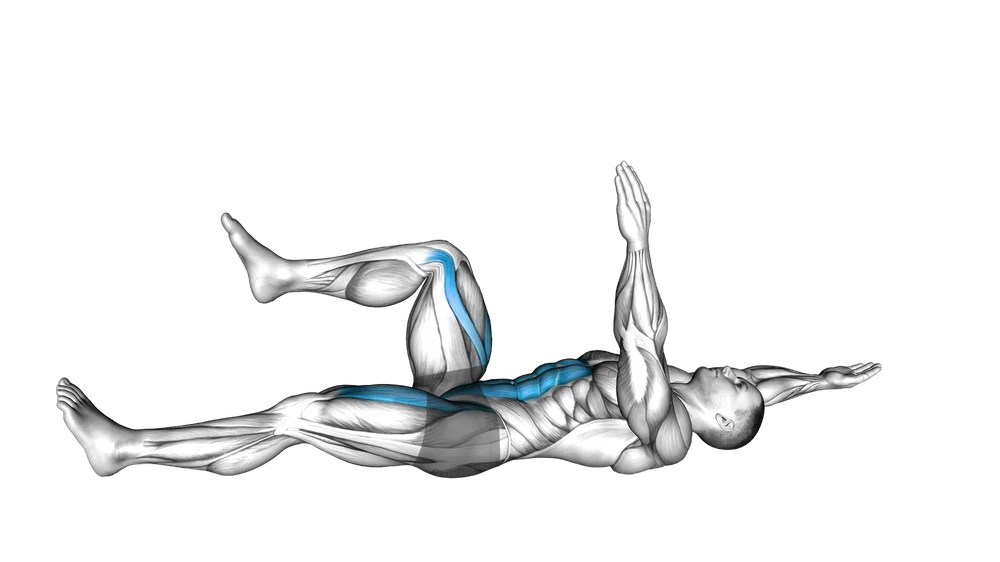
Crawl forward on hands and toes, knees hovering.
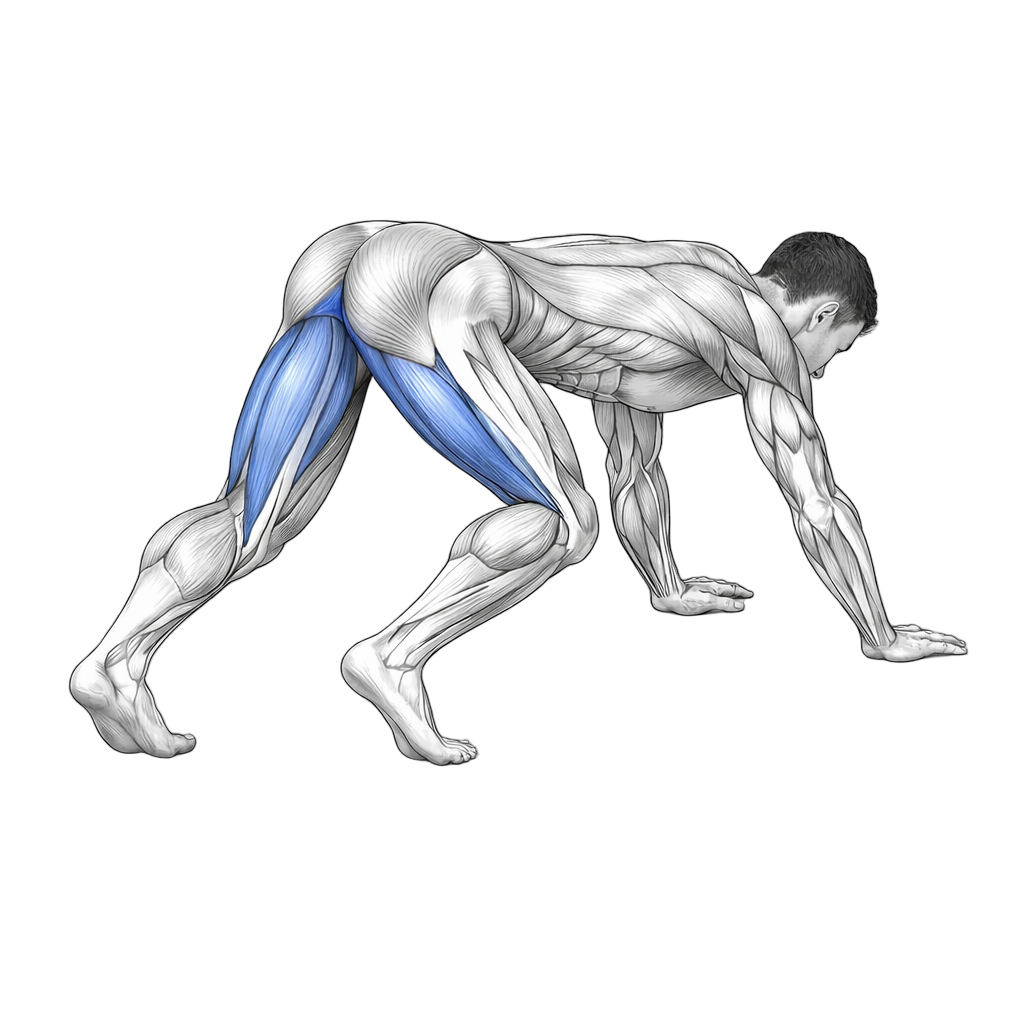
Keep your hips level and steady, don't let them sway side to side.
Crawling with knees hovering an inch off the floor keeps the hips low and loaded, so the hamstrings and glutes work continuously to drive each leg through its short, controlled step. Because opposite hand and foot move together while everything else stays rigid, it is also a moving stability drill that punishes any swaying or sagging. It earns its spot in warm-ups and conditioning circuits as full-body work that requires exactly zero equipment.
That hover is what separates a bear crawl from crawling like a toddler. It keeps constant tension through your legs and forces your trunk to hold position, so the moment the knees touch down the exercise has effectively stopped.
Slow and controlled builds the most stability, fast crawls turn it into conditioning. Earn the slow version first, if your hips sway side to side at walking pace, speed will only make it uglier.
Distance or time both work, something like 10 to 20 metres per set or 20 to 40 seconds. Stop the set when your hips start rising or swaying, because reps past that point are just bad crawling practice.