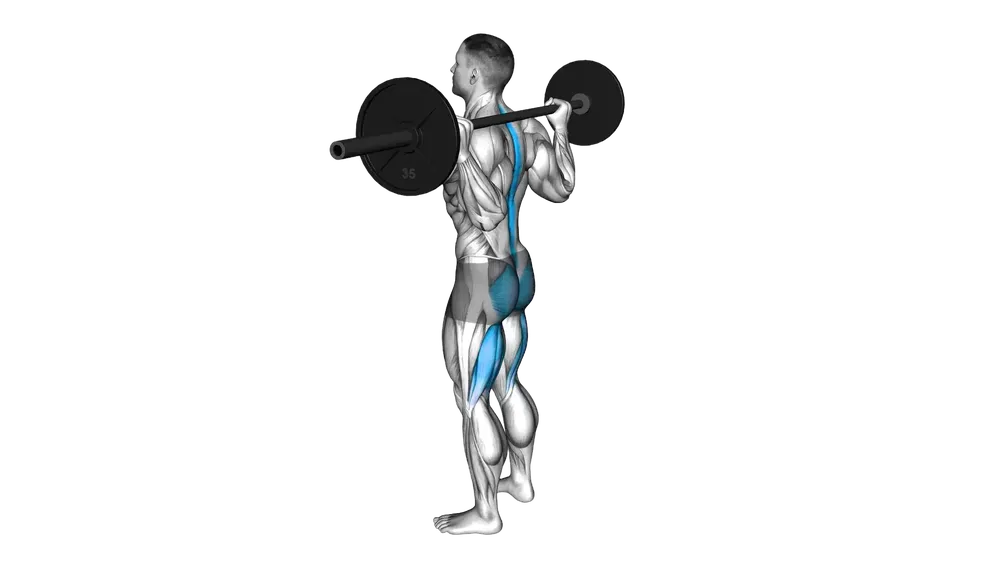
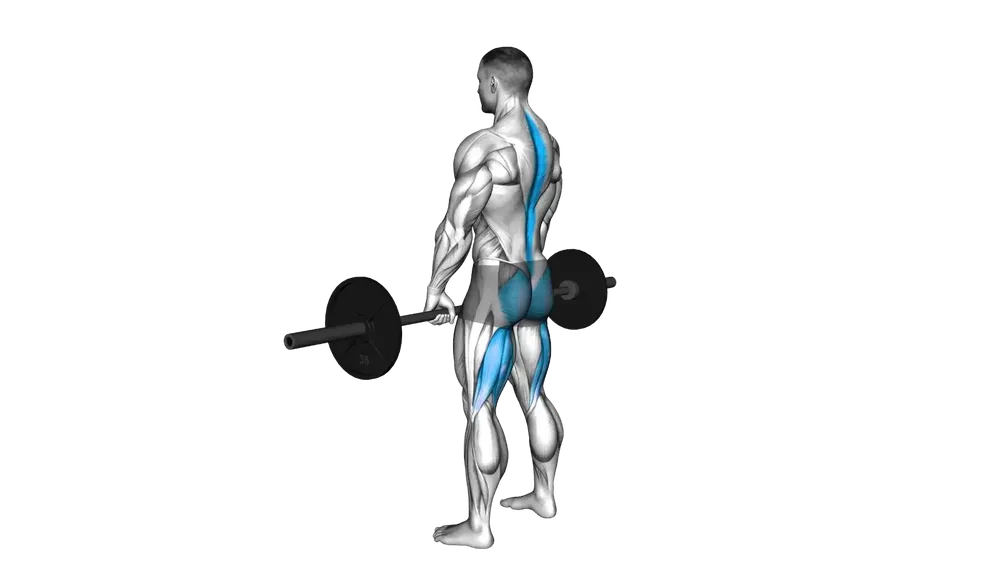
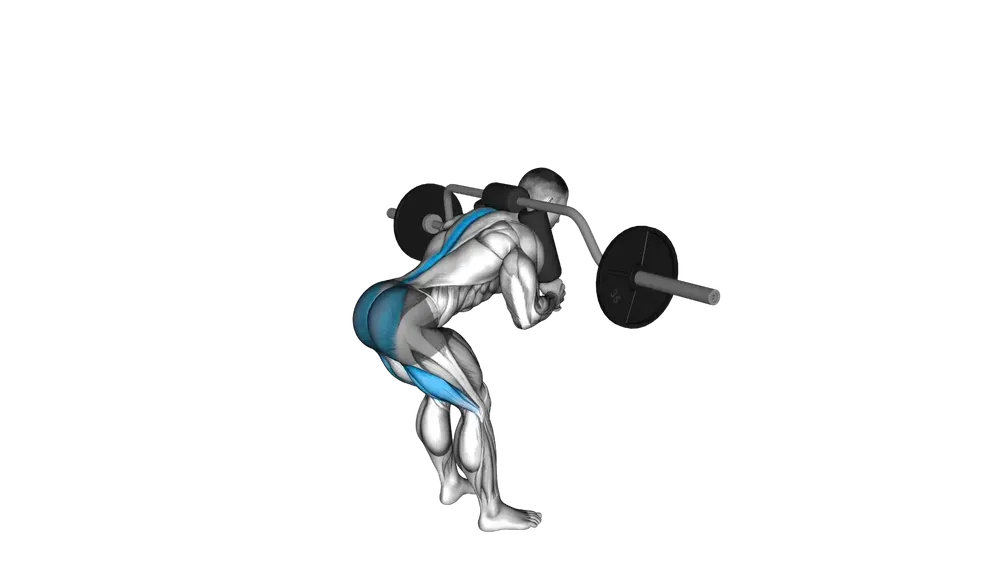
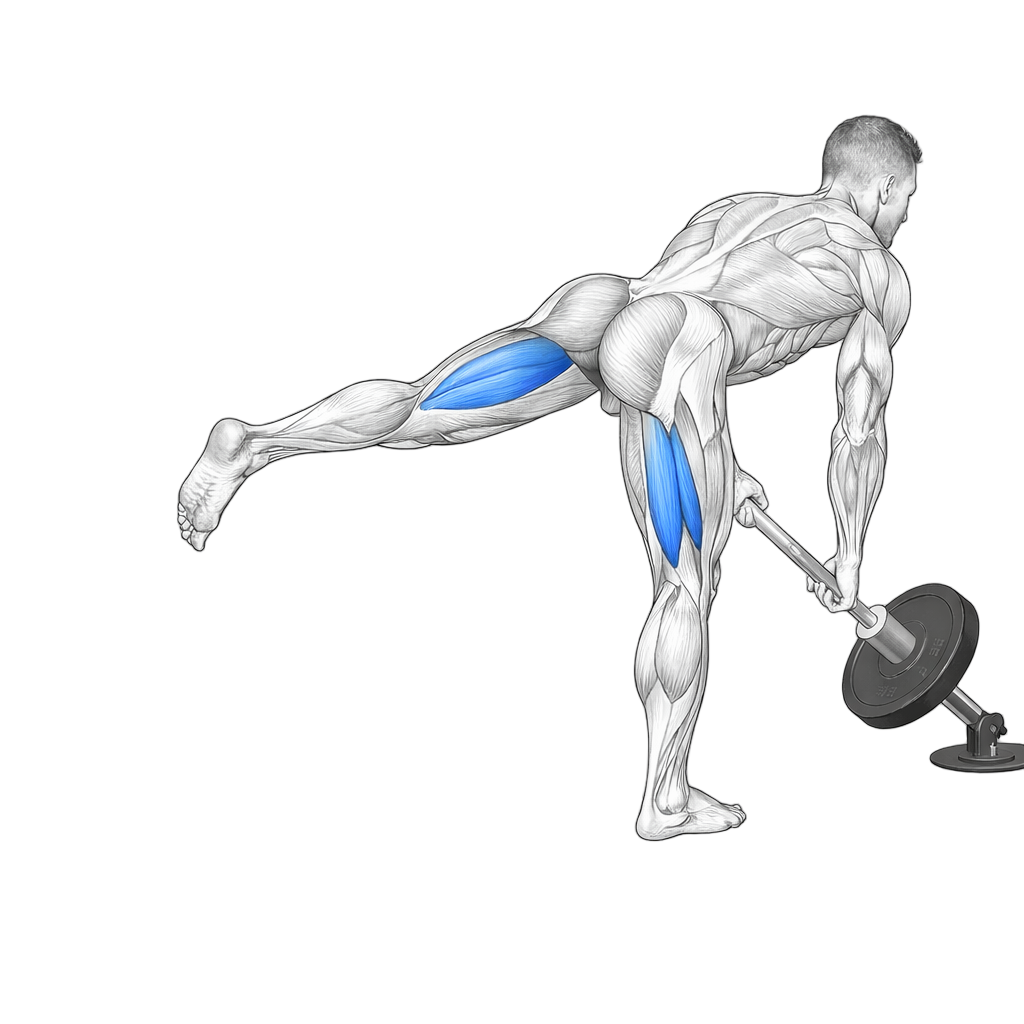
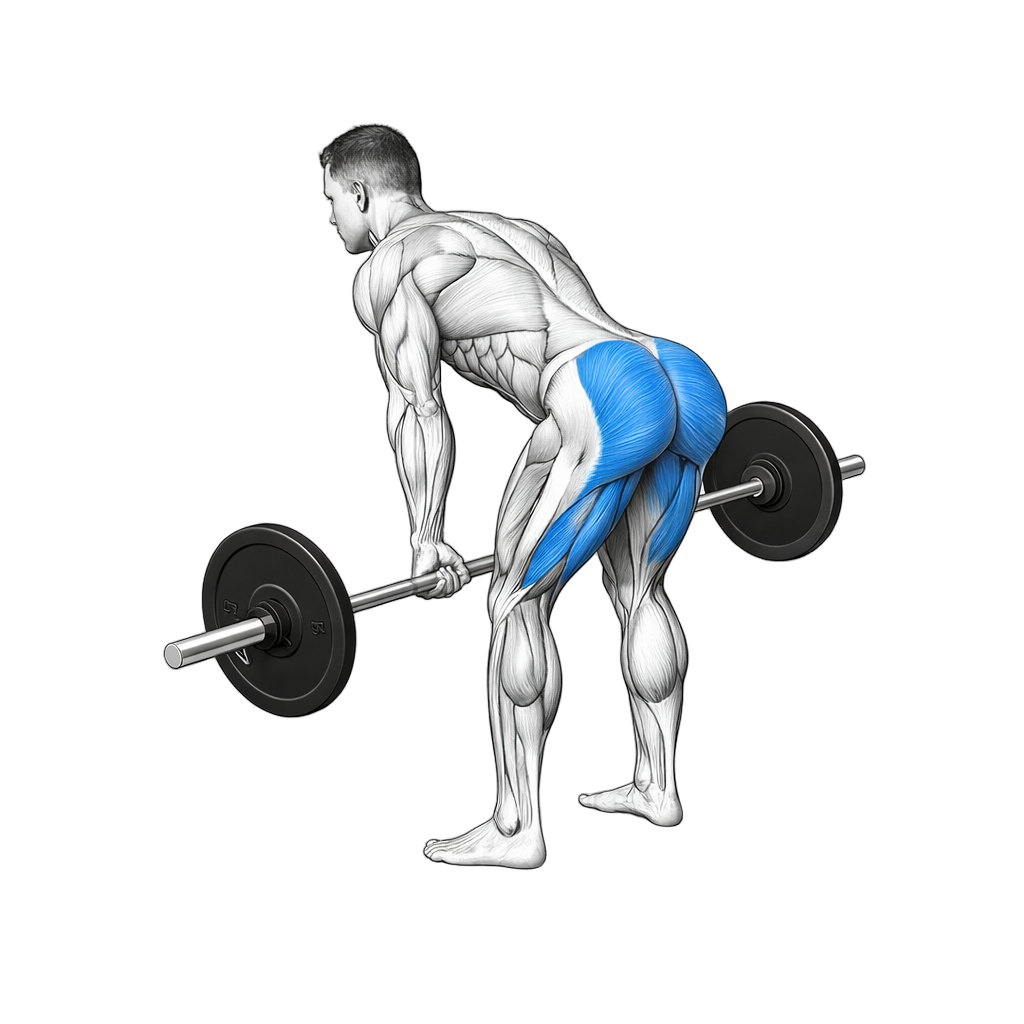
Sneaky single-leg hinge with the stability of a barbell.
Keep the bar close and your back flat. Push your hips back, the bar follows.
The kickstand foot shifts almost all the load onto the front leg, so the hamstring on that side lengthens under near single-leg loading while the glute finishes the hip lockout. Because the back toes stay down for balance, you keep the stability of a normal barbell hinge and can load it far heavier than a true single-leg RDL. It is the move for ironing out left to right differences without turning your hinge into a balance act.
Very little, think of the back foot as a kickstand carrying maybe a tenth of the load. If you feel the back leg working, shift more weight forward until the front hamstring is clearly doing the job.
B-stance lets you load heavier and focus on the hamstring instead of fighting for balance, so it usually wins for muscle and strength. The true single-leg version earns its place when balance and hip control are the goal.
Expect to use well under half your two-leg RDL load per side, since one hamstring is doing nearly all the work. Start light, find the deep stretch down the front leg, and build from there.