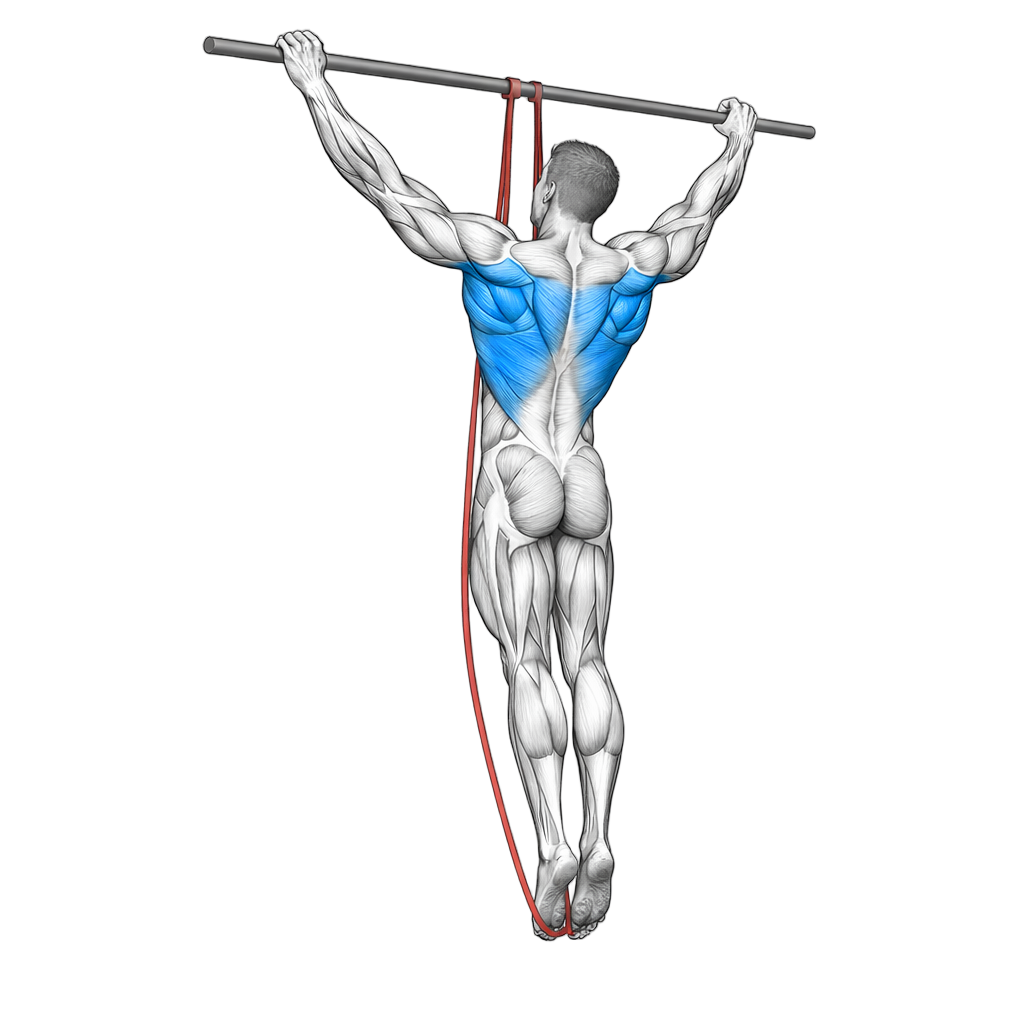
Train the lower traps everyone forgets about.
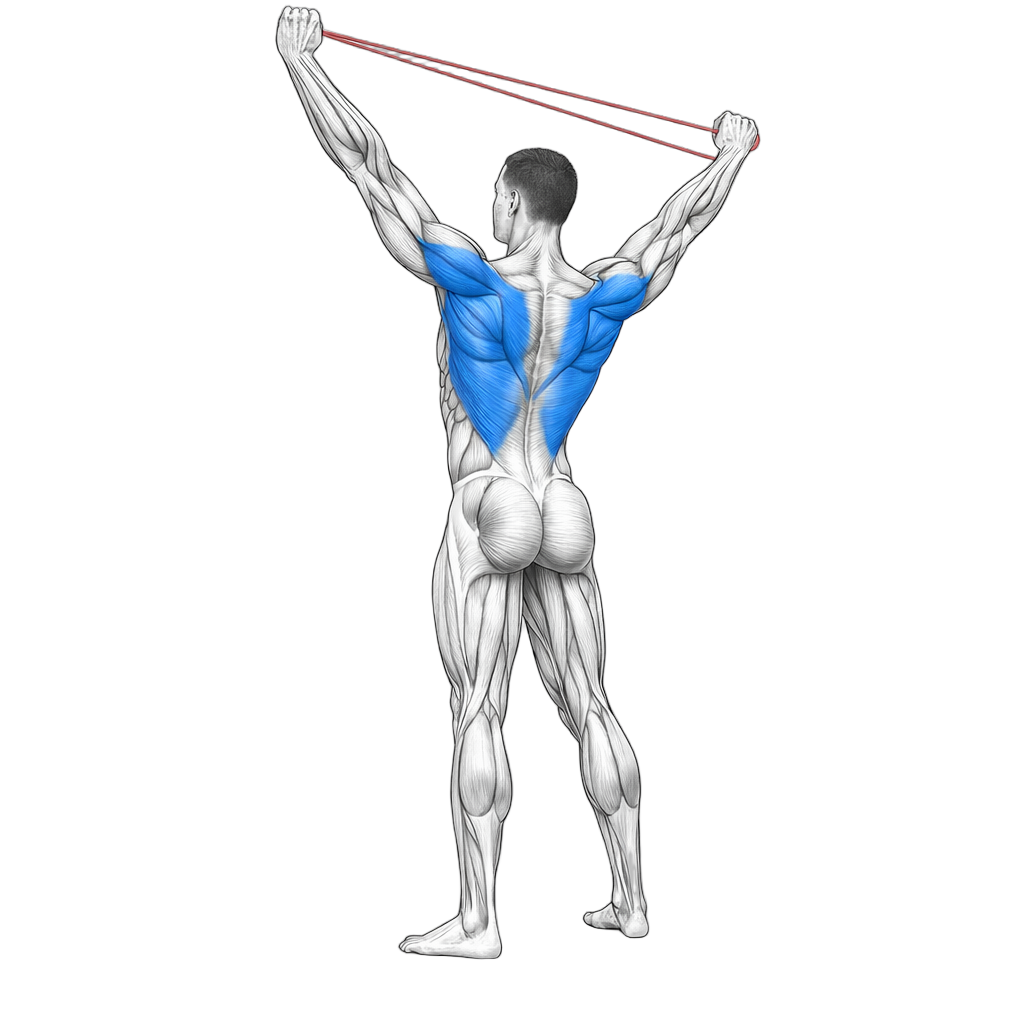
Lead with your thumbs and pull your shoulder blades down as you raise, don't shrug.
Raising long arms into a Y overhead drags your shoulder blades through upward rotation, which is lower trap territory that almost nothing else in a typical programme touches. The shoulders assist by lifting the arms, but the work you are chasing is between the shoulder blades, pulling them down and around as the arms rise. It earns its place as prep before overhead pressing and as insurance for anyone who sits at a desk all day.
A lateral raise takes the arms straight out to the sides and targets the side delts. The Y fly angles the arms up and out overhead, which shifts the work to the muscles that rotate and control the shoulder blades.
You are shrugging the movement. Before each rep, set the shoulder blades down away from your ears and think about raising the arms while the shoulders stay low. Lighter band, slower reps.
Thumbs up rotates the shoulder into a friendlier position at the top of the raise and biases the muscles the Y is designed to hit. Palms down at that angle tends to pinch.