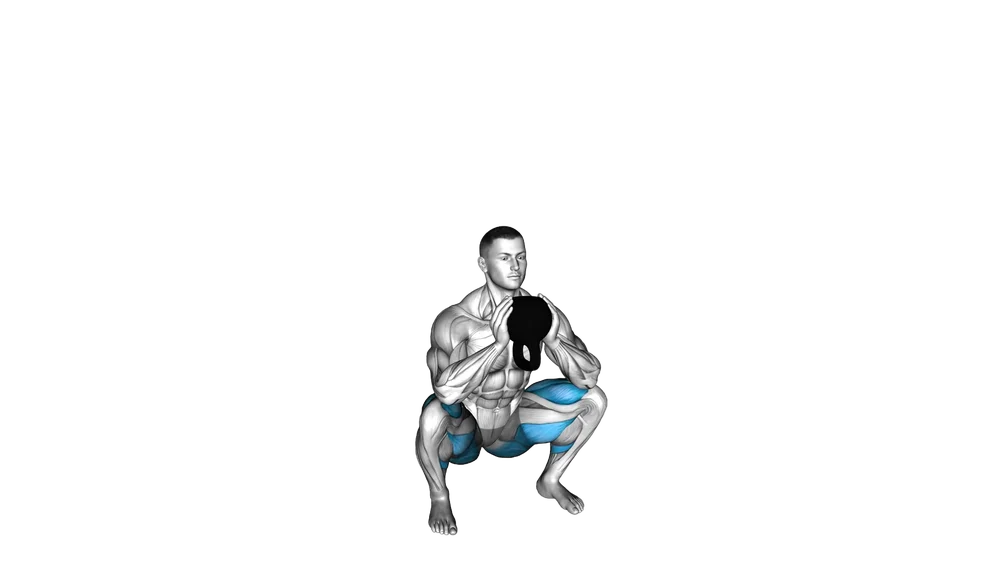
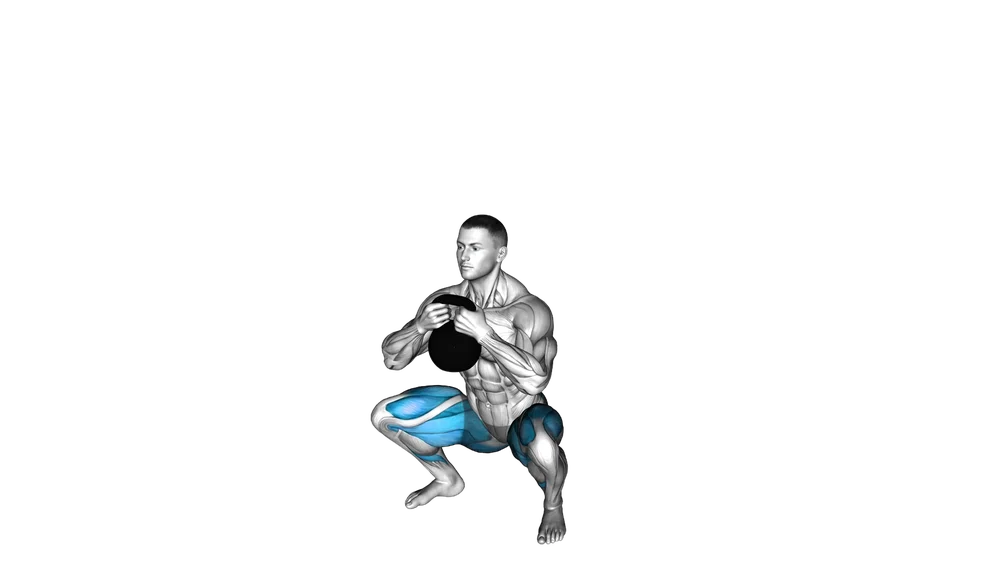
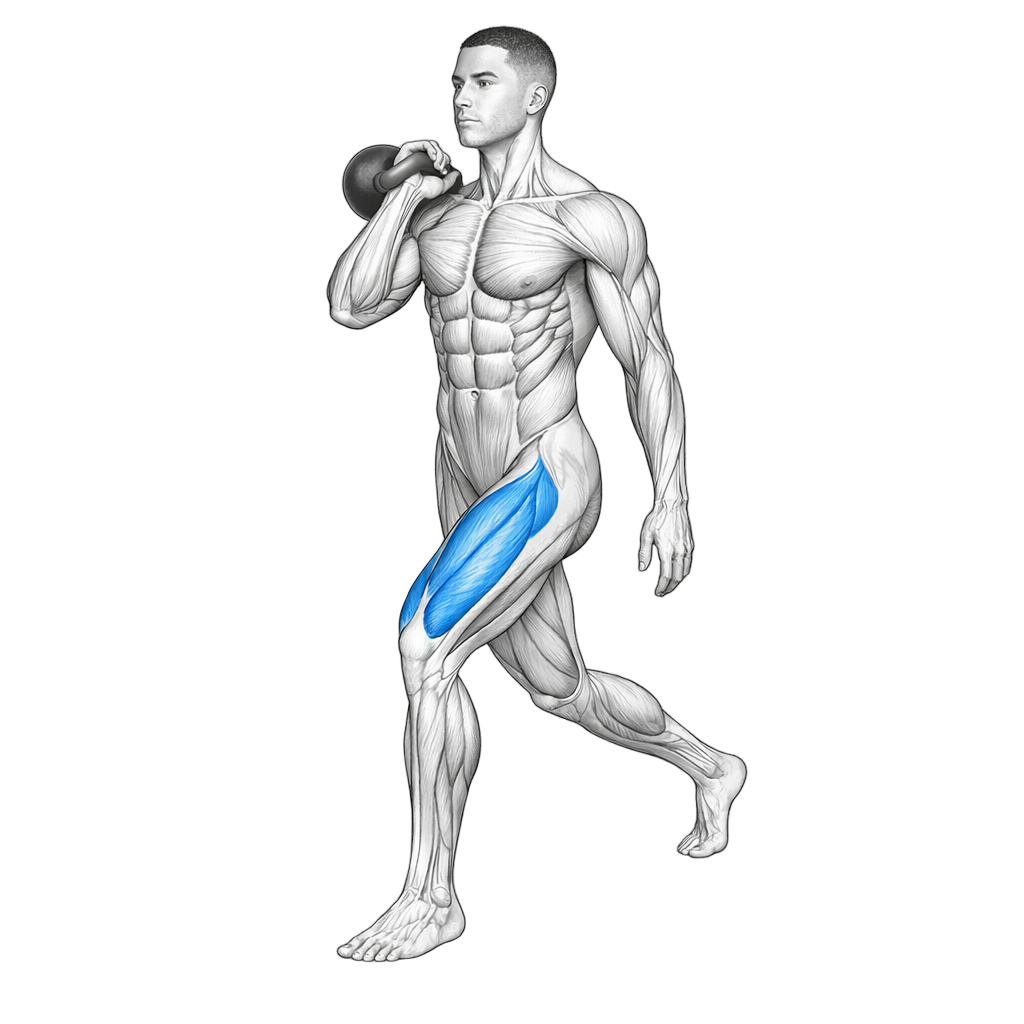
Wide stance, bell between the legs, sit deep.
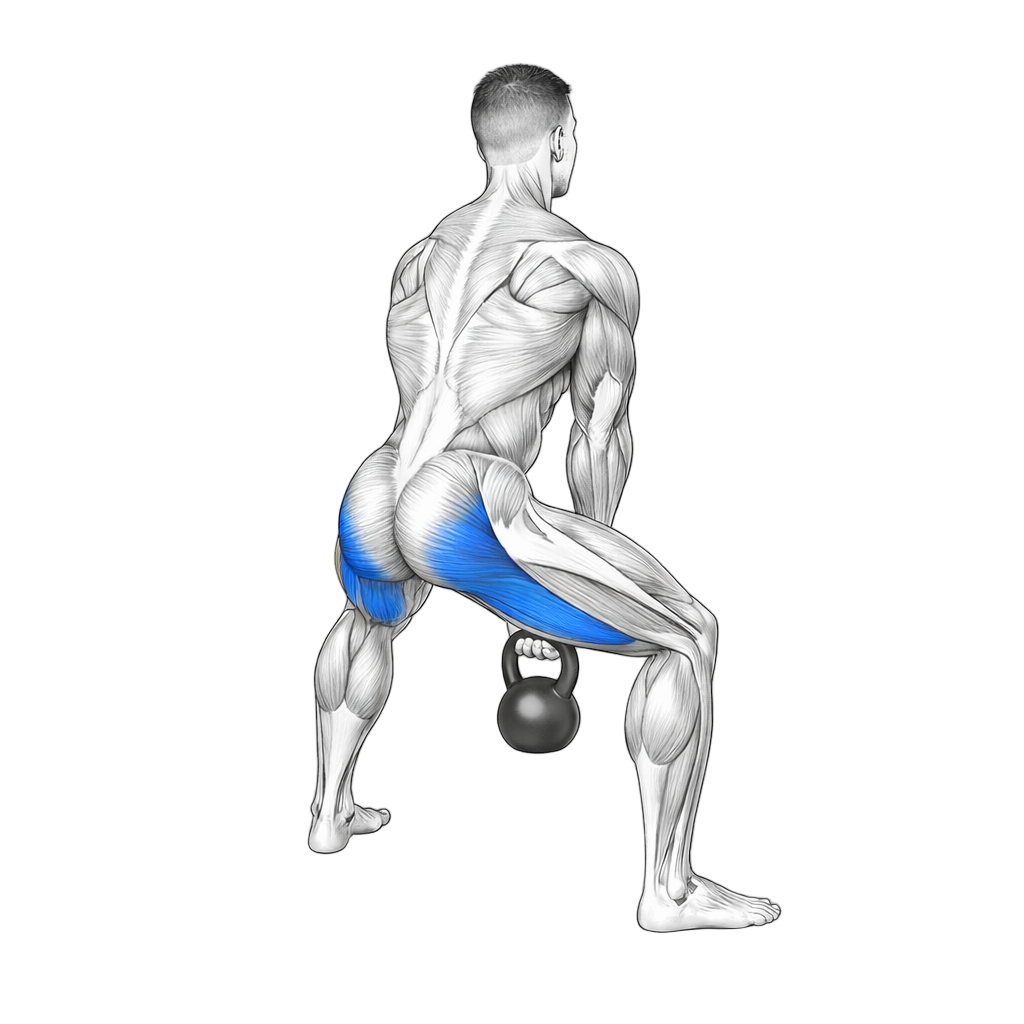
Push your knees out as you descend, don't let them cave inward.
The wide stance and turned out toes let you sit deep between your legs, loading the hips heavily, with the hamstrings and glutes working hard to control the descent and power the stand. Holding the bell at the chest or hanging between the legs keeps the torso tall, so the hips take the work rather than the lower back. It earns its place as a hip-dominant squat that most people can sink deep into comfortably, even when a narrow stance squat feels cramped.
The wide, toes out stance shifts more of the job to the hips, hitting the glutes and hamstrings harder while letting you stay very upright. If narrow squats make you fold forward, sumo usually fixes it instantly.
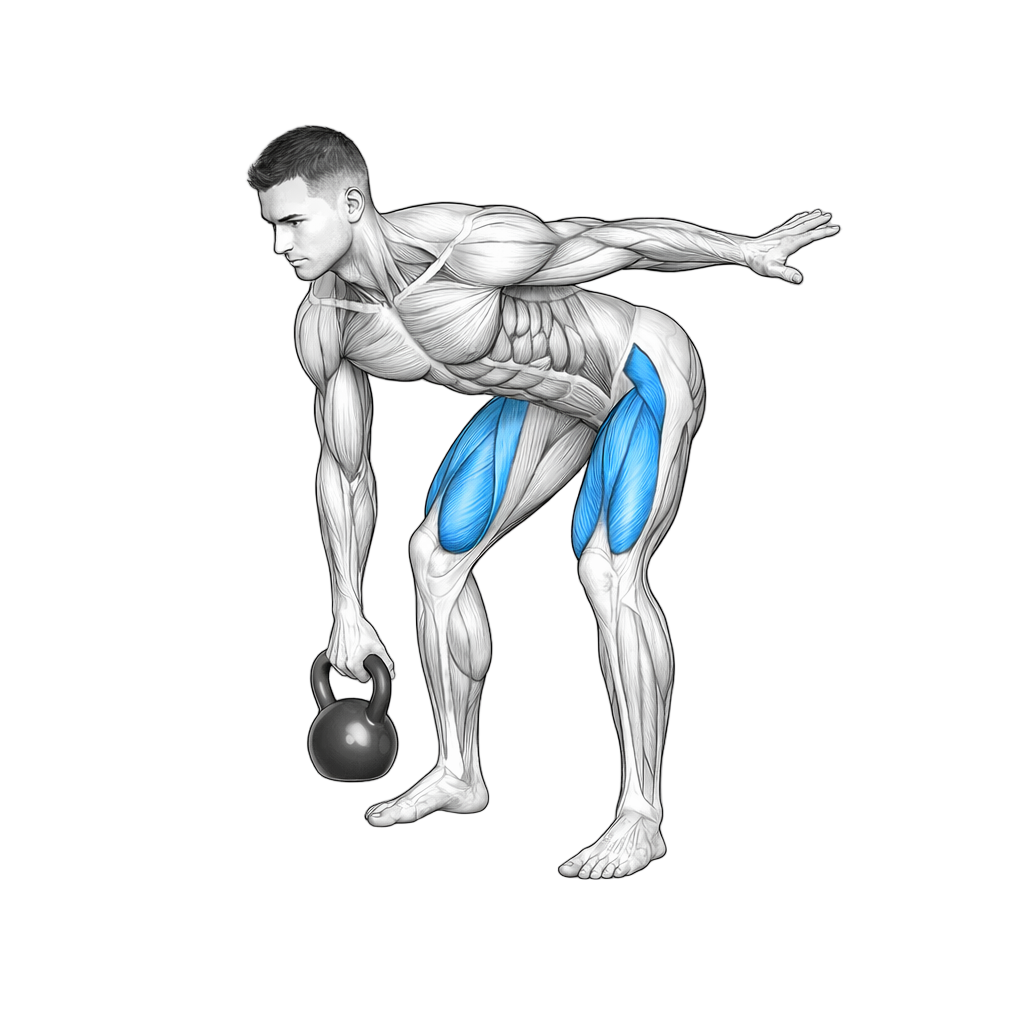
Both work. At the chest keeps the rep strict and the torso tall, hanging between the legs lets you go heavier and feels closer to a pull. Pick based on the weight you are using and how your lower back feels.
The wide stance demands active knees, so push them out over your toes from the first inch of the descent. If they still collapse, narrow the stance slightly and lighten the bell until the track is clean.