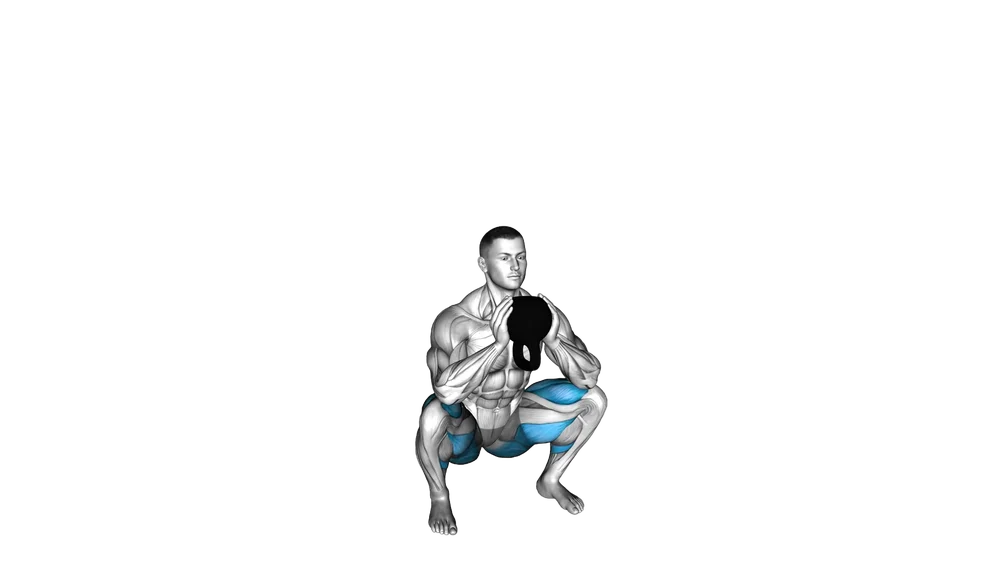
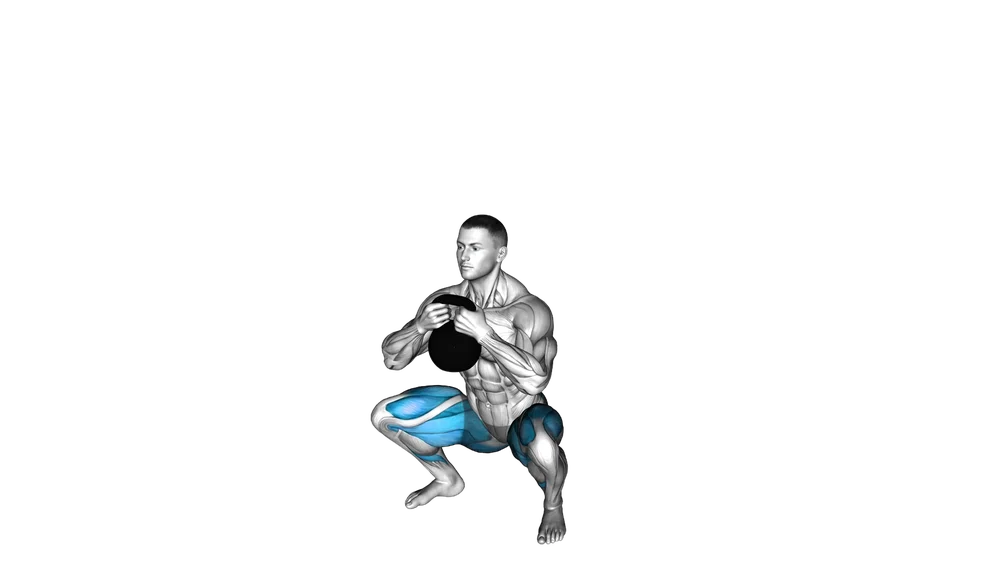
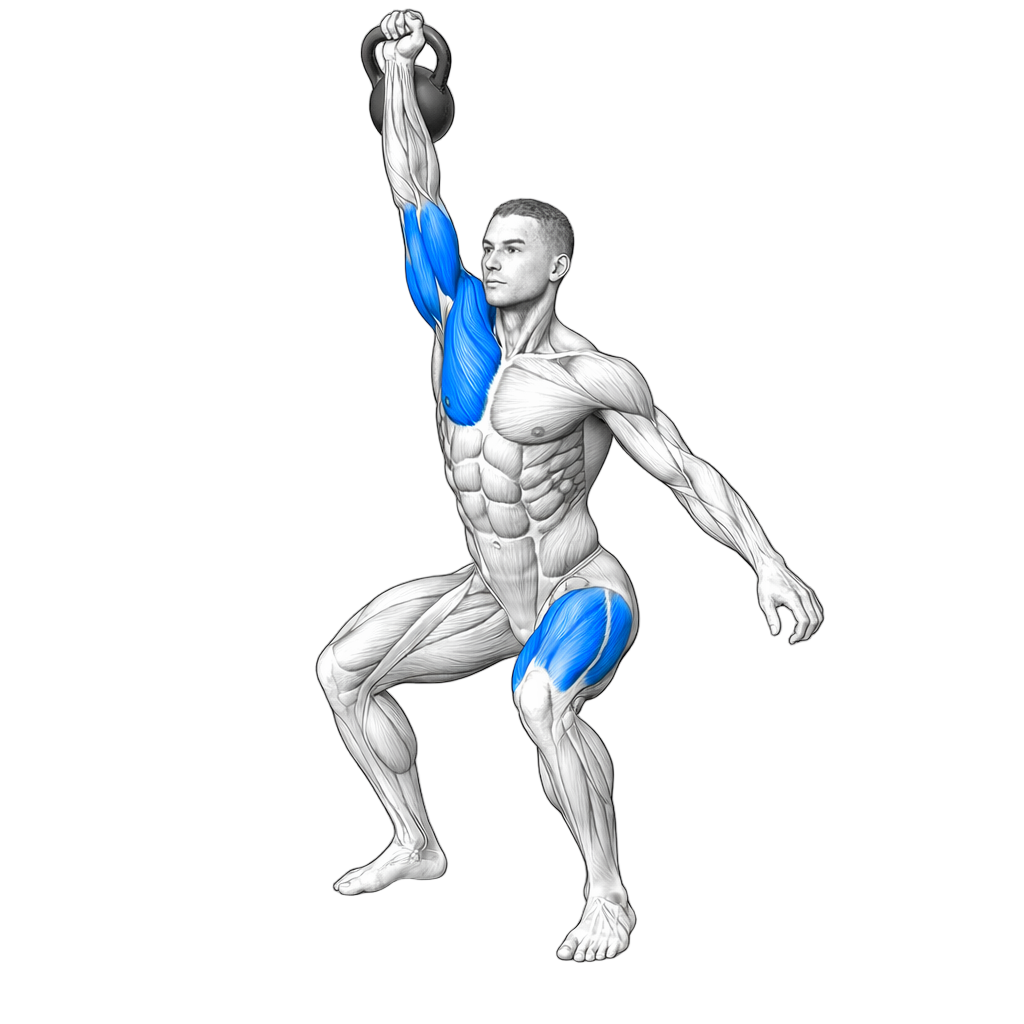
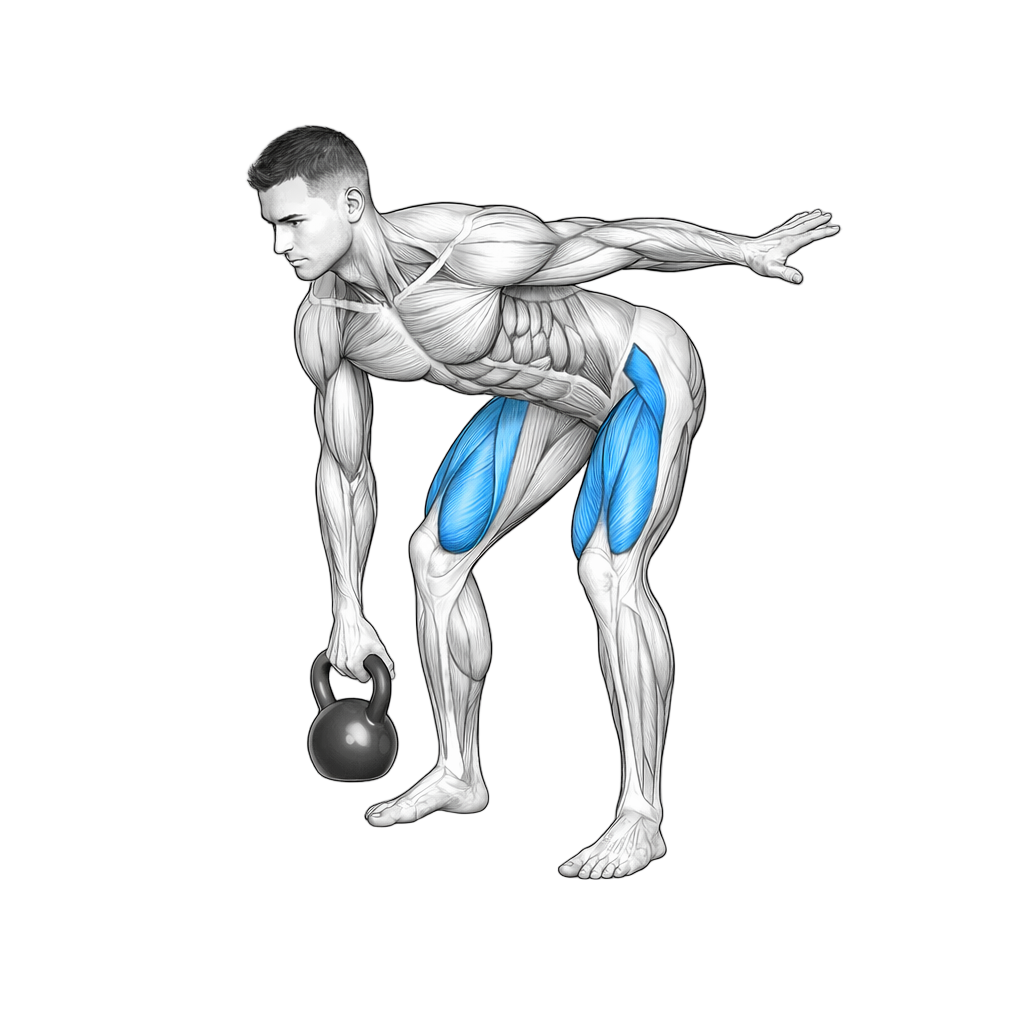
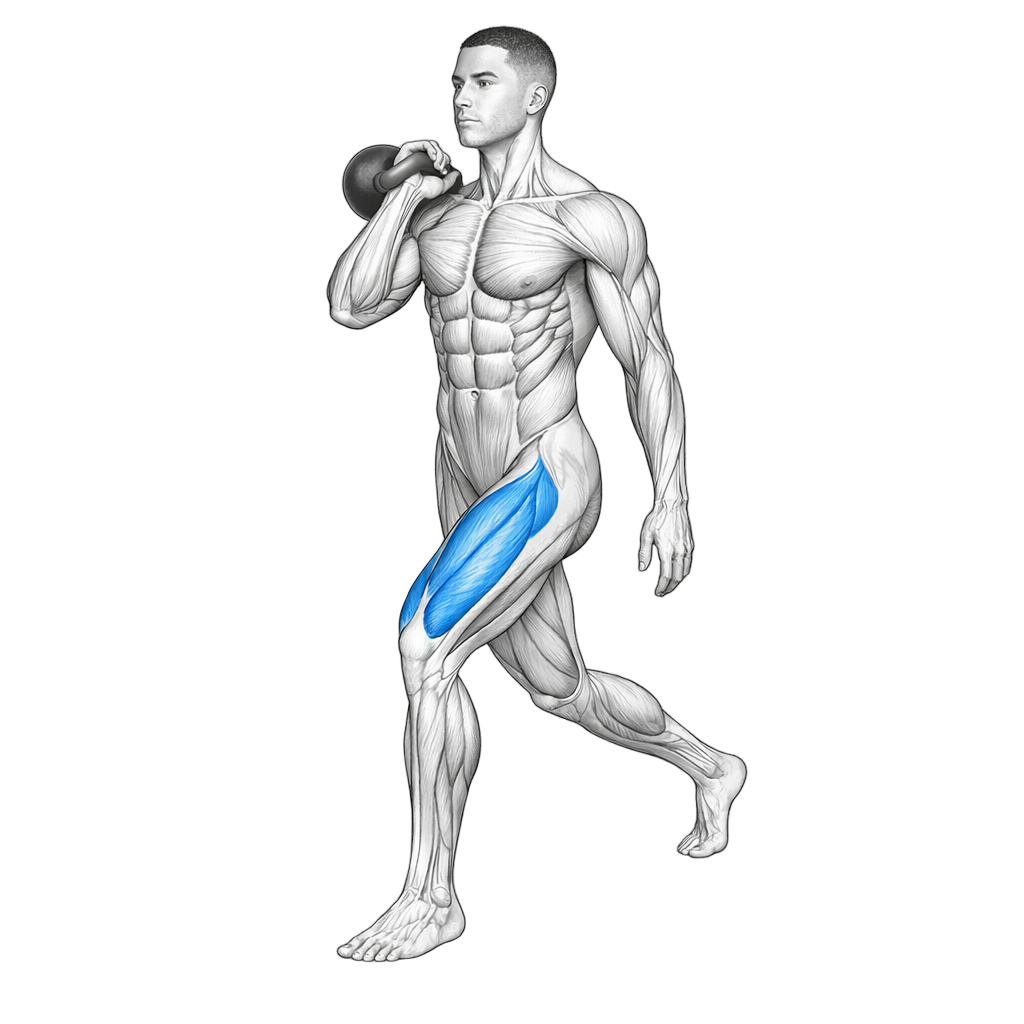
Hold the bell, drop to one leg, prove your control.
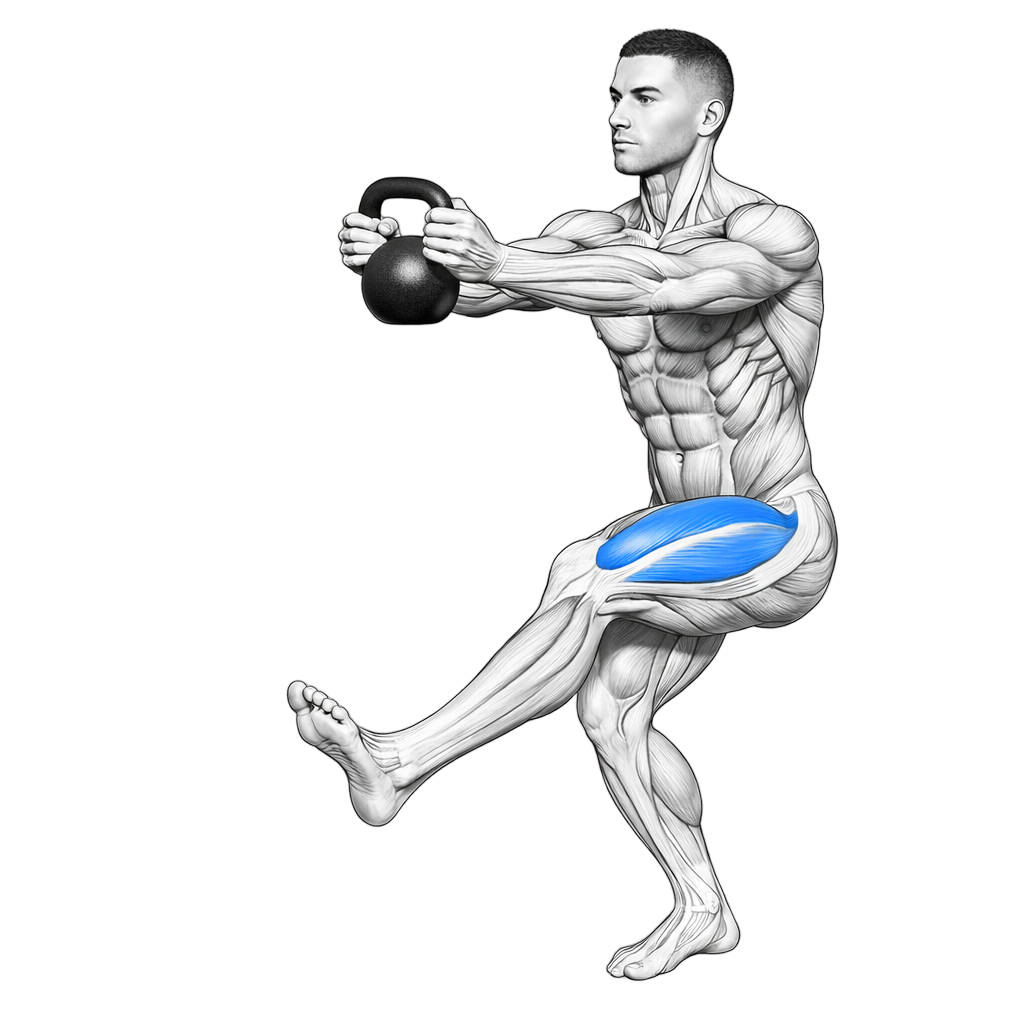
Let the bell drift forward as you descend, it counterweights you and keeps your heel down.
Squatting on one leg puts your entire bodyweight through a single quad, which has to control the descent and grind out the stand with zero help from the other side. The glutes work overtime to keep the hip stable and stop the knee collapsing inward. The kettlebell held at the chest is a counterweight, not extra load, it lets you sit back further and keep your heel down, which is why the loaded version is often easier to balance than the bare version.
The bell acts as a counterbalance. Letting it drift forward as you descend shifts your centre of mass so you can sit back without tipping over, which makes depth and heel contact much easier to find.
Straight out in front, as parallel to the floor as your mobility allows. If it keeps dropping and scuffing the ground, spend time on hip flexor strength and ankle mobility rather than forcing ugly reps.
Work box pistols first, squatting to a bench and standing back up, then lower the target over time. Once you own the full range with the counterbalance, the next step is losing the bell, not adding weight.