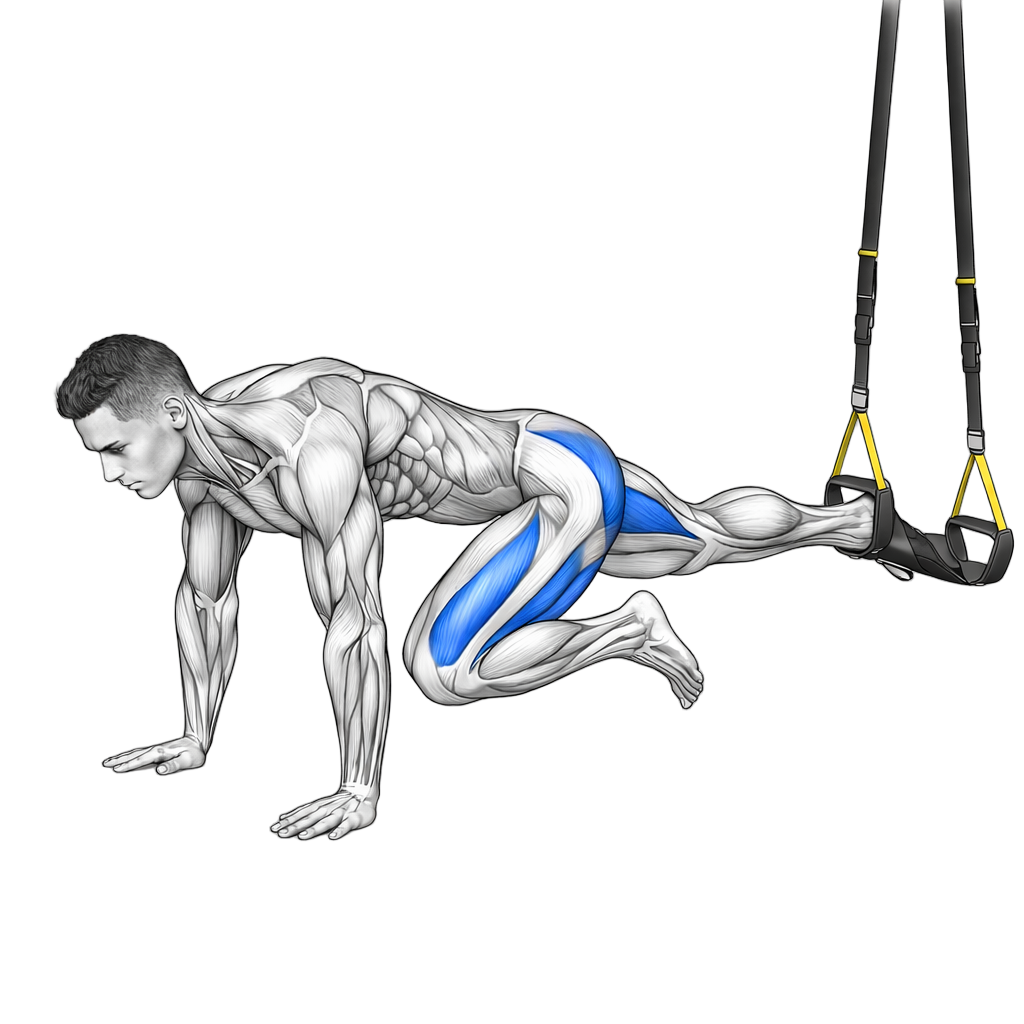
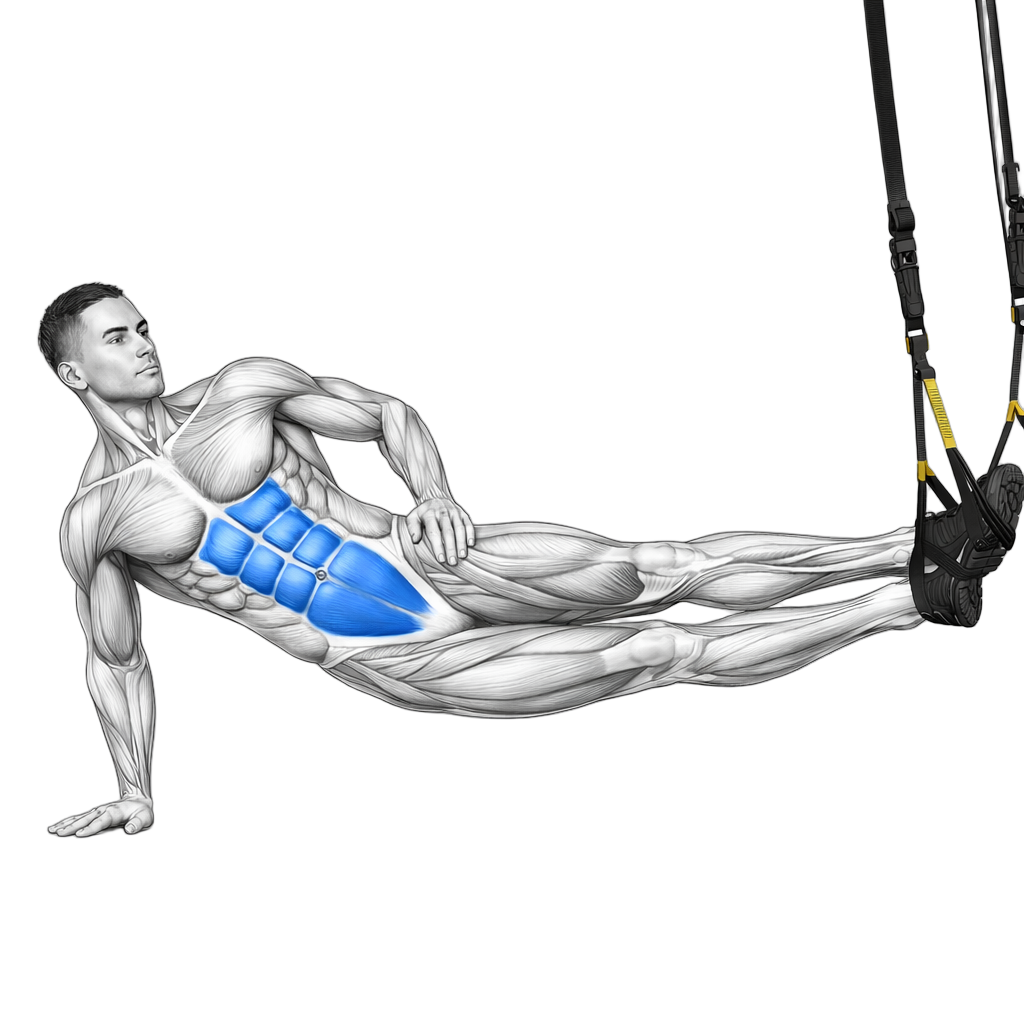
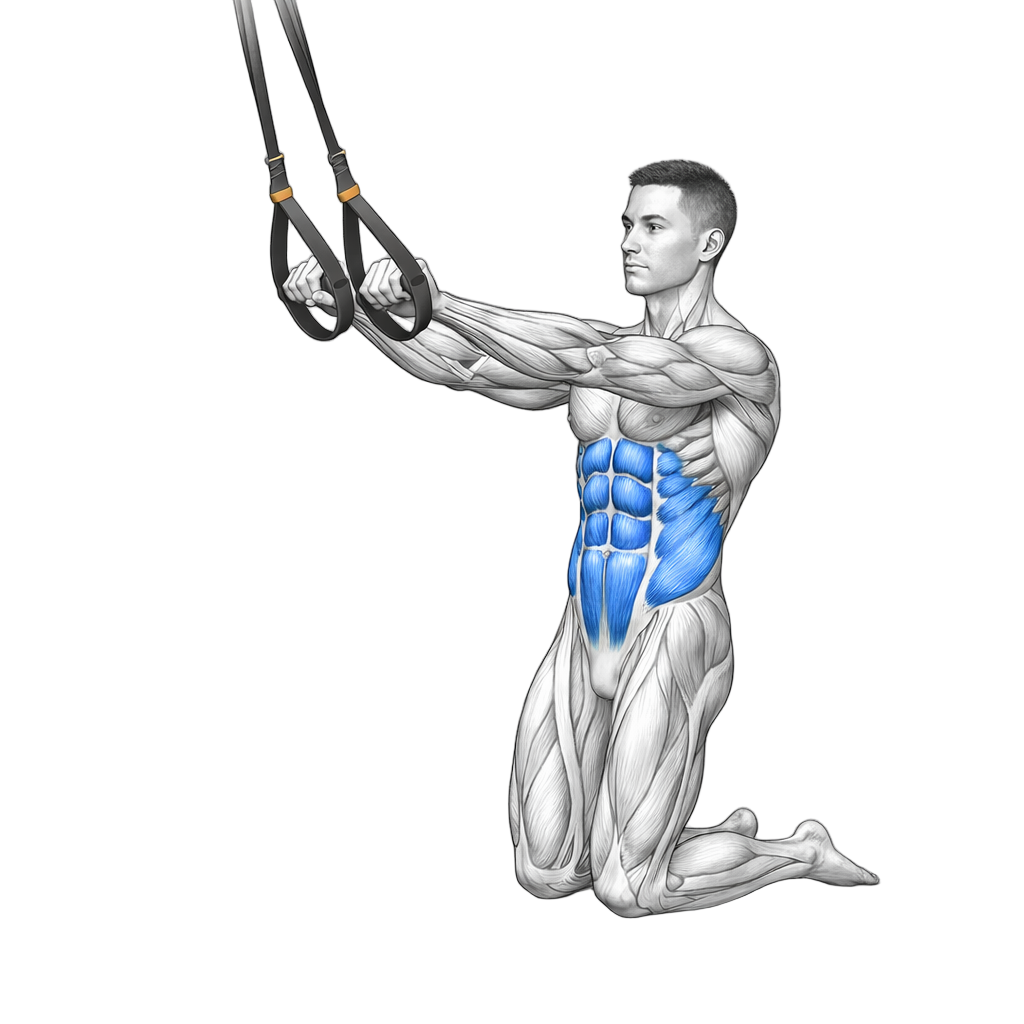
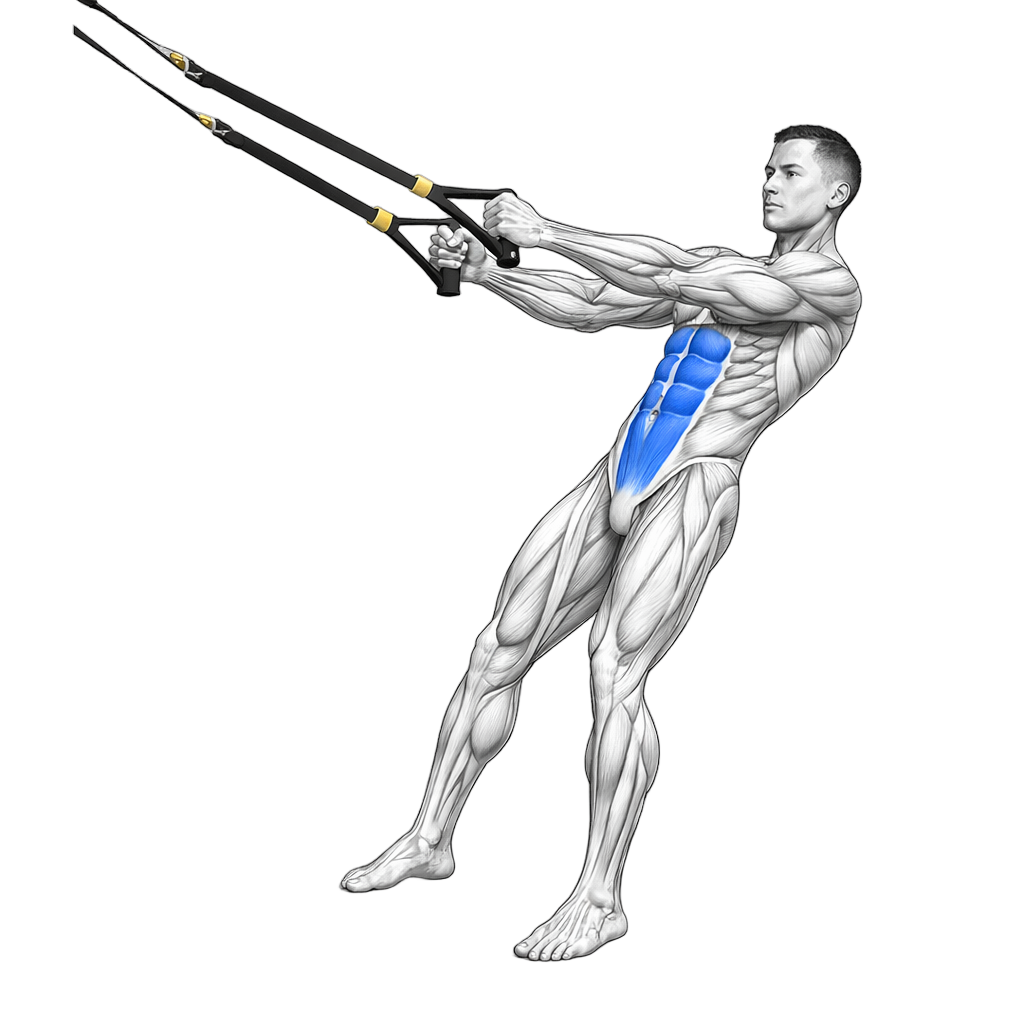
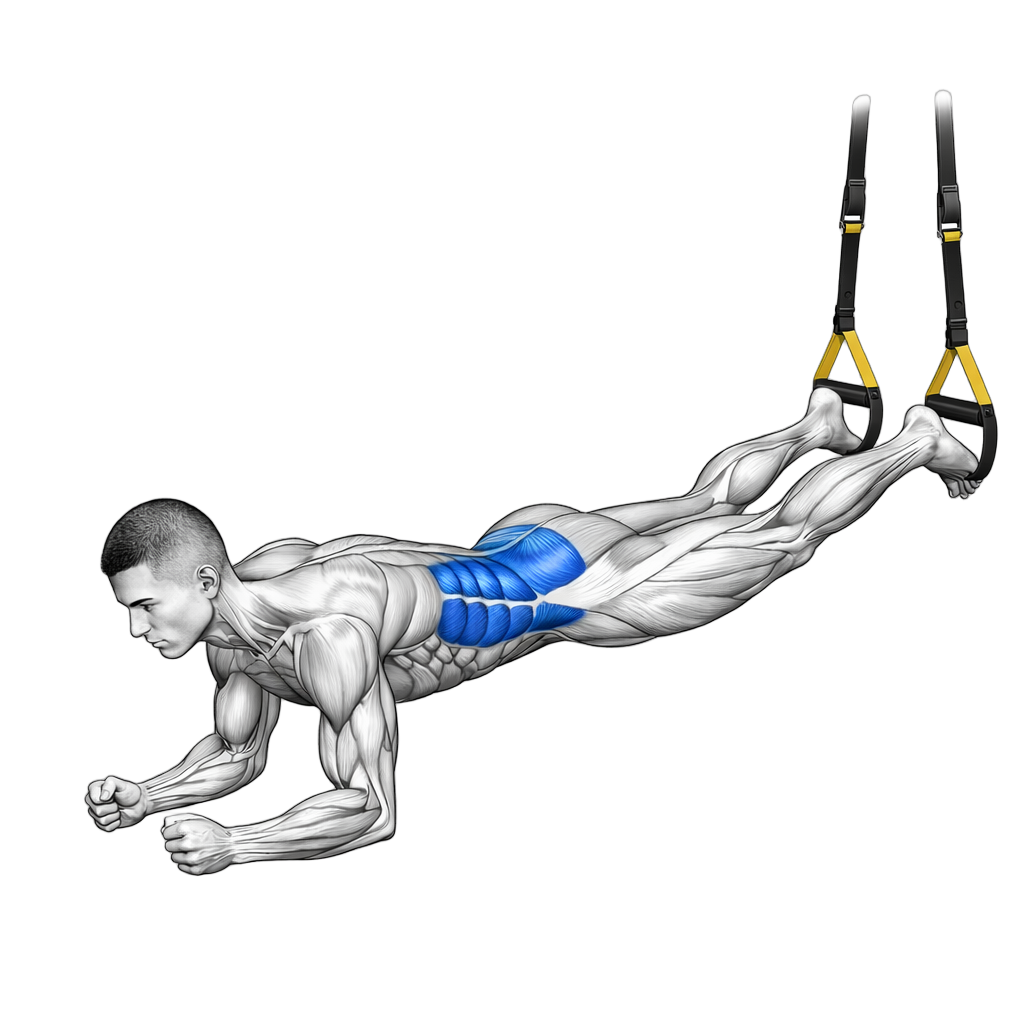
Straps under your feet, abs doing all the work.
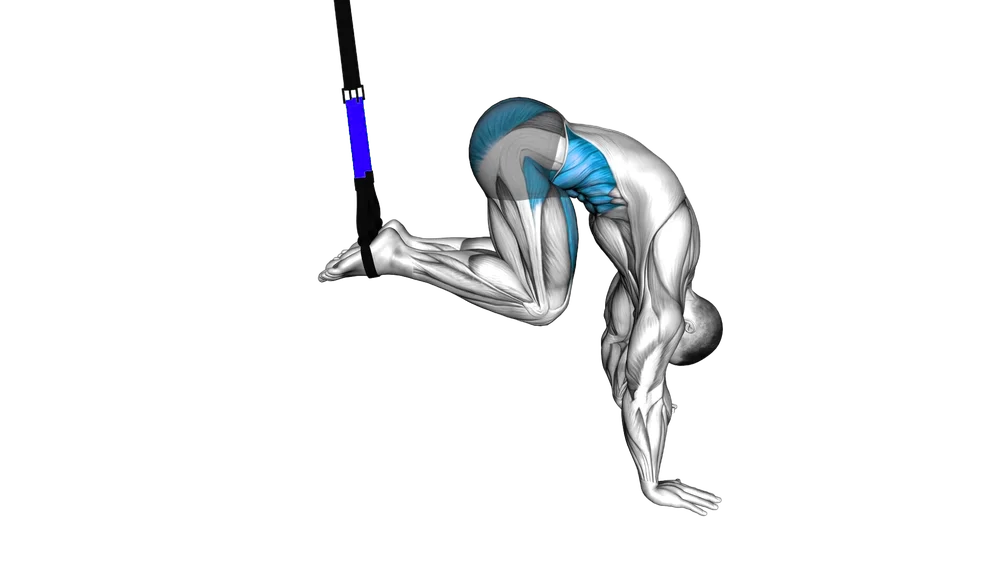
Drive with your abs, not your hip flexors, and keep your lower back from sagging.
With your feet floating in suspension straps, the knee tuck has no stable base at all: the core must pull the knees in, hold the plank from collapsing, and stop the straps swinging you around, all at once. That instability is the multiplier, demanding trunk control a floor-based tuck never asks for. It earns its place as the next rung above planks and floor knee tucks, and the stepping stone toward strap pikes and harder suspended core work.
Orientation. Hanging raises work from a vertical dead hang with grip in the mix, while the suspension jackknife works from a horizontal plank with your hands on the floor and feet in straps. The strap version adds instability and keeps the plank loaded throughout.
Move slower and brace before the knees travel. Swinging means the tuck is being thrown rather than pulled. Set a rigid plank, drag the knees in on a straight line, and extend back out at the same speed you came in.
Pike it. Keep the legs straight and lift your hips toward the ceiling instead of tucking the knees, which massively lengthens the lever. Slow negatives and pausing at full tuck are worthwhile middle steps before full pikes.