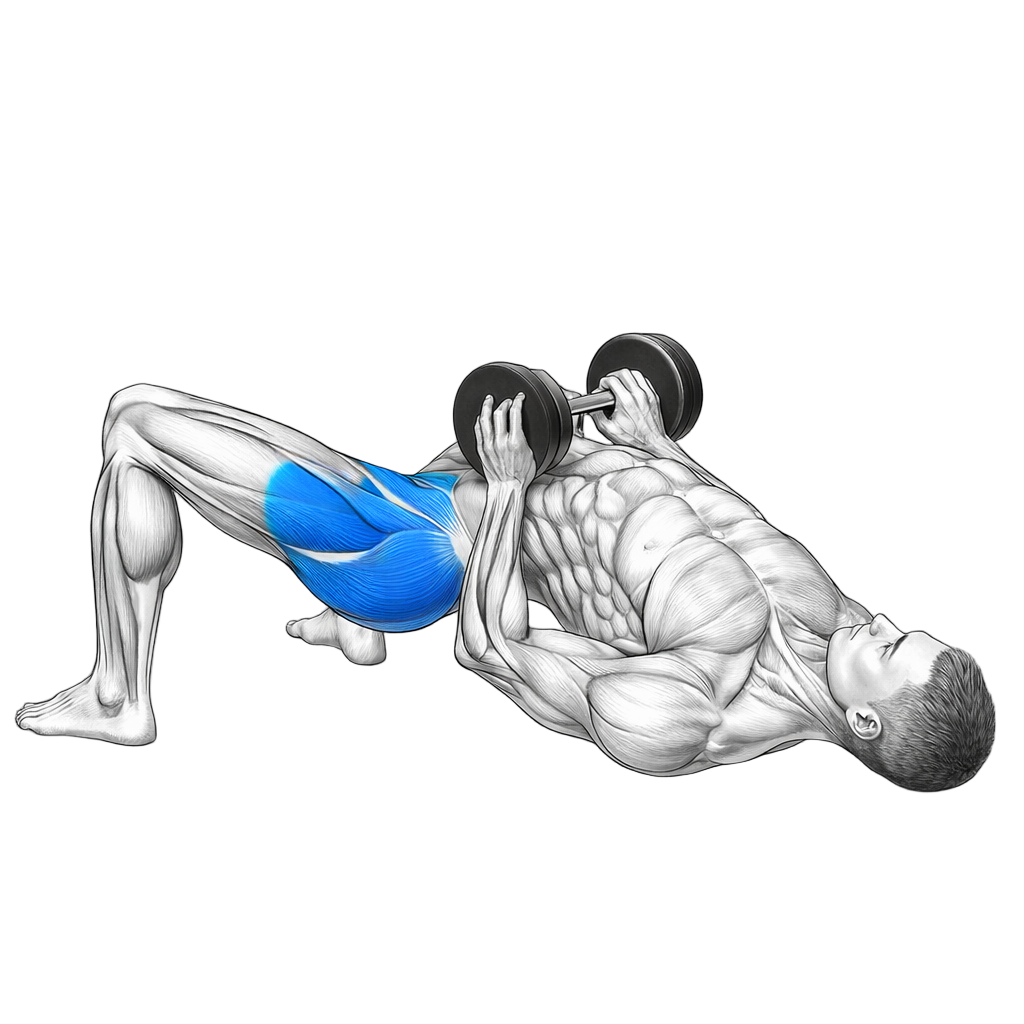
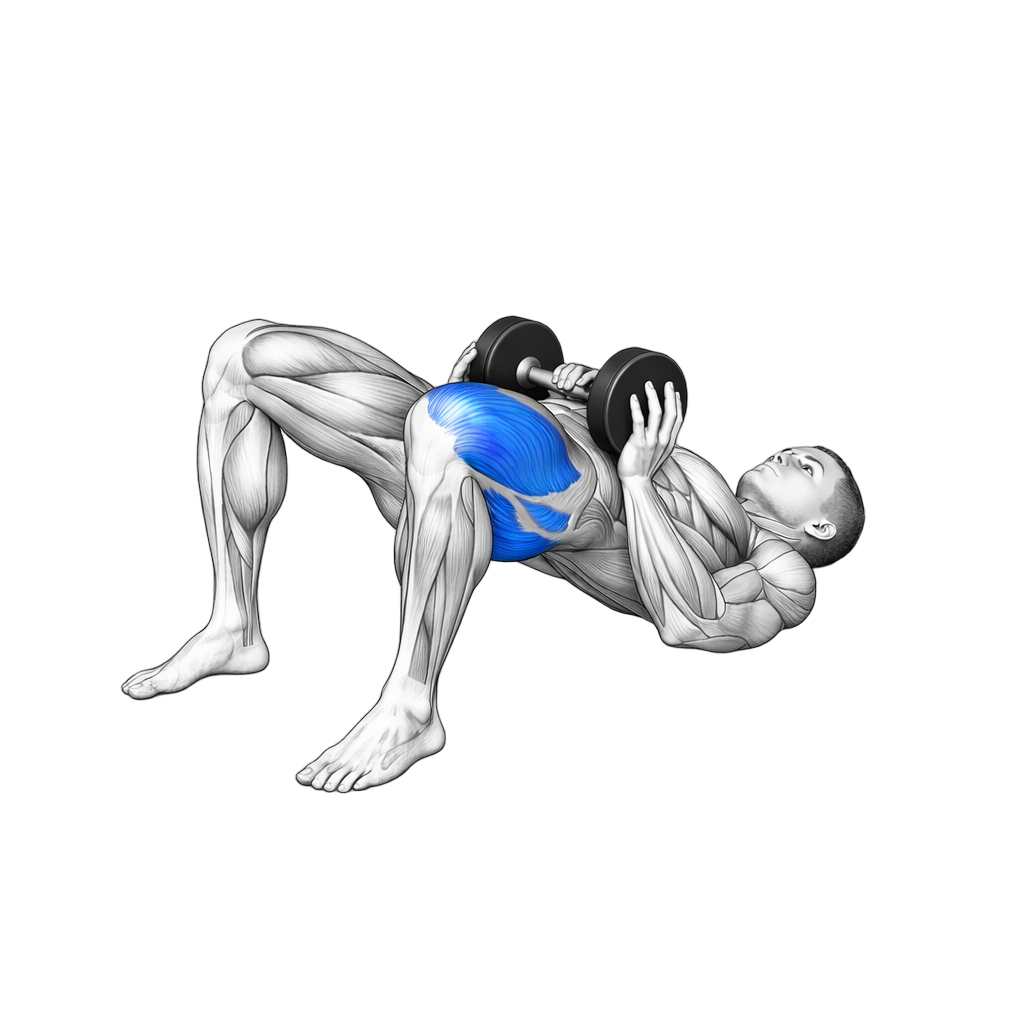
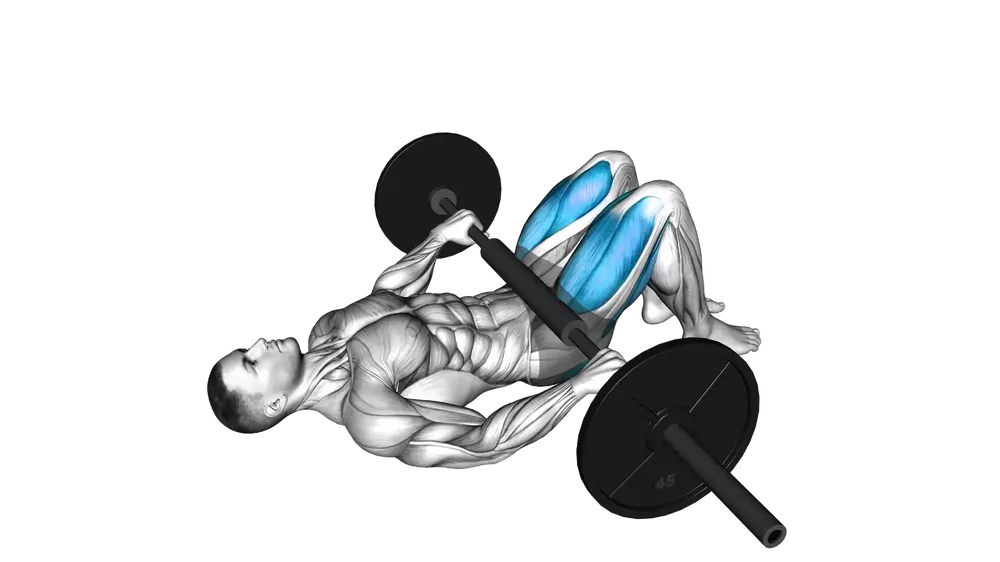
Add a dumbbell to single-leg thrusts and watch your glutes grow.
Push the dumbbell up with your hips, not your lower back. Ribs stay down.
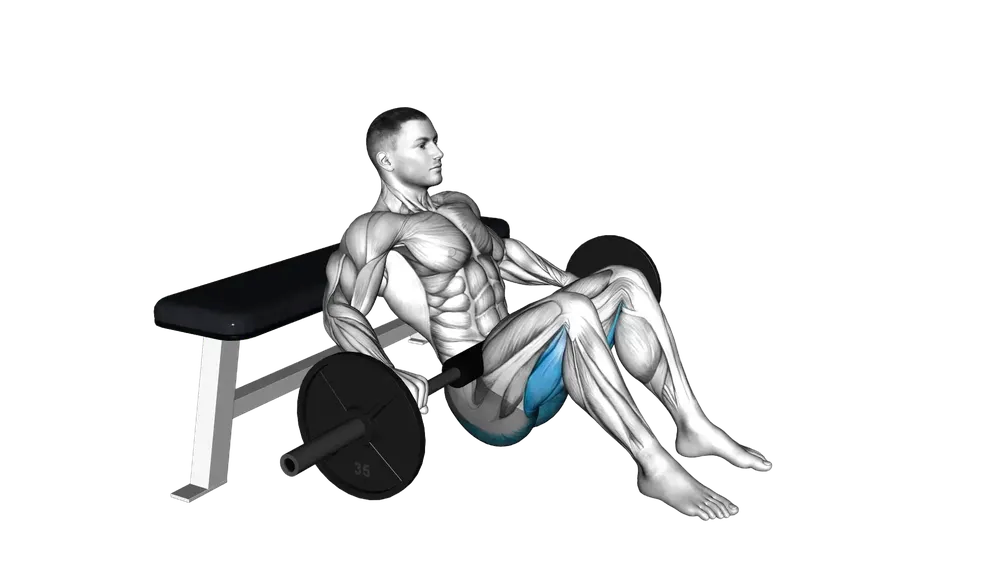
Planting one foot puts the entire dumbbell plus your bodyweight through a single glute, doubling the stimulus per side without needing to double the load. The hamstring assists to stabilise the knee and drive the hips while the bench under your shoulders lets you reach full lockout, the position where the glutes work hardest. Trained one side at a time, it exposes the weaker hip that two-leg thrusts quietly hide, which is exactly why it belongs in a lower-body programme.
Across the crease of your hips on the working side, held steady with your hands. If it digs in, fold a towel or mat under it. It should move because your hips move, never because your arms lift it.
One glute is now doing the work of two, plus stabilising the pelvis against the raised leg trying to drag it down. Expect to use far less weight than your two-leg thrust, the trade is worth it for balanced strength side to side.
You are finishing the rep by arching rather than squeezing. Tuck your chin, keep your ribs down, and stop the hips at a flat line from knees to shoulders. Lockout comes from the glute squeeze, not from bending the spine backwards.