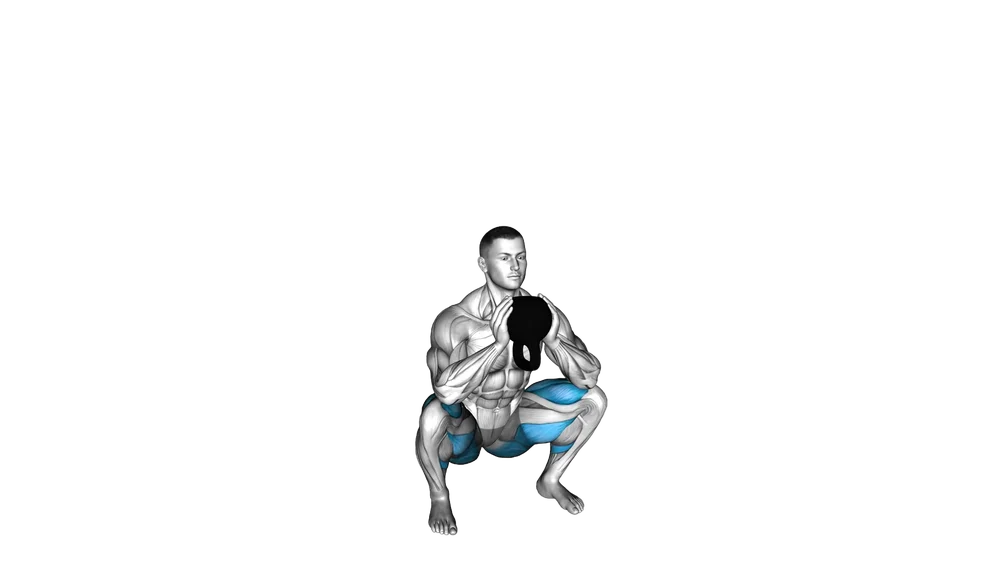
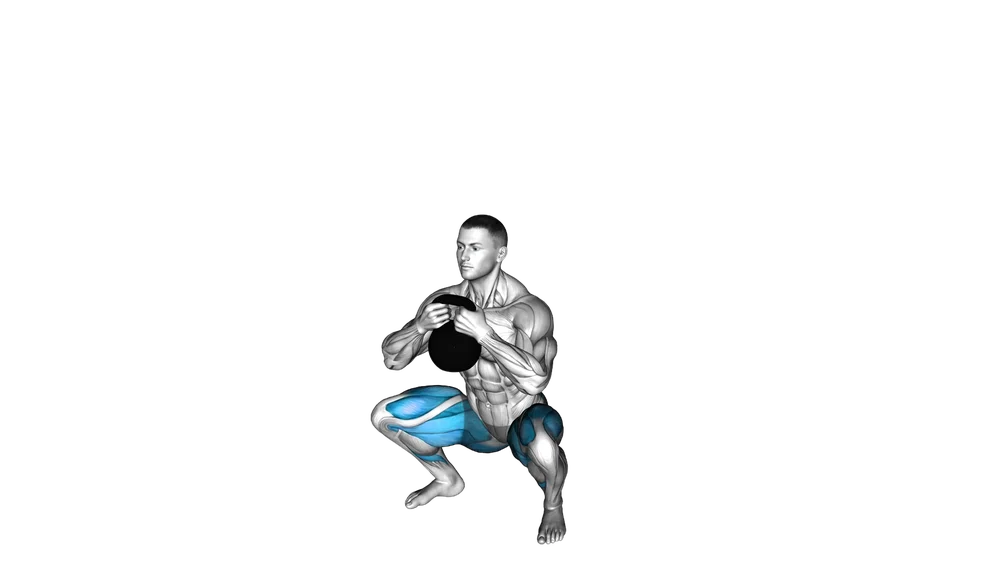
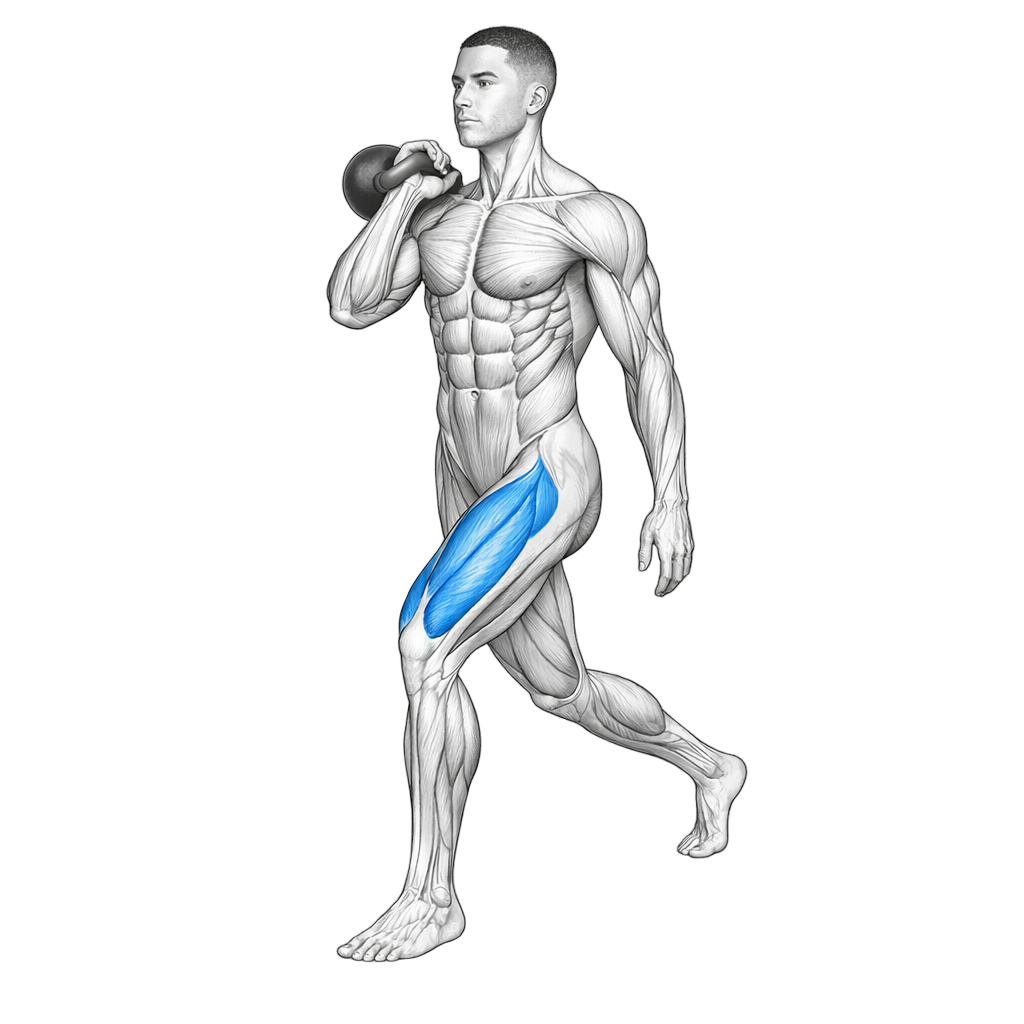
Two bells racked, squat deep and stay tall.
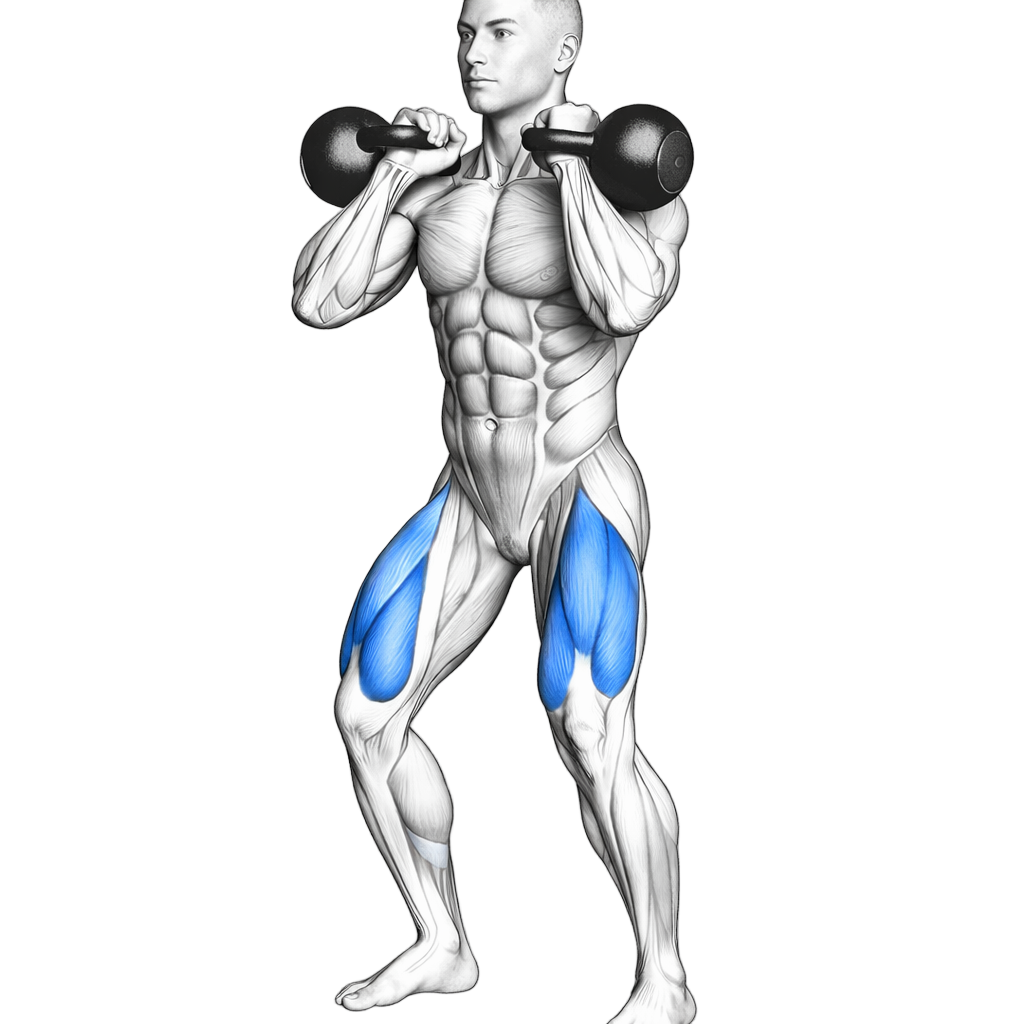
Keep elbows tucked and chest up so the bells stay racked and don't pull you forward.
Racking two kettlebells at your shoulders puts the load in front of your body, which drags you forward and forces a tall, braced torso through every rep. The quads do the bulk of the work driving out of the deep bottom position, with the glutes finishing the stand. The front-loaded position also means your breathing and brace get trained as hard as your legs, which is why sets of these feel like conditioning at heavier weights.
The bells sit on your forearms rather than across your shoulders, so there is no rack grip mobility problem and the load is a touch lower and closer to your centre. It is friendlier to learn, but the double rack taxes your breathing and brace much sooner.
Either the elbows are drifting away from your ribs or your upper back is folding. Keep the elbows tucked, chest tall, and drive up through the heels. If it keeps happening, drop the bell size until position wins.
Hips below knees, as written. The dual rack actually helps depth by acting as a counterweight, so if you cannot get there, the issue is usually ankle or hip mobility rather than the bells.