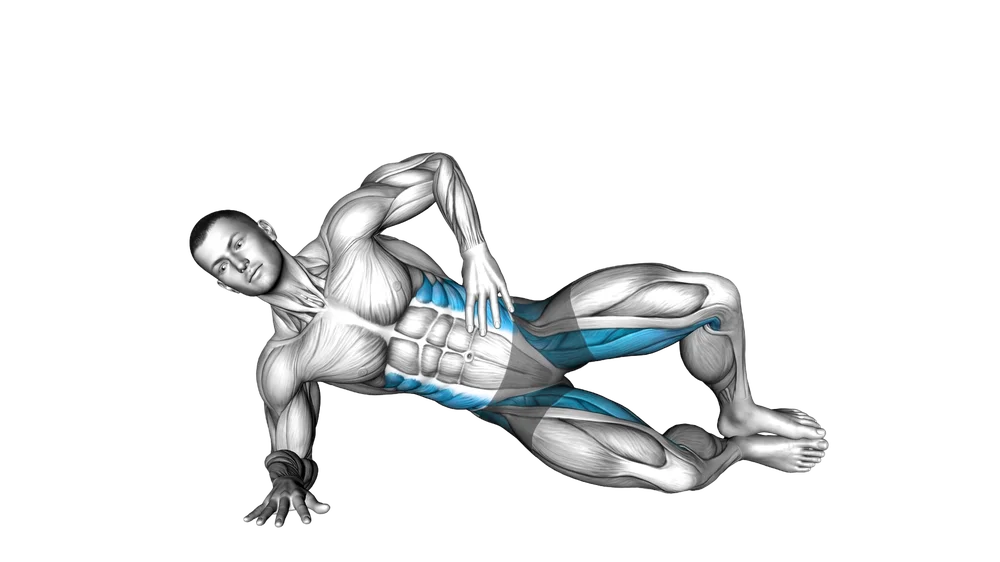
Explode side to side and stick the landing.
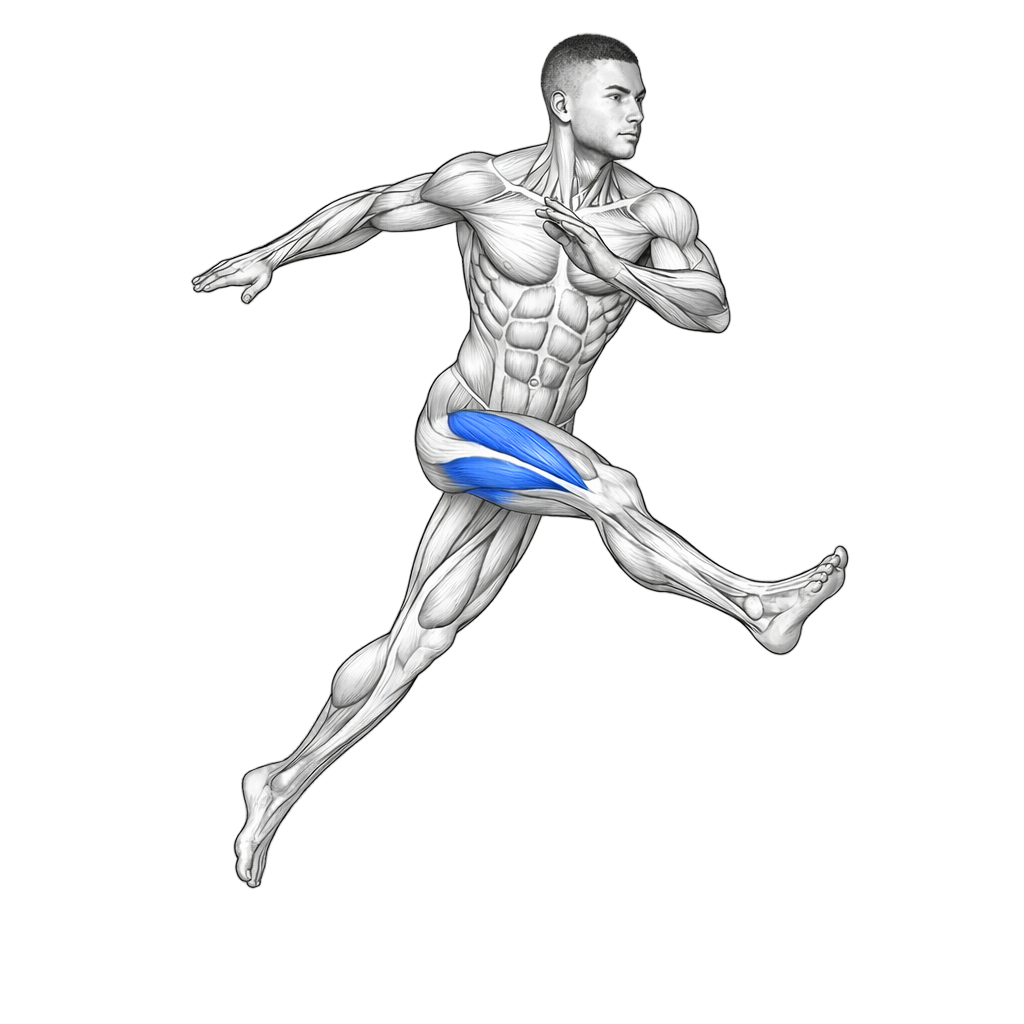
Stick each landing under control before pushing off. Power comes from a stable base.
Leaping sideways from one leg to the other loads the inner thigh hard, the adductors help drive the push-off and then work overtime to decelerate and stabilise each landing as your body arrives over the new leg. Sticking the landing for a beat turns every rep into force absorption practice, not just a jump. It earns its place in athletic training because sport happens sideways, and bounding is one of the few gym drills that trains lateral power directly.
They are close cousins. Bounds emphasise sticking and holding each landing to train control and force absorption, skater jumps flow continuously for conditioning rhythm, start with stuck landings before you chase speed.
Only as far as you can land soft and hold your balance for a full beat. Distance grows as a byproduct of better landings, reaching for range with wobbly landings trains nothing useful.
The inner thigh muscles work hard to brake and stabilise each sideways landing, and that eccentric load is what drives the soreness. Ease in with fewer, smaller bounds and build up, it is also exactly why the drill helps protect against groin strains in sport.