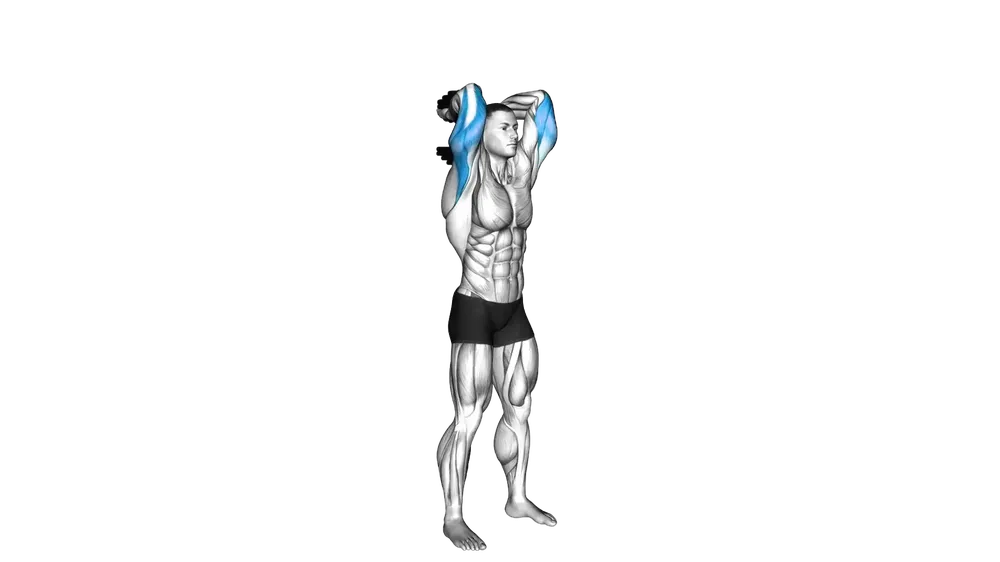
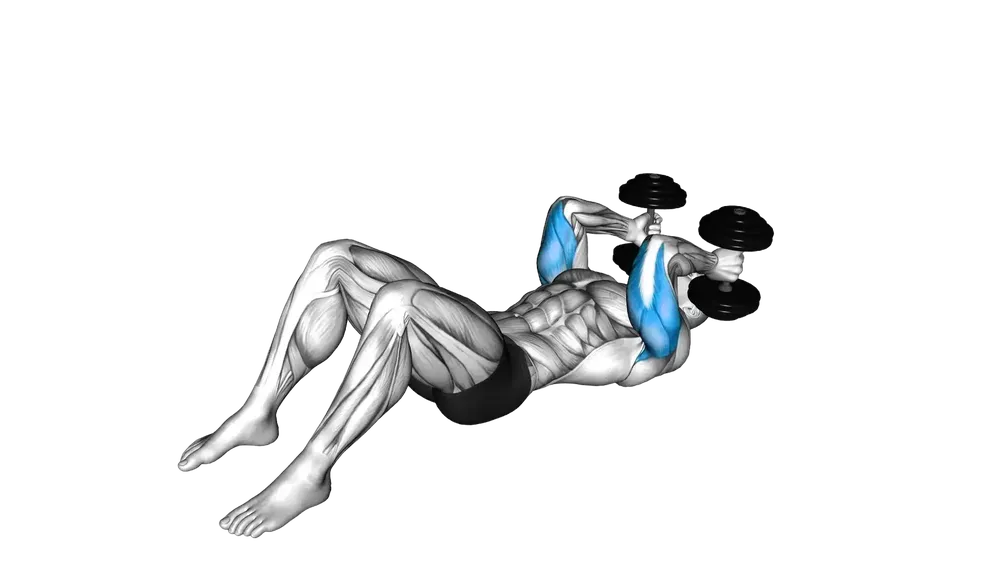
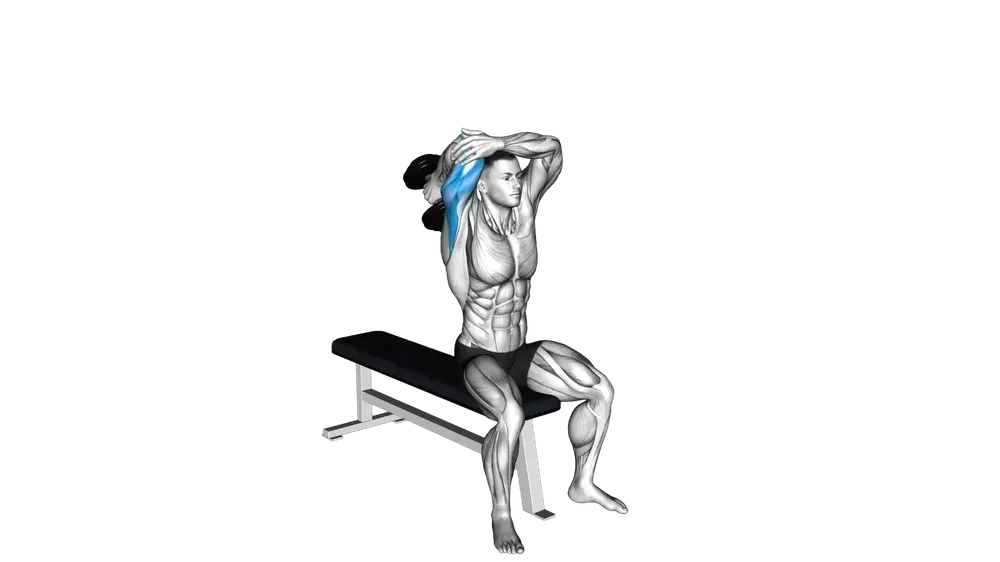
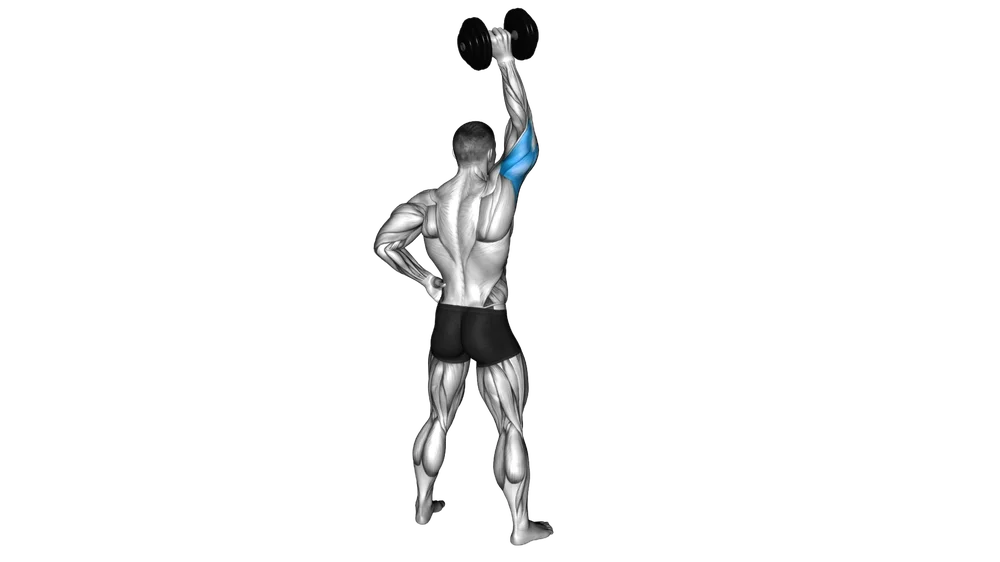
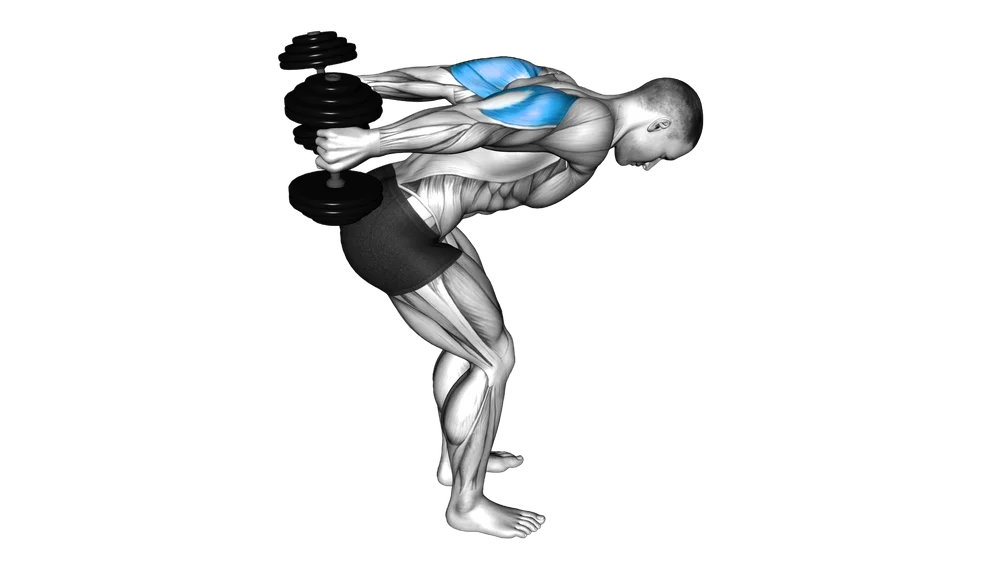
Hinge over and kick back for a sharp triceps squeeze.
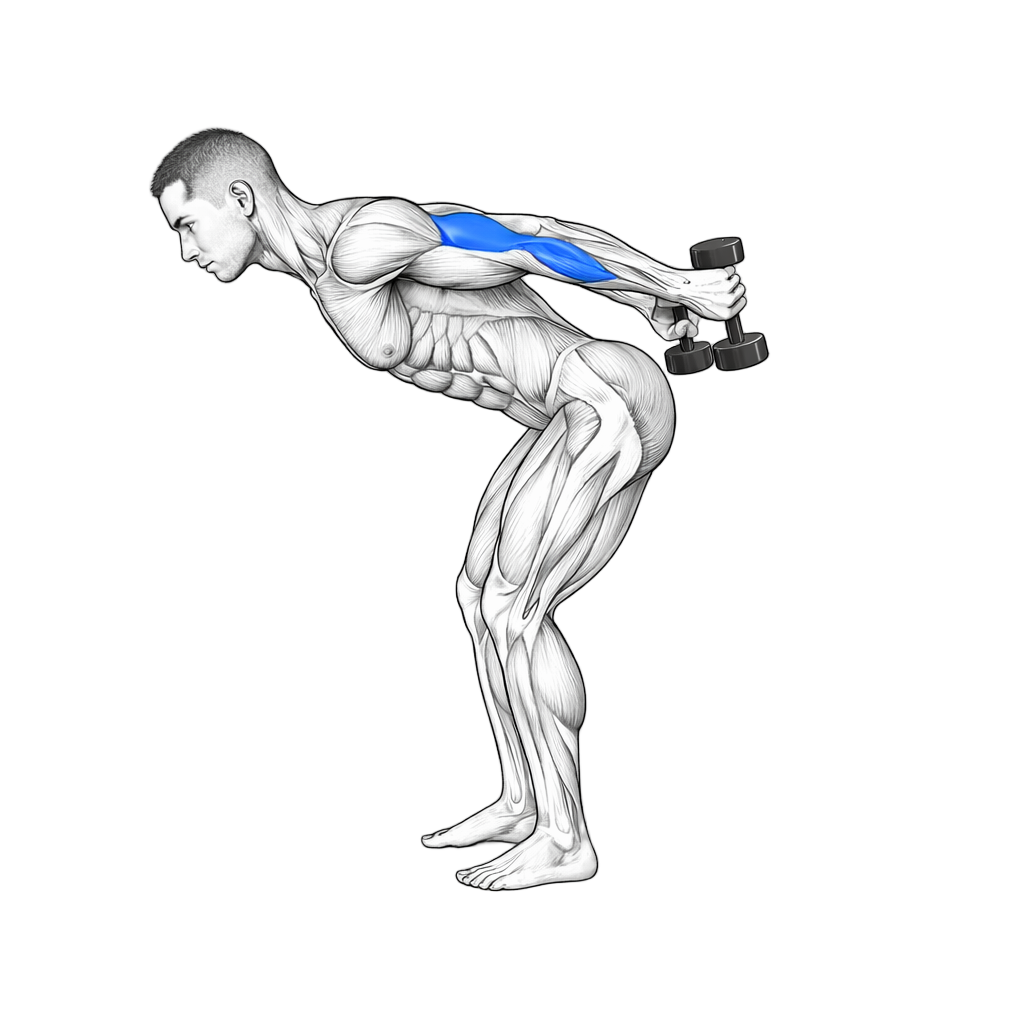
Keep your upper arm glued to your side, only your forearm moves.
The kickback catches the triceps where most exercises let them off, at full lockout with the arm extended behind the body, the position of peak contraction. Hinging over and pinning the upper arm parallel to the floor means gravity resists hardest right at the squeeze. Worked one arm at a time with the other hand braced on the bench, it is a strict finishing move, light by design, that sharpens the lockout other pressing work builds.
Almost always because the upper arm drops or swings. If your elbow drifts down toward the floor, the tension disappears. Lock the upper arm parallel to your torso, move only the forearm, and hold the lockout for a beat.
Because gravity loads the movement hardest at full extension, where the triceps are weakest. Heavy dumbbells just turn it into an arm swing. Light weight with a hard squeeze at lockout is the entire point.
They are complements, not rivals. Kickbacks load the fully contracted position, most pushdown and extension work loads the stretch and mid-range. Kickbacks work well as a finisher after your heavier triceps pressing is done.