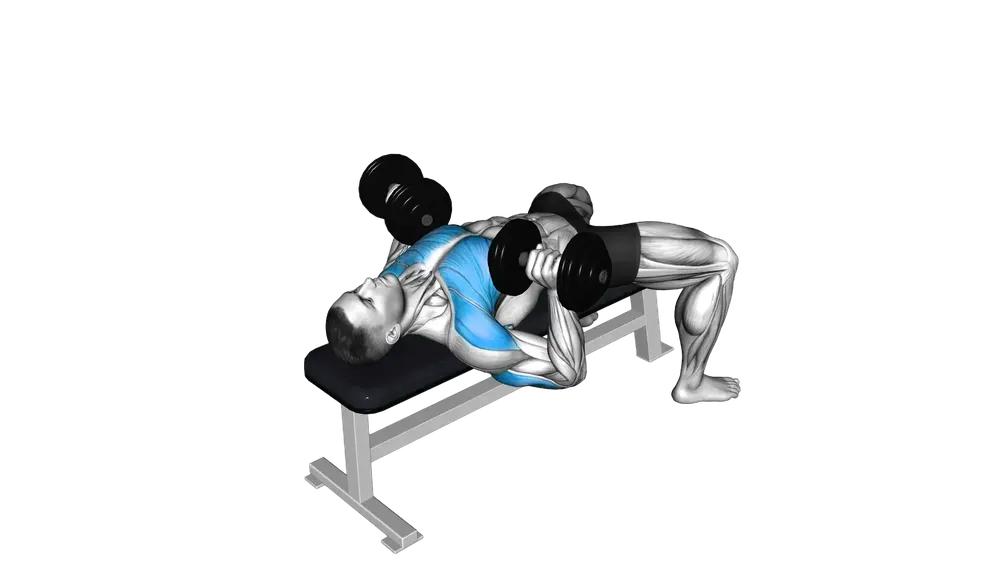
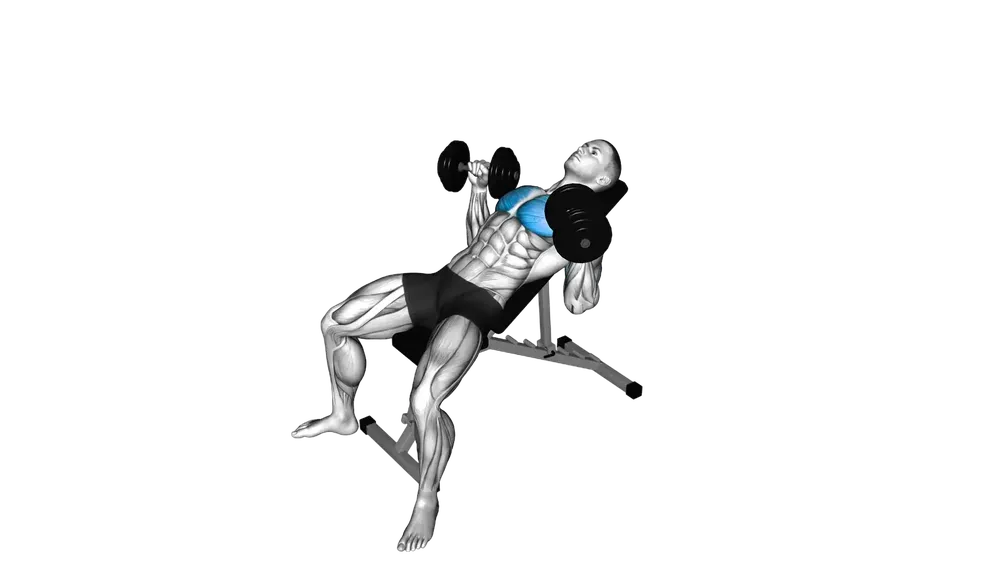
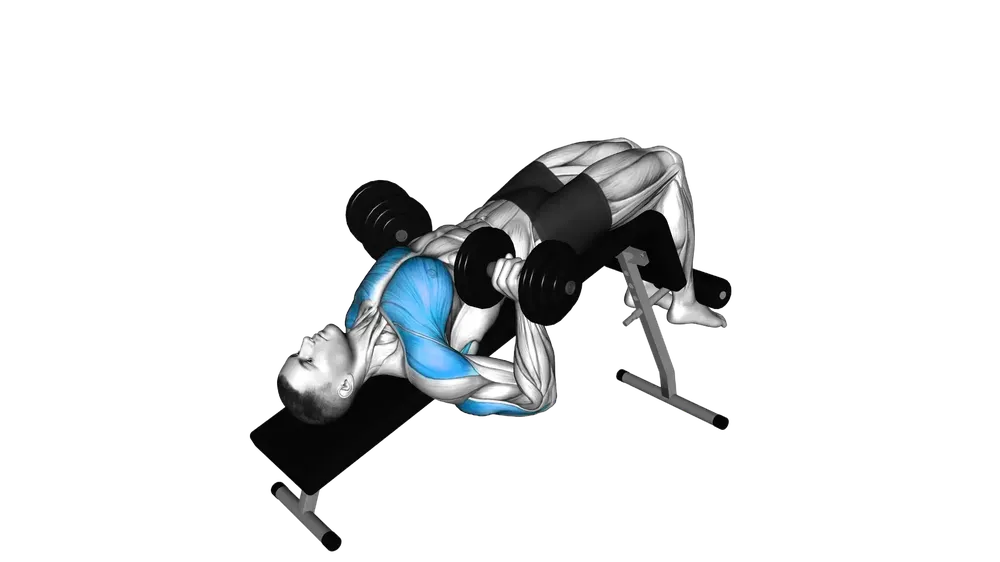
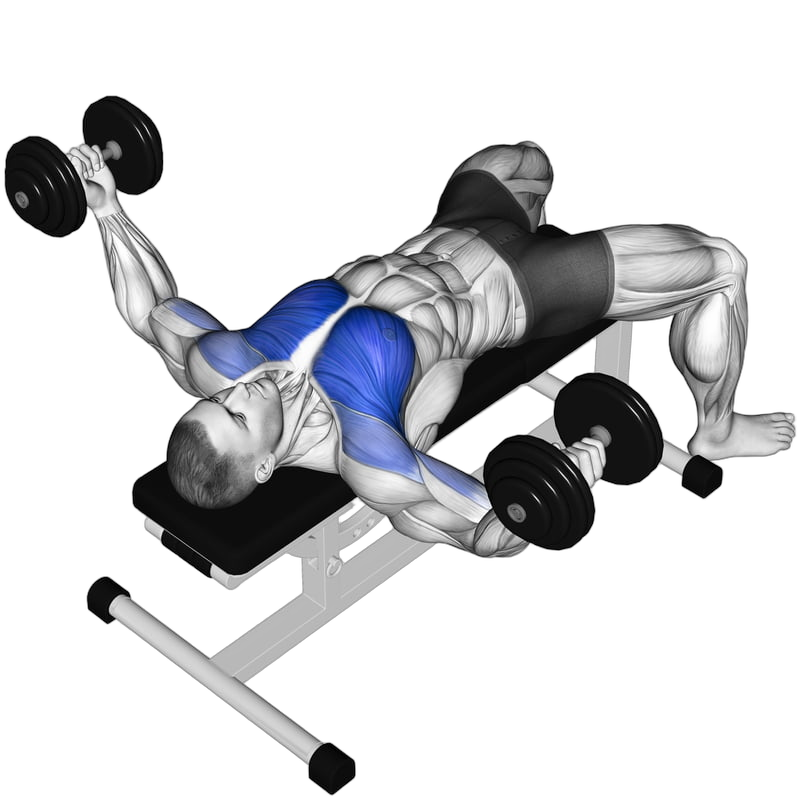
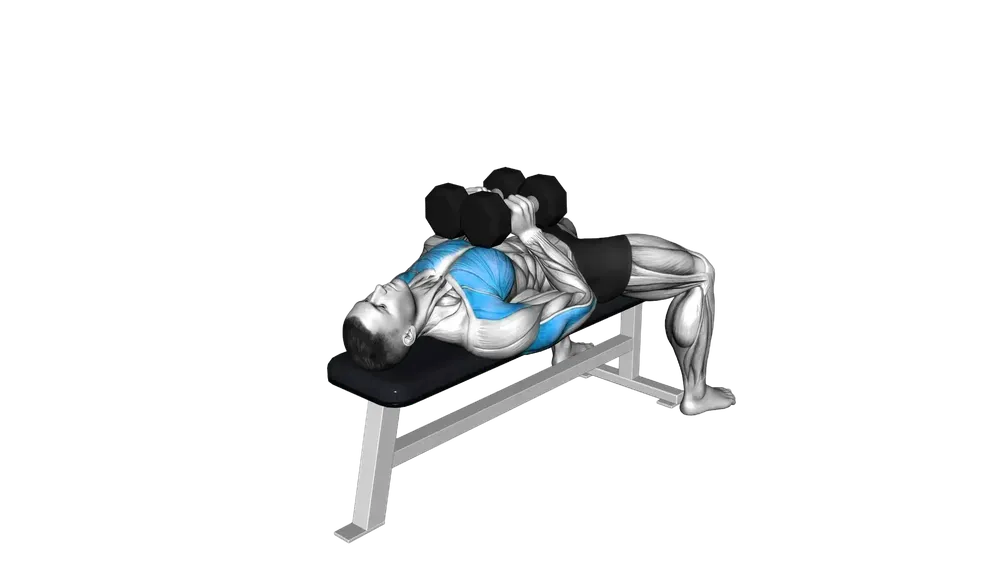
A decline angle hits the lower chest fibers a flat fly skips.
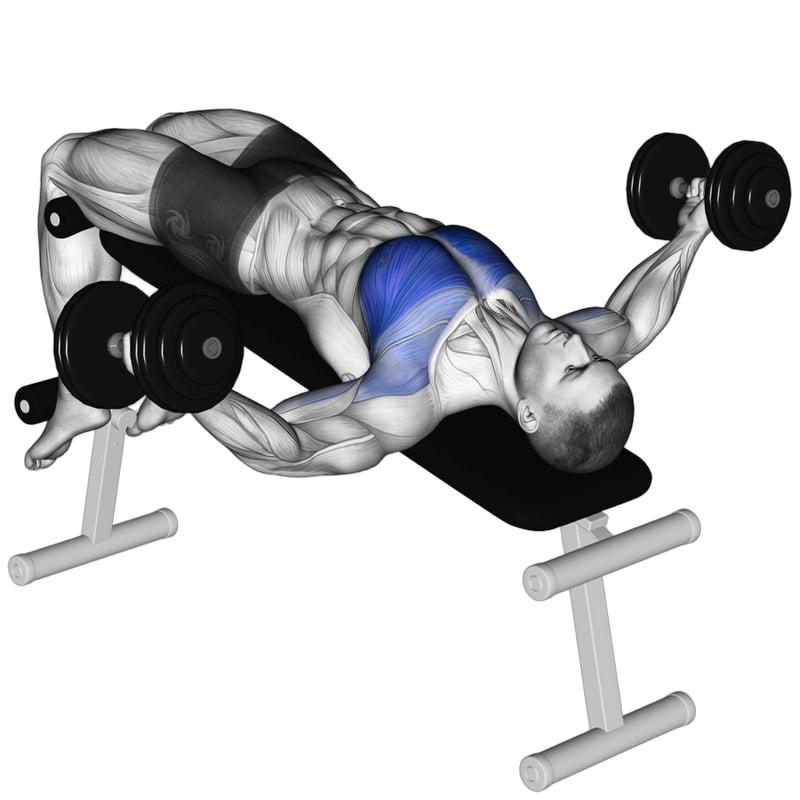
Lead with the chest, not the elbows. Keep that elbow bend fixed so it stays a fly, not a press.
Tilting the bench into a decline lines the arc of the fly up with the lower chest fibres, which run downward toward the sternum and rarely get direct stretch-loaded work. The fixed soft elbow bend keeps it a pure arc, so the chest lengthens fully at the bottom and squeezes hard as the dumbbells come together, with the front delts assisting to control the path. It earns its place as a finishing move for a fuller lower chest line.
The decline angle shifts the stretch and squeeze toward the lower chest fibres, the ones that create the line along the bottom of the pecs. Flat flyes spread the work across the mid chest instead.
To a comfortable deep stretch across the chest, roughly level with your torso, and no further. Sinking past that turns a growth stimulus into a shoulder strain, especially with the elbows locked into a fixed bend.
Bending the elbows shortens the lever and makes the rep easier, which quietly turns your fly into a press. Set a soft bend before rep one and treat it as locked, drop the weight if you cannot hold it.