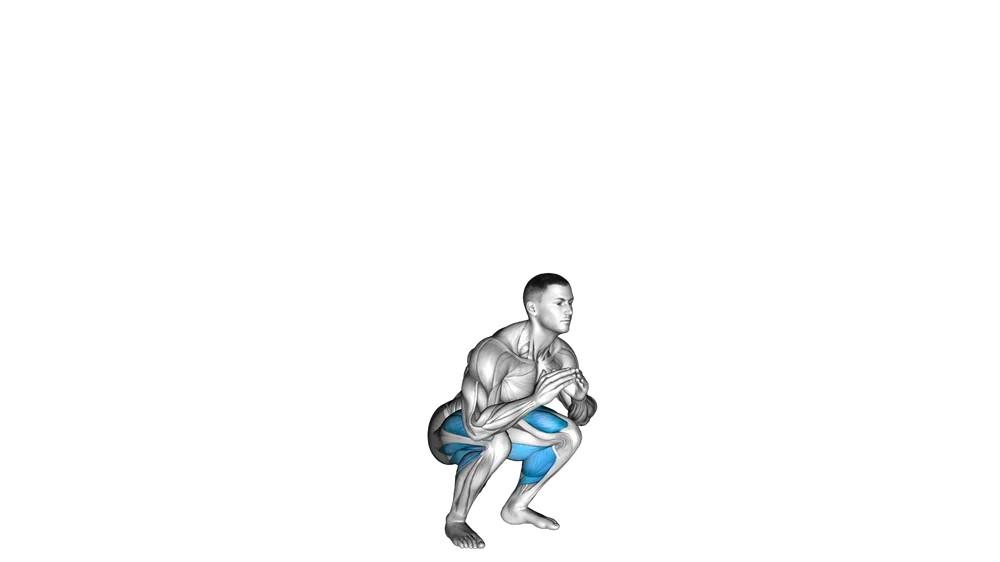
Stay deep in a squat and waddle forward, low and slow.
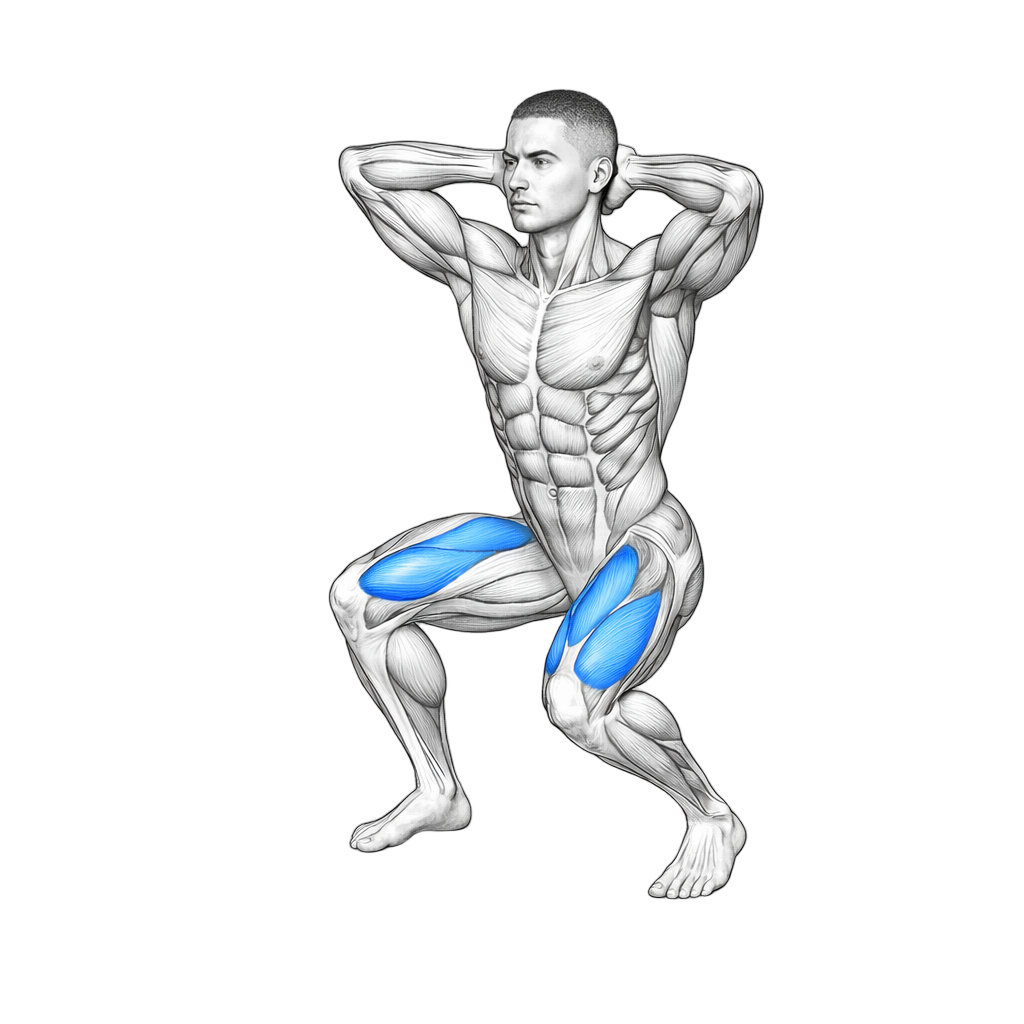
Don't rise out of the squat between steps, keep your hips low the whole walk.
Staying pinned in the bottom of a squat while stepping forward keeps the quads under constant tension with no rest at the top of a rep, because there is no top. The glutes work overtime stabilising each low step, and your hips and ankles get taken through the deep range most people avoid. It earns its place as a finisher or warm-up drill that builds bottom-position strength for every squat you will ever do.
Deep knee flexion under bodyweight is a position worth training, not avoiding, but you have to earn it. Start with short distances, keep steps small and controlled, and back off the volume if your knees complain the next day.
Take smaller steps and slow down. Heels popping up usually means your ankles are running out of range, so shorten the stride, keep the chest up, and let ankle mobility improve over weeks of practice.
Count steps or metres rather than reps, something like 10 to 20 metres per set. The burn stacks up fast because there is no top position to rest in, so start shorter than feels necessary.